
Most spiders you see in a Jeffreys Bay house are harmless and, frankly, doing you a favour by eating flies and mosquitoes. A few deserve more care, especially around children. Our job is to tell you which is which, reduce how many end up indoors and deal with the ones living in places they really should not be, like under the kids' outdoor chairs or inside the guest bedroom.
Why J-Bay homes have so many spiders
Much of the town borders fynbos, dune scrub and coastal bush, and that vegetation is full of insects and the spiders that hunt them. Gardens planted with indigenous shrubs, wooden decks, stacked firewood, outdoor showers and garages with stored gear give them plenty of cover right next to the house. Outside lights left on at night attract insects, and spiders follow the food. In houses that are empty for weeks at a time, webs build up in corners, under eaves and across window frames with nobody brushing them away.
Spiders you are likely to meet
Rain spiders
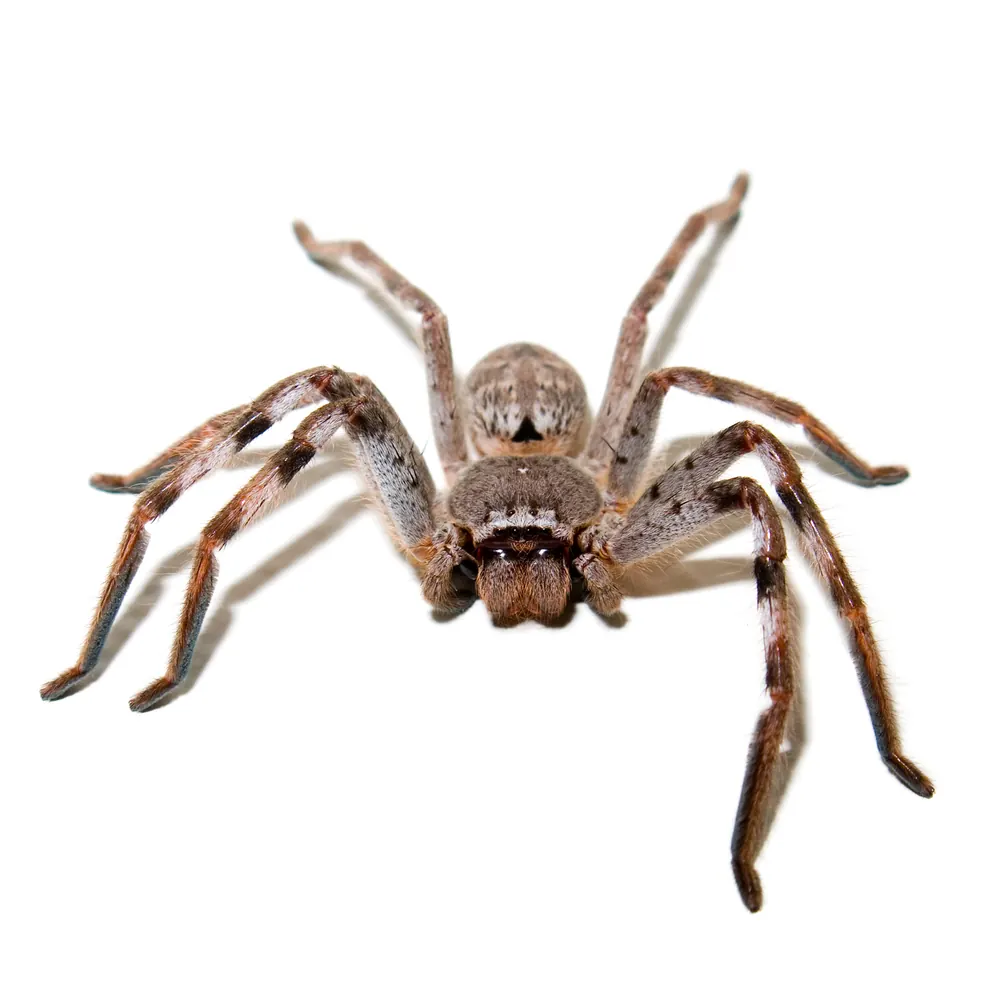
Large, flat, brown and fast, often seen on walls before or after rain. They look alarming but are not considered dangerous to people. The females make a big papery egg sac in shrubs or under eaves.
Button spiders
The black button spider is shiny black, often with a red mark on the abdomen, and its bite needs medical attention. The brown button spider is more common around houses, lighter and mottled, with a much milder bite. Both build untidy webs in sheltered, dry spots: under garden furniture, in pot plants, in meter boxes, around the braai and in garage corners.
Sac spiders
Small, pale yellow-green spiders that hunt at night and shelter in a silk sac in curtains or the corners of ceilings. They are responsible for many of the bites people find in the morning, which can blister and take time to heal.
Daddy long-legs and other web builders
Thin-legged spiders in ceiling corners and garages. Harmless, but the webs make a house look neglected, which matters to anyone letting it out.
Signs you have more spiders than you'd like
- Webs reappearing in the same corners within days of being cleared
- Egg sacs under eaves, in window frames or behind outdoor furniture
- Spiders regularly seen in bedrooms or bathrooms
- Unexplained bites on people sleeping in a particular room
- Lots of insects around outside lights, which is what draws the spiders
How we treat
- Inspection. We look at eaves, window frames, decks, outdoor furniture, the garage, meter boxes and bedrooms to see which spiders are present and where they are concentrated.
- Remove webs and egg sacs in the main problem areas.
- Residual treatment. An odourless, non-staining product applied to eaves, window and door frames, wall corners and the sheltered spots where webs keep returning.
- Perimeter barrier around the house, especially on the side facing the bush or dunes.
- Insect advice. Fewer flying insects means fewer spiders, so we look at lighting and other attractions too.
No need to move out. Keep children and pets off sprayed surfaces until they are dry.
A local tip
Switch outside lights to warm-white or yellow bulbs and turn them off when they are not needed. Insects are drawn far less to warmer light, and a deck light that no longer attracts a cloud of moths every evening soon has fewer spiders waiting beside it.
A mistake to avoid
Spraying every spider you see with insect spray and leaving it at that. Many spiders are only lightly affected by household aerosols, and the ones you do kill are quickly replaced from the bush outside. The longer-term answer is removing their shelter near the house, cutting down the insects they feed on and treating the surfaces they rest on.
What does spider control cost?
It depends on the size of the house, how much outdoor area needs treating and how heavily spiders have settled in. For many homes, regular sweeping of webs and egg sacs and a change of outdoor lighting is enough, and we will tell you if that is all you need. A full inside-and-out treatment makes sense for holiday lets before the season, homes with young children and anyone seeing button spiders around the house. We quote after inspecting.
Scorpions often share the same hiding places as spiders; see our page on scorpion problems in Jeffreys Bay. For more on identification, read our spider identification and control guide. We also deal with spiders in Walmer's leafy gardens, and our main Port Elizabeth spider control page covers the rest of the metro. For other local pests, see what we treat in Jeffreys Bay.
Call 087 012 5550, or WhatsApp us a clear photo of the spider and we will tell you what it is.
Questions we get asked
Are rain spiders dangerous?
No. They are big and fast, which is frightening, but they are not considered dangerous to people. Most will leave on their own or can be moved out with a container and a piece of card.
How do I recognise a black button spider?
It is shiny black with a round abdomen, often with a red stripe or spot on top, and lives in a messy web in sheltered spots close to the ground. If someone is bitten, get medical help.
What bit me in bed overnight?
In many houses it is a sac spider, which hunts at night. Bed bugs are the other common cause, so check the mattress seams too.
Will treatment kill all the spiders?
It greatly reduces them around and inside the house. Some will always wander in from the bush, but far fewer will settle.
Can you treat outdoor furniture and decks?
Yes. We treat under and around furniture, deck edges and outdoor shower areas, which are favourite spots for button spiders.