
The honest starting point with spiders is that most of the ones in South African homes are harmless to people and helpful in the garden. They eat flies, mosquitoes, moths and cockroaches. So good spider control isn't about wiping out every spider. It's about keeping them out of living spaces, knowing which few species need care, and removing the insects and clutter that bring them in.
Spiders are not insects
Spiders are arachnids, with eight legs and two body segments, related to scorpions and mites. That matters for treatment. They don't feed on bait the way ants and cockroaches do, and they groom less, so they pick up less product from treated surfaces. Many hunt and move around rather than staying in one web. Effective treatment focuses on where they shelter and travel, and on reducing the insects they eat.
Spiders that need respect
A small number of local spiders can give a medically significant bite. They're rarely aggressive and usually bite only when pressed against skin, in a shoe, glove or bedding.
Button spiders
The widow spiders. The black button spider has a round, shiny black body, sometimes with red markings on top; the brown button spider is mottled brown with an orange hourglass underneath and leaves distinctive spiky round egg sacs. The black species is the more dangerous of the two. They build untidy webs in sheltered spots: under garden furniture, in meter boxes, around pool pumps, in wood piles and in the corners of outbuildings.
Violin spiders
Slender, brownish, long-legged, with a darker violin-shaped marking on the front of the body. They hide in dark, undisturbed places like the backs of cupboards, behind pictures and in stored clothes. Their bite can cause a slow-healing wound.
Sac spiders
Small, pale yellowish or greenish spiders that wander at night and shelter in silk sacs in folds of curtains, ceilings and corners. Bites can cause a painful sore.
If you're bitten and develop a spreading wound, muscle pain or feel unwell, see a doctor. Take the spider with you if you can do so safely.
Big but mostly harmless
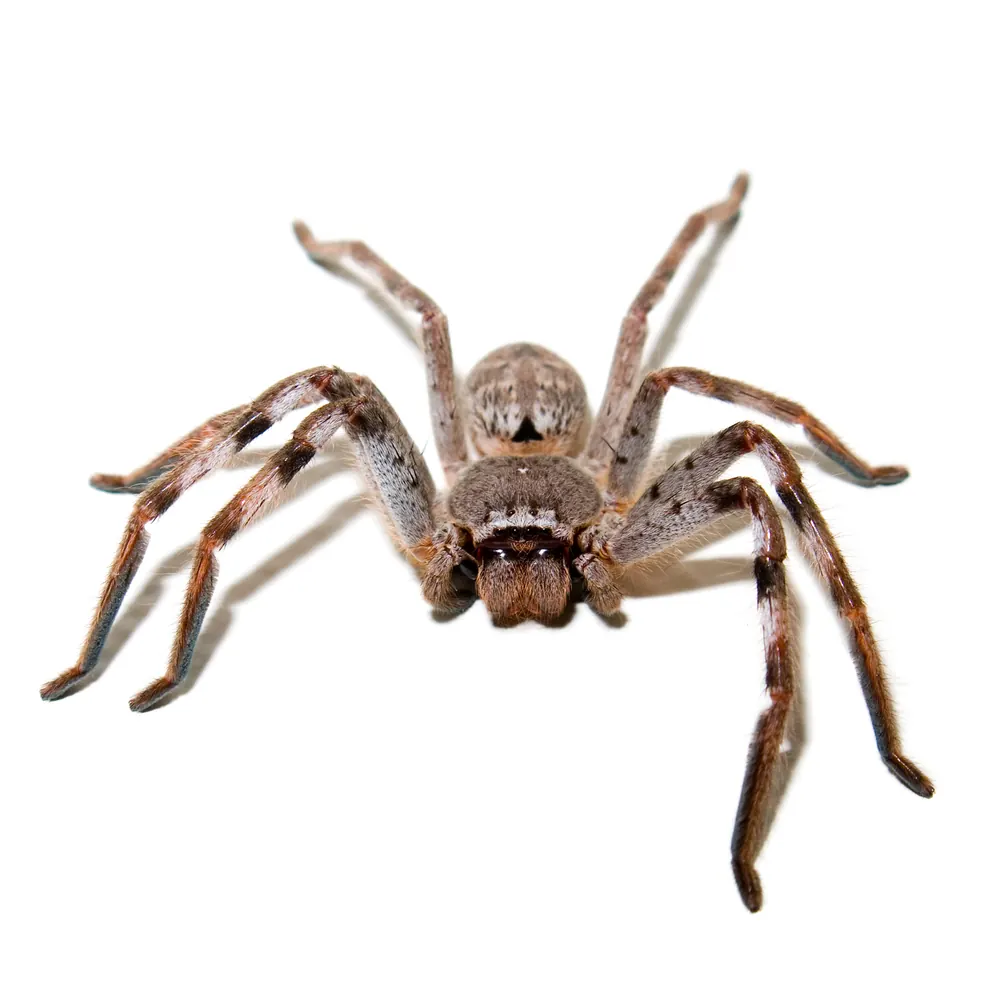
Rain spiders are the large, flat, brown huntsman-type spiders that appear on walls, often before or after rain. They're alarming in size but are not considered dangerous. Daddy long-legs in ceiling corners, garden orb-weavers and jumping spiders are harmless too. If you can, catch them with a glass and a sheet of card and put them outside.
Why spiders move in
- Food. Lots of insects mean lots of spiders. Outside lights that attract moths draw spiders to your doors and windows.
- Shelter. Clutter in garages, wood piles against the house, dense creepers on walls and undisturbed storerooms all give them hiding places.
- Weather. Some species come indoors before rain or as it gets cooler.
- Bush on the boundary. Homes next to open bush, smallholdings and nature reserves naturally see more spiders and scorpions.
What people often get wrong
Spraying every web you see with a household aerosol. It kills that spider but leaves the eggs, the shelter and the insects they came for. A few weeks later, new spiders move in. Removing webs with a broom, cutting down the insects drawing them, and treating the right places works far better.
What professional spider treatment involves
- Inspection. We look at where spiders are sheltering, which species are present and what's attracting them.
- Targeted residual treatment to eaves, window frames, door frames, garages, meter boxes, outbuildings and the outside of the house, using odourless, non-staining products. Indoors, treatment goes into corners, behind furniture and other harbourage.
- Insect control where needed. If spiders are feeding on cockroaches or flies, dealing with those helps. Our guide to household insect control covers that side.
- Advice on clutter, lighting and vegetation that will keep numbers down.
For our service in the city, see spider control in Port Elizabeth. Leafy suburbs with large gardens and old outbuildings tend to see more of them; our page on spiders in Walmer's big gardens looks at that. Scorpions shelter in many of the same places, and scorpion control around Nelson Mandela Bay covers those.
Prevention
Shake out shoes, gloves and garden clothing before putting them on, especially if they've been stored in a garage. Move wood piles and bricks away from the house. Keep storerooms tidy, with boxes off the floor and sealed. Fit insect screens on windows. Switch outside lights to warmer bulbs that draw fewer insects. Wear gloves when working in the garden, meter box or under the deck.
Empty houses and quiet corners
Spiders thrive where nobody disturbs them. A holiday home closed up for months, a guest room that's rarely used, a garage full of boxes or a storeroom at the back of a shop can fill up with webs surprisingly fast. Before a holiday house is opened for the season, it's worth sweeping out webs and egg sacs from corners, window frames and under furniture, and checking meter boxes and outside storerooms for button spiders before reaching inside.
What does it cost?
Price depends on the size of the house, outbuildings and garden, how heavy the spider activity is, and whether insects need treating too. A house in a suburb is a smaller job than a smallholding with sheds and stables. We'll quote after seeing the property.
Found a spider and not sure what it is? WhatsApp us a clear photo and we'll identify it, or call Pest Arrest on 087 012 5550.
Questions we get asked
Which spiders in South Africa are dangerous?
Black and brown button spiders, violin spiders and sac spiders are the main ones to be careful of. Most other house and garden spiders are harmless.
Are rain spiders poisonous?
Rain spiders have venom, like nearly all spiders, but they aren't considered dangerous to people. They're big and fast, which is why they scare people.
Should I kill spiders in my house?
Not usually. Most are harmless and eat insects. Catch them and put them outside, and call us if you're finding button or violin spiders indoors.
How long does a spider treatment last?
It depends on weather and how much the treated areas are cleaned or rained on. Outside treatments wear faster in wet weather, so problem homes are often treated seasonally.
Why do I have more spiders than my neighbours?
Usually because you have more insects, more shelter, or both. Outside lights, wood piles, creepers and bush on the boundary all make a difference.