
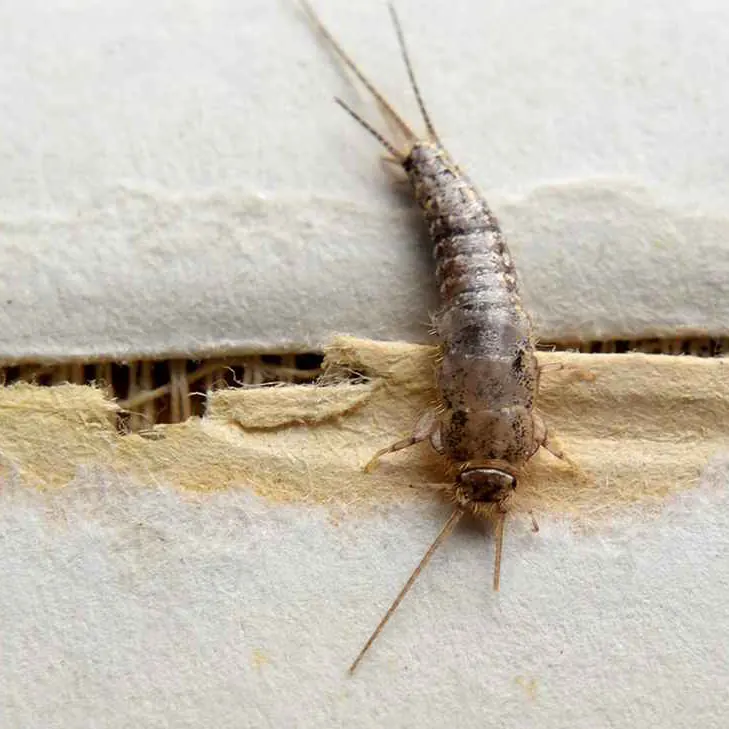
Fishmoths are a slow, quiet pest, and that is exactly why they do so well in Jeffreys Bay holiday homes. They need humidity, darkness and starchy food such as paper, cardboard, linen, wallpaper glue and crumbs, and a beach house closed up for months gives them all of that with nobody disturbing them. The fix is a targeted treatment of the places they hide, combined with changes to how things are stored. Once you have both in place, fishmoths are easy to keep on top of. Full-time residents get them too, particularly in rooms on the shady side of the house, in garages converted into storerooms and in older homes with built-in cupboards against outside walls, where condensation keeps the back panels slightly damp.
What fishmoths are
Fishmoths, called silverfish in many countries, are small, wingless, carrot-shaped insects with a silvery sheen and three long bristles at the tail. They move in a wriggling, fish-like dash when you lift something. They are not dangerous, do not bite and do not carry disease, but they damage things people care about: books, photographs, documents, linen, curtains and clothes.
Why J-Bay houses get them
- Coastal humidity. Sea air keeps humidity high for much of the year. Fishmoths thrive in it, especially in rooms without much sun.
- Houses that stay shut. With windows closed and no one cooking, showering or opening cupboards, rooms stay still and damp. Fishmoths spread through cupboards and boxes without disruption.
- Plenty of stored paper and fabric. Holiday homes collect boxes of paperbacks, board games, magazines, spare bedding and the good linen that only comes out at Christmas.
- Cardboard moving in and out. Fishmoths and their eggs travel in cardboard boxes from storage units and deliveries.
Signs you have fishmoths
- Small, irregular holes or thin, grazed patches on linen, clothing and paper
- Yellowish stains on stored fabrics
- Book spines and covers with the surface layer eaten off
- Tiny pepper-like droppings on shelves and in drawers
- Fine, silvery scales and shed skins in cupboards
- The insects themselves darting away when you open a cupboard, lift a box or pick up a book
How we treat
- Inspection. We check linen and clothing cupboards, bookshelves, the geyser cupboard, kitchen units, storerooms, under carpets at the edges and the roof space if boxes are stored there.
- Targeted residual treatment. An odourless, non-staining product goes into cracks, crevices, cupboard corners, shelf edges and skirting boards where fishmoths hide and travel.
- Roof void treatment where they are coming down from stored items or insulation.
- Storage and moisture advice. Without changes here, they will come back.
You do not need to move out. Remove clothing and linen from cupboards before treatment so we can reach the corners, and let surfaces dry before putting them back.
Keeping them away
- Store linen, documents and photographs in sealed plastic containers rather than cardboard.
- Do not leave piles of newspapers or magazines in cupboards or garages.
- Fix dripping taps and leaking geysers that keep cupboards damp.
- Open up and air the house whenever someone is there, and leave internal cupboard doors ajar if security allows.
A local tip
Before you lock up for the season, put a moisture absorber tub in each linen cupboard and wardrobe. These are sold at hardware and grocery shops, and in a closed coastal house they fill up surprisingly quickly. Drier cupboards mean fewer fishmoths, less mould and less of that musty smell when you open up again.
A common misunderstanding
Many people treat fishmoths with naphthalene moth balls. Moth balls are aimed at clothes moths, have a strong smell that clings to fabric and do very little against fishmoths hiding in the cracks behind the cupboard. Removing cardboard and treating the hiding places works much better.
What does fishmoth control cost?
The price depends on the size of the house, how many cupboards and rooms are affected, and whether the roof space needs treatment. A light problem in one cupboard can often be managed yourself by emptying it, cleaning out the cardboard, drying it and storing things in sealed containers. A whole holiday house with fishmoths throughout is a bigger job, best done before the busy season. We quote after a look.
Fishmoths are one of several crawling insects we treat in J-Bay, and often appear alongside other problems in closed-up homes; see our Jeffreys Bay pest overview. We also handle fishmoths in older Walmer houses, and there is more detail on our main fishmoth control page for Port Elizabeth.
Call 087 012 5550, or WhatsApp us a photo of the damage or the insect and we will confirm what it is.
Questions we get asked
Are fishmoths harmful to people?
No. They do not bite or spread disease. The problem is the damage they do to paper, books, photos and fabrics.
Why do I find fishmoths in the bath?
They wander at night looking for moisture, fall into the bath and cannot climb the smooth sides. It usually means they are living in the bathroom or nearby cupboards.
Can fishmoths damage clothes?
Yes, especially starched cotton, linen and rayon, and anything stored with food or sweat stains on it. They graze the surface and leave small holes and yellow marks.
How do I protect old photos and documents?
Keep them in sealed plastic boxes or archive sleeves, in a dry room, and away from cardboard and the floor.
Will fishmoths come back after treatment?
They can, if humidity stays high and cardboard and paper keep piling up. The treatment works best when storage is sorted out at the same time.