
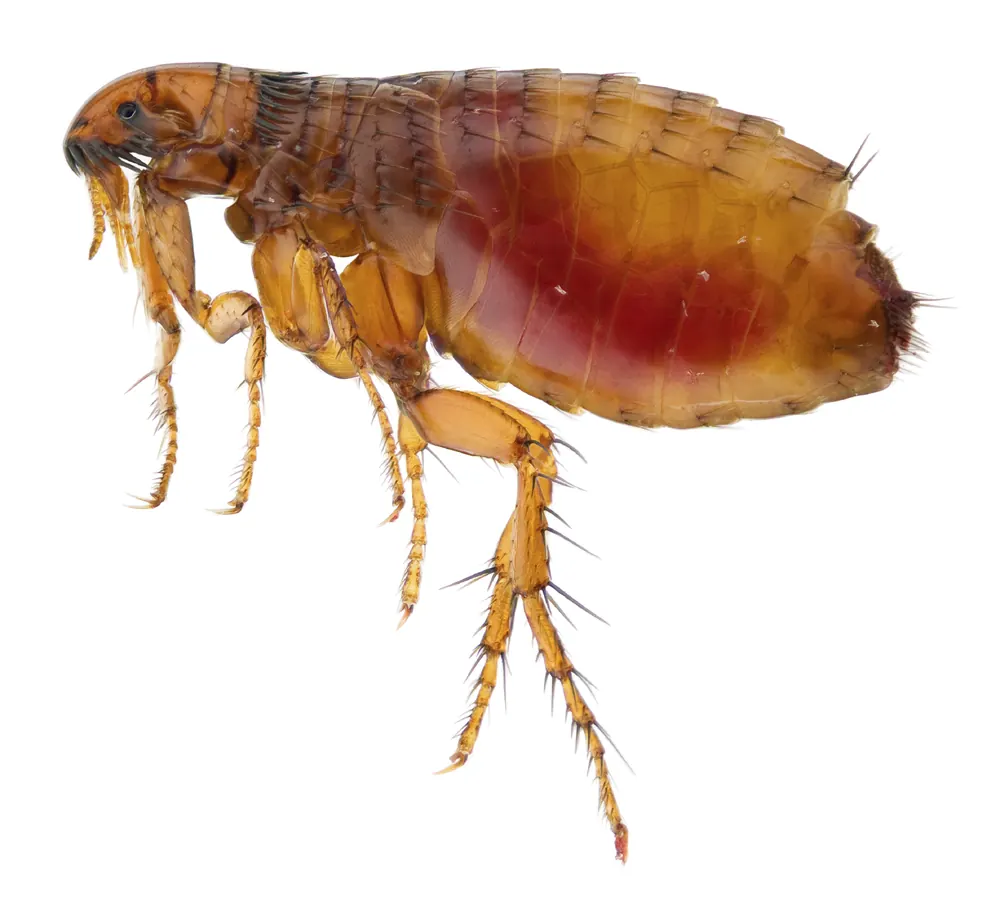
If you're being bitten around the ankles, your pets are scratching more than usual, or you've just moved into a house and suddenly have bites you didn't have before, it's probably fleas. Getting rid of them takes two things at once: your pets treated by a vet-recommended product, and your home and garden treated for the eggs, larvae and pupae that make up most of the population. Do only one half and fleas come back within weeks. We handle the house and garden side for homes and properties across Port Elizabeth.
Why the fleas you see are only the start
Adult fleas live on the animal, but they lay their eggs there too, and the eggs fall off wherever the pet sleeps, lies or walks. Those eggs hatch into larvae that hide deep in carpet fibres, between floorboards, in couch cushions and in shaded soil outside. The larvae spin cocoons and wait as pupae, sometimes for a long time, until they sense vibration, warmth or carbon dioxide nearby. Then they hatch all at once and jump onto whatever walks past.
That's why the adults you see are only a small fraction of the problem. It's also why an empty house can explode with fleas when new people move in: the pupae have been waiting for someone to arrive.
Why fleas are common in Port Elizabeth
Fleas like it warm and humid, and our coastal climate gives them that for much of the year. There's no hard frost to kill off flea stages in sheltered outdoor spots, so gardens can carry fleas well into winter. Sandy, shaded areas under decks, along walls and under trees where dogs lie are ideal places for larvae. Stray cats, visiting dogs and wildlife moving through gardens add more.
Holiday homes and rentals are a particular risk. A property that stands empty for weeks after a tenant with pets has left can be full of pupae just waiting for the next occupants.
Signs of fleas
- Small, itchy red bites, mostly around the ankles and lower legs
- Pets scratching, biting at their fur or losing hair, especially near the tail
- Tiny dark specks in the pet's coat or bedding that turn reddish when dampened on white paper. That's flea dirt.
- Small, dark brown insects jumping on carpets, rugs or your socks
- Bites that start after returning from holiday or after moving into a new house
How we treat fleas
- Inspection. We find out where pets sleep and spend time, inside and out, and check carpets, rugs, furniture, pet beds and the garden for activity.
- Preparation. Before we treat, you'll need to vacuum thoroughly, including under furniture and along skirtings, then empty or throw away the vacuum bag outside. Wash pet bedding on a hot cycle. Clear the floors so we can reach everything.
- Indoor treatment. We treat carpets, rugs, floor cracks, under furniture and other areas where flea larvae develop.
- Outdoor treatment. We treat the shaded areas where pets lie, kennels, under decks and along walls.
- Follow-up. Pupae are protected inside their cocoons, so we come back to catch fleas that emerge after the first treatment.
You don't need to leave the house, but keep children and pets off treated surfaces until they're dry.
Your pets are part of the plan
We treat the home; your vet treats the animals. Flea control on pets is a job for a vet-recommended product, and every pet in the household needs to be treated at the same time, including the indoor cat that never goes outside. If one animal is left out, it keeps the cycle going.
The mistake most people make
Stopping vacuuming after treatment. It seems logical to leave the treatment undisturbed, but regular vacuuming in the days after treatment does two things: it removes eggs and larvae, and the vibration encourages pupae to hatch so the newly emerged fleas come into contact with the treated surfaces. It's normal to see a few fleas for a while after treatment. That's the pupae hatching, not the treatment failing.
A local tip
If you're moving into a house or taking over a rental anywhere in the Bay, have it treated for fleas before you move your furniture in, especially if the previous occupants had pets. It's much easier to treat empty floors, and you avoid that first-week bite surprise.
Fleas in rentals, holiday homes and businesses
For landlords, letting agents and owners of holiday homes, a flea treatment between tenants is a simple way to avoid complaints. For kennels, catteries, grooming parlours and animal welfare sites, fleas are a continuous challenge, and a regular service works better than waiting for an outbreak.
What does flea treatment cost?
The price depends on the size of the home, how much of the garden needs treating and how bad the infestation is. A flat with one cat is a smaller job than a big house with several dogs and a large garden. Flea control usually includes a follow-up visit. If it's a mild case that's just started, treating the pets properly and vacuuming hard may be enough, and we'll say so.
Not sure it's fleas? See our page on all the biting insects in PE, or compare with bed bug signs and treatment. We also treat fleas in Walmer's big gardens and flea problems in Jeffreys Bay holiday homes.
Call 087 012 5550 to book a flea treatment, or WhatsApp us a photo of the bites or the specks you're finding.
Questions we get asked
Why do I still see fleas after treatment?
Fleas still inside their cocoons are protected and keep hatching for a while. Keep vacuuming; they'll contact the treated surfaces and die. The follow-up deals with the rest.
Can I have fleas without pets?
Yes. Fleas from previous occupants' pets, stray cats or wildlife in the garden can infest a home, and pupae can wait in an empty house for weeks.
Do you treat my dog or cat?
No, we treat the home and garden. Pets need a vet-recommended flea product, given to every animal in the household at the same time.
How long after treatment can my pets come back in?
Once the treated surfaces are dry. We'll tell you the timing on the day.
Should I treat the garden as well?
If your pets spend time outside, yes. Shady spots where they lie are often where much of the flea population develops.