
Most spiders you'll find around a Bluewater Bay home are harmless, and many are doing you a favour by eating flies and mosquitoes. A few, though, are worth treating, especially if you have young children who play in the garden or pets that poke around wood piles. Our job is to identify what you're seeing, treat the places spiders shelter around the house and, just as importantly, reduce the insects that feed them.
Why spiders do well here
Spiders go where their food is. With the estuary close by, Bluewater Bay has plenty of mosquitoes, midges and moths on calm evenings, and every outside light draws them in. Spiders soon learn to build there. That's why the webs collect around patio lights, under the eaves, along gutters and in window corners facing the garden.
The coastal bush, rockeries, hedges and wood piles in local gardens give them shelter during the day. Garages and storerooms, with boxes, fishing gear and garden tools that stay undisturbed for months, are another favourite.
You'll often notice more spiders indoors at certain times of year. Rain and cooler weather push hunting spiders like rain spiders inside, while late summer is when the web builders are at their biggest and most visible. A sudden increase doesn't always mean something has changed at your house; it's often just the season.
The spiders we see most
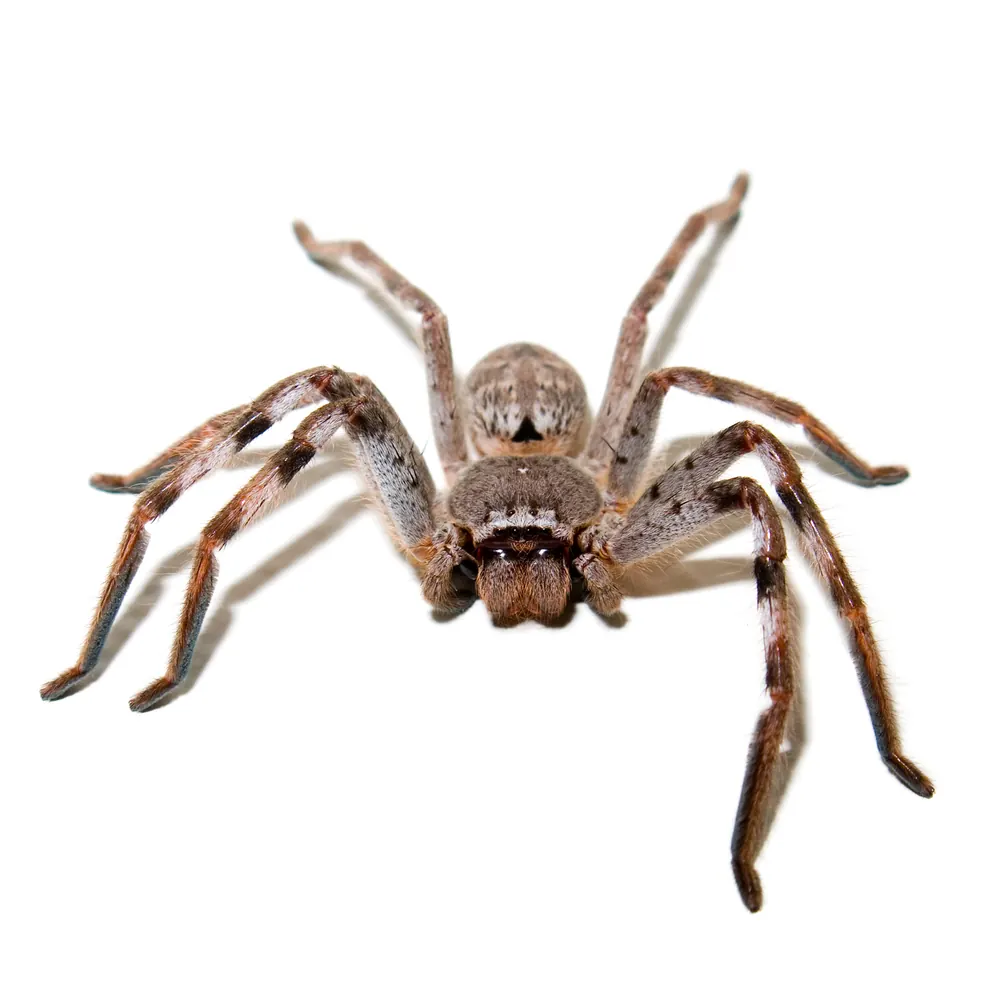
- Rain spiders are big, brown and flat, and they turn up on walls indoors, often before or after rain. They look alarming but are not considered dangerous to people. If you can, catch one under a container and put it outside.
- Button spiders are small and round-bodied. The black ones, with red or orange markings, are the ones to take seriously. They live low down, in wood piles, under rubble, in garden pots, letterboxes and outside toilets.
- Sac spiders are small, pale and hunt at night. They wander indoors into bedrooms and curtains, and their bites can cause a sore, slow-healing patch.
- Orb-web and garden spiders build the big wheel webs between shrubs and across paths. They're harmless and useful.
- Daddy longlegs live in ceiling corners and are harmless.
How we treat spiders
- Inspection. Eaves, window frames, outside lights, garages, storerooms, wood piles and garden areas near doors.
- Web removal from eaves and corners, so it's easy to see if they return.
- Targeted residual treatment. An odourless, non-staining spray around eaves, window and door frames, garage corners and other places spiders shelter, plus a barrier treatment around the outside of the house.
- Reducing their food. Advice on lighting and on the insects attracting the spiders, because fewer insects means fewer spiders.
Nobody has to leave the house for this. Just keep the kids and the dog away from treated eaves, frames and paving until the product has dried.
What people get wrong
Spraying every web and leaving the light on. As long as the outside lights pull in clouds of insects every night, new spiders will keep moving in to feed. Swapping white bulbs for yellow or warm-coloured ones that attract fewer insects, or switching outside lights off when not needed, does more than people expect. So does a regular sweep of the eaves with a long broom, which removes egg sacs before they hatch.
Children, gloves and the wood pile
If your kids play outside, teach them not to reach into dark gaps under pots, in the wood pile or under the wendy house. Wear gloves when moving firewood, bricks or garden rubble, and shake out shoes and gardening gloves left outside overnight. These simple habits cover most of the risk from button spiders. Scorpions shelter in exactly the same places, and our page on scorpions in Bluewater Bay gardens covers them.
A local tip
Keep a clear gap between the house and the garden. Prune hedges and creepers back from walls and windows, and don't stack firewood against the house. Spiders travel along vegetation, and branches touching the wall give them a bridge to the eaves.
What does it cost?
It depends on the size of the house and garden and how many outbuildings need treating. A few rain spiders indoors usually don't need treatment at all, just a container and a piece of card. Button spiders around the house, heavy webbing on every surface, or a family with small children who want the risk lowered is where a treatment makes sense. We'll give you an honest view after a look.
For more on identifying spiders, read our spider identification and control guide. We also offer spider control around Port Elizabeth and spider treatments for Despatch homes. For all the other pests in the area, see Bluewater Bay pest control.
Call 087 012 5550, or WhatsApp us a clear photo of the spider and we'll tell you what it is.
Questions we get asked
Are rain spiders dangerous?
No, rain spiders are not considered dangerous to people. They're big and fast, which makes them frightening, but the best approach is to catch and release them outside.
Which spiders in Bluewater Bay should I worry about?
Black button spiders and sac spiders are the ones to take seriously. Button spiders live low down in wood piles and pots; sac spiders wander into bedrooms at night.
Why are there so many webs around my outside lights?
The lights attract insects, and spiders build where the food is. Switching to warmer bulbs or turning lights off reduces both.
Will treatment get rid of every spider?
No, and it shouldn't. Treatment cuts down spiders around and inside the house. Some will always live in the garden, where they're useful.
What should I do if someone is bitten?
Get medical advice, especially for children or if there's pain, swelling or feeling unwell. If you can, safely take a photo of the spider.
Is spider treatment safe for children and pets?
Yes, once surfaces are dry. Keep them off treated areas until then.