
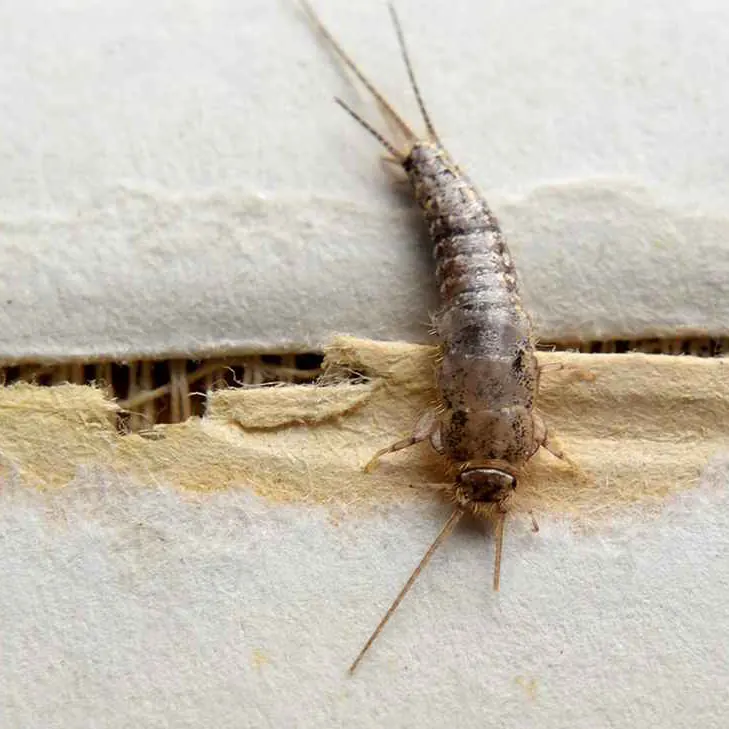
Fishmoths, also called silverfish, are one of the most common household insects in Port Elizabeth, and the reason is simple: they need moisture, and a coastal city has plenty. They don't bite or carry disease, but they chew paper, books, photographs, wallpaper, cardboard boxes, cotton and linen, and the starch in clothing. To get rid of them you need two things: a residual treatment in the dark, dry-looking places they hide, and a less humid home so they don't come back.
What is a fishmoth?
Despite the name, it's not a moth and it can't fly. A fishmoth is a small, wingless insect, usually up to about the length of a fingernail, shaped like a carrot or teardrop, with a silvery-grey, scaly body and long antennae at the front and three bristly tails at the back. It wriggles when it runs, which is where the fish part of the name comes from. Fishmoths are mostly active at night and dash for cover when a light comes on.
They live a long time for an insect, and they can go months without eating. That means a small population can quietly build up for a long time before anyone notices.
Why fishmoths do so well here
Fishmoths need high humidity. Port Elizabeth's location on Algoa Bay keeps the air moist for much of the year, and many homes have rooms that stay slightly damp: built-in cupboards against outside walls, bathrooms without extractor fans, under-stair cupboards, garages and roof spaces under sheeting where condensation forms. Older houses with wooden floors, plaster ceilings and gaps behind skirtings give them endless hiding places.
They also arrive in cardboard. Moving boxes, archive boxes, stored books and old magazines often bring fishmoths with them.
Signs of fishmoths
- Irregular holes or scraped, thinned patches on paper, book covers and wallpaper
- Yellowish stains or damage on clothes, linen and curtains, particularly starched or cotton items
- Tiny, pepper-like droppings in drawers and on shelves
- Fine silvery scales shed in cupboards, bookshelves and boxes
- Fishmoths in the bath or basin; they fall in looking for moisture and can't climb out
- A quick, wriggling insect disappearing behind a picture frame or skirting at night
How we get rid of fishmoths
- Inspection. We look for the damp, dark, undisturbed places they live: built-in cupboards, bookshelves, storerooms, the roof space, behind skirtings, and around baths and basins.
- Residual treatment. We apply an odourless, non-staining residual spray into cupboards, along skirtings, behind fittings and into cracks and voids, and where needed into the roof space. Odourless and non-staining matters here, because the treatment goes right where your clothes and books are kept.
- Advice on moisture and storage. We point out the damp spots and what's likely causing them, and what to change about how things are stored.
- Follow-up if the infestation is heavy or widespread.
You don't need to leave the house. Keep children and pets off treated surfaces until they're dry, and let cupboards air before you pack them again.
The mistake that keeps them coming back
Treating the cupboard and putting everything straight back in the same cardboard boxes in the same damp spot. Cardboard is both food and shelter for fishmoths, and any eggs or insects hiding in the folds go back with it. Move stored items into sealed plastic containers, and unpack and check boxes that have been standing for a long time.
Prevention that actually works on the coast
You can't change the sea air, but you can make your home less humid where it counts. Run a bathroom extractor fan, or open the window after showers. Leave built-in cupboard doors open for a while on dry, windy days; PE's famous wind is good for something. Don't pack clothes in tightly against an outside wall. Fix leaking pipes, geyser overflows and gutters that send water into walls. A small dehumidifier or moisture-absorbing tubs can help in a cupboard or storeroom that's always damp.
Fishmoths in businesses
For libraries, archives, offices with paper records, museums and shops with stored stock in cardboard, fishmoths can do real damage over time. Regular inspection and treatment of storerooms, combined with better storage and humidity control, keeps them under control. We can set up a schedule for buildings that need it.
What does fishmoth control cost?
The price depends on the size of the home, how many cupboards and rooms are affected and whether the roof space needs treatment. A few cupboards in a flat is a quick job; a large old house with fishmoths throughout and a big roof space takes longer. If you're only seeing the odd fishmoth in the bath, drying out the room may be all that's needed, and we'll tell you if that's the case.
Fishmoths are one of several crawling insects we treat in Port Elizabeth, and our general insect control service covers the rest. For damp beachfront flats, see fishmoths in Summerstrand, and for older homes with wooden floors, fishmoth treatment in Mill Park.
Call 087 012 5550, or WhatsApp us a photo of the damage or the insect, and we'll tell you what you're dealing with.
Questions we get asked
Are fishmoths harmful to people?
No. They don't bite, sting or spread disease. The problem is the damage they do to paper, books, photographs, wallpaper and fabric.
Why do I find fishmoths in the bath?
They go looking for moisture and fall in. The smooth sides stop them climbing out. It usually means there are more hiding nearby.
Will the spray damage my clothes or books?
No. We use an odourless, non-staining residual spray. Let cupboards air before you pack items back in.
Do mothballs keep fishmoths away?
Not reliably. Cutting moisture, using sealed containers and treating hiding places does far more.
Are fishmoths a sign of damp?
Often, yes. Fishmoths need humidity, so a cupboard or room with lots of them is usually damper than the rest of the house.