
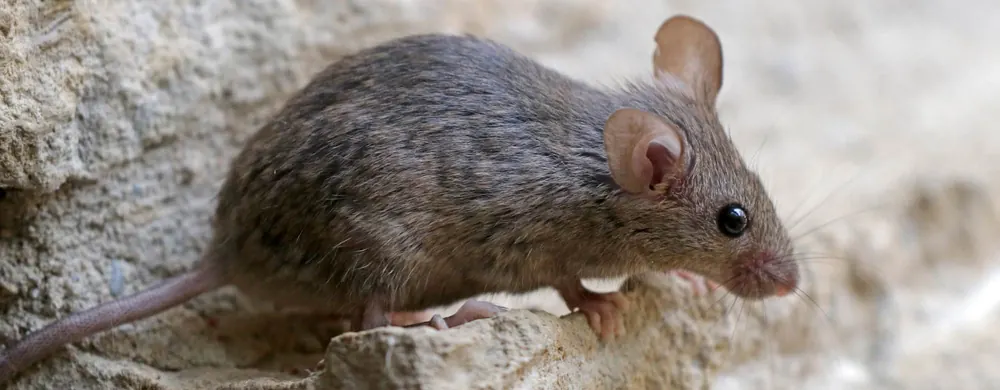
Mice are a small animal with a big talent for getting in. If you are finding rice-sized droppings in a Jeffreys Bay kitchen drawer or garage, there is almost certainly a gap somewhere about the width of a pencil that they are using every night. Remove the mice without finding that gap and new ones move in within weeks. We do both.
Where J-Bay mice come from
A lot of homes in and around town sit next to open ground: fynbos, dune scrub, vacant plots and the bush along the town's edges. Wild mice and house mice both live out there, and they shift towards buildings when food is easy or the weather turns cold and wet. The house on the edge of the bush tends to get them first.
The way people use their homes here matters too. Beach houses often have big garages stacked with surfboards, camping gear, spare bedding and boxes that are only opened once a year. That is perfect nesting material, undisturbed for months, with a pantry a few metres away.
Mouse or rat?
The droppings tell you. Mouse droppings are small and pointed, about the size of a grain of rice, and scattered widely because mice nibble as they go. Rat droppings are much bigger, roughly raisin-sized. Mice make light pattering sounds; rats are heavy and noisy. If the droppings are big, see our page on rat removal in Jeffreys Bay instead.
Signs you have mice
- Small droppings in drawers, on shelves and along the back of kitchen counters
- Nibbled corners on cereal boxes, bread bags and bags of dog food
- Shredded paper, foam or fabric tucked into a corner, box or appliance
- A faint, stale smell in cupboards or the garage
- Light scratching inside walls or under kitchen units at night
- Chewed sleeping bags, cushions or tent fabric in storage
How we get rid of them
- Find the runways and the gap. Mice travel along walls and edges. We follow droppings and rub marks to where they enter, which is often under a garage door, around a pipe behind the stove or through a gap where a cable comes in.
- Set stations and traps. Lockable, tamper-resistant bait stations along outside walls and in the garage, and traps or tracking powder inside where they are the better choice. Children and pets cannot reach the bait.
- Proofing advice. Brush strips on garage doors, steel wool and sealant around pipes, mesh on vents. We show you exactly where.
- Check back. We return to inspect the stations and confirm the activity has stopped.
Holiday homes and guest units
For houses that are used only part of the year, the best plan is to have stations in place permanently around the outside and in the garage, checked on a schedule. Mice that arrive while nobody is home meet the bait before they reach the pantry. If you let the house out, it saves you from a guest opening a drawer full of droppings. It also fits neatly with the other seasonal checks on our pest control list for J-Bay homes, such as wasp nests under the eaves and fishmoths in the linen.
A local tip
Pack stored bedding, cushions and camping gear into sealed plastic crates rather than cardboard boxes or open shelves. Mice chew straight through cardboard, and a box of sleeping bags in a J-Bay garage is one of the most common nests we find. Crates also keep out fishmoths and damp.
The mistake people make
Putting out one trap, catching a mouse and calling it solved. Where there is one mouse, there are usually several, and they breed quickly. If you keep finding fresh droppings after a catch, the problem is still there. The other common error is baiting with loose pellets in cupboards, where pets and children can find them.
What does mouse control cost?
A single mouse in an otherwise sealed kitchen can often be dealt with by a couple of good snap traps baited with peanut butter, and we will say so if that is all you need. Costs go up with the size of the property, how many mice are active, how much proofing is needed and whether you want ongoing station checks for a holiday home or business. We quote after we have seen it.
Mice are part of a wider rodent picture; our J-Bay rodent control page covers rats and mice together. For background, read our in-depth mouse control guide, compare with mice in Walmer homes, or see our main Port Elizabeth mouse control page.
Call 087 012 5550, or WhatsApp us a photo of the droppings and we will confirm what you have.
Questions we get asked
How small a gap can a mouse get through?
About the width of a pencil. If the head fits, the body follows, so even small gaps under doors and around pipes matter.
Why do I only get mice in winter?
Cold, wet weather pushes mice from the bush and open ground into buildings looking for shelter and food. Sealing gaps before winter helps a lot.
Are mice dangerous?
They contaminate food and surfaces with droppings and urine and chew wiring. Throw away any food they have touched and clean affected areas with disinfectant.
Can I use a cat instead?
A cat may catch a few, but it will not find the gap they are coming through. It works best alongside proofing.
Do ultrasonic repellers work against mice?
In our experience, not reliably. Mice often get used to them. Sealing gaps and using stations or traps works better.