
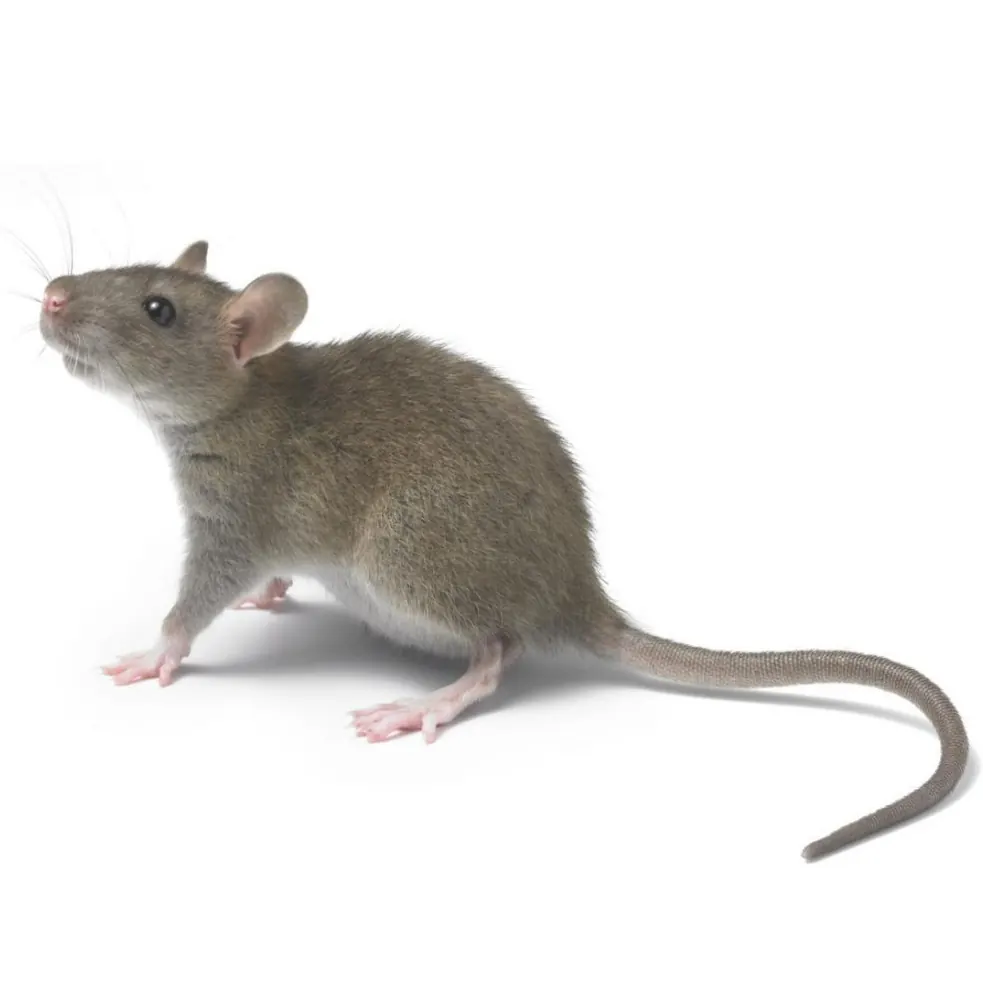
Rodent control in Port Elizabeth comes down to three things: knowing whether you have rats or mice, finding how they're getting in and what's feeding them, and choosing a treatment that works without putting children, pets or wildlife at risk. Get any one of those wrong and the problem comes back. We've been doing this across the Bay for 25 years, in houses, restaurants, warehouses and industrial plants.
Rats or mice? It matters
Rats and mice behave very differently, and the treatment changes with them.
- Roof rats climb. They use trees, fences and cables to reach the roof and live in ceilings.
- Norway rats burrow. They live low down, along drains, under paving, in yards and around refuse areas.
- House mice are small and curious. They squeeze through very small gaps and live close to food, inside cupboards, behind kitchen units and in storerooms.
Rats are cautious of new objects and can take time to accept a bait station; mice investigate almost anything. That affects where we place stations and traps and how many we use. Our dedicated pages go into more depth on rat removal in Port Elizabeth and getting rid of mice.
Why rodents thrive in Nelson Mandela Bay
Our climate doesn't give rodents a hard winter, so they breed for more of the year than they would inland. The harbour, rail lines, industrial zones and old stormwater systems give Norway rats long, sheltered routes across the city. The older suburbs have mature trees, creepers and fruit trees that roof rats use as ladders and larders.
And then there's the wind. Strong gusts loosen tiles, ridge capping and roof sheeting over time, and every lifted edge is a doorway into the ceiling. After a big storm it's worth having a look at your roof line, because rodents certainly will.
Rodents in businesses and industry
For a business, rodents are more than a nuisance. They contaminate stock with droppings and urine, chew through packaging, cables and insulation, and can cause a food business to fail an audit. Warehouses with roller doors that stay open all day, canteens, packhouses and factories with pallets stacked against walls are all prime rodent habitat.
Businesses do best on a scheduled monitoring contract. We set out numbered, lockable, tamper-resistant bait stations around the outside of the building and traps or monitoring points inside, map them, and check them on a regular schedule. Each visit is recorded, so you can show an auditor what was found and what was done. If activity spikes, we know where and can act on it.
Signs of rodents
- Droppings along walls, on shelves or in the roof space
- Gnaw marks on doors, skirtings, packaging, irrigation pipes or cables
- Dark, greasy smears along beams, pipes and the edges of walls where rodents run repeatedly
- Nests of shredded paper, cloth or insulation in quiet corners
- Scratching or scurrying in the ceiling or walls at night
- Holes in the ground next to walls, under paving or beneath sheds
- Pets fixating on one cupboard, wall or patch of ceiling
Health and damage risks
Rats and mice carry disease in their droppings and urine and contaminate whatever they walk over, including food, kitchen counters and stored goods. Their teeth never stop growing, so they gnaw constantly, and cables are a favourite. Chewed wiring in a ceiling is a genuine fire risk, which is reason enough not to leave a roof rat problem for later.
How we treat a rodent problem
- Inspection. Roof spaces, wall voids, kitchens, storerooms, garages, drains and the outside of the building. We look for droppings, rub marks, gnawing, nests, burrows and, above all, entry points.
- Treatment. Lockable bait stations placed along the routes rodents actually use, traps where bait isn't suitable, and tracking powder in voids where it helps. Everything is placed where children, pets and birds can't reach it.
- Proofing. We show you exactly which gaps need closing: under doors, around pipes, broken air bricks, gaps at the eaves and lifted roof sheeting. Some you can do yourself; some need a builder or roofer.
- Follow-up. We come back to check stations, replace bait and confirm activity has stopped.
The thing people get wrong
Leaving the food source in place. You can bait all you like, but if there's a bag of bird seed in the garage, dog pellets in an open bin or a compost heap full of kitchen scraps, rodents will keep coming because that's where dinner is. Rodents are also less likely to take bait when there's plenty of better food about. Clear the food and the bait does its work.
A prevention tip that suits PE
Look at the trees. In the leafy suburbs, roof rats use overhanging branches like a bridge onto the roof. Cutting branches back so they're at least an arm's length or more from the roof line removes one of their favourite routes. Do it at the same time as checking for wind-lifted tiles.
What does rodent control cost?
For homes, it depends on how many rodents, which species, how big the property is and how much proofing needs doing. A few mice in a kitchen is quick. Rats spread through a large roof and garden takes longer. For businesses, the price depends on the size of the site, the number of stations and how often we visit. We'll quote once we've seen the premises.
Rodents tend to move indoors as the weather cools, which we explain in why rodents come inside in winter. For the biology and habits of rats in depth, read our rat guide. And if you're in the industrial heartland, we have a page for rodent control in Kariega.
Call 087 012 5550 to book an inspection, or WhatsApp us a photo of the droppings and we'll tell you what you're dealing with.
Questions we get asked
Can you tell rats from mice by the droppings?
Yes. Mouse droppings are about the size of a grain of rice; rat droppings are the size of a raisin or bigger. A photo on WhatsApp is usually enough for us to say which.
Do you put poison in the ceiling?
Not loose. Bait goes into lockable, tamper-resistant stations placed for a reason, and we use traps where bait isn't suitable.
What's included in a rodent monitoring contract?
Mapped, lockable bait stations and monitoring points, regular scheduled inspections, bait replacement and a written record of each visit for your files.
Will rodents smell after they die?
It can happen if one dies in a wall or ceiling void. Placing stations outside along rodent routes, and using traps indoors, helps reduce that risk.
Do you proof the building as well?
We identify every entry point and tell you how to close it. Small gaps you can often fix yourself; bigger roof or structural gaps may need a builder or roofer.
Are bait stations safe near my dogs?
Yes. Lockable stations are designed so dogs, cats and children can't get to the bait inside.