
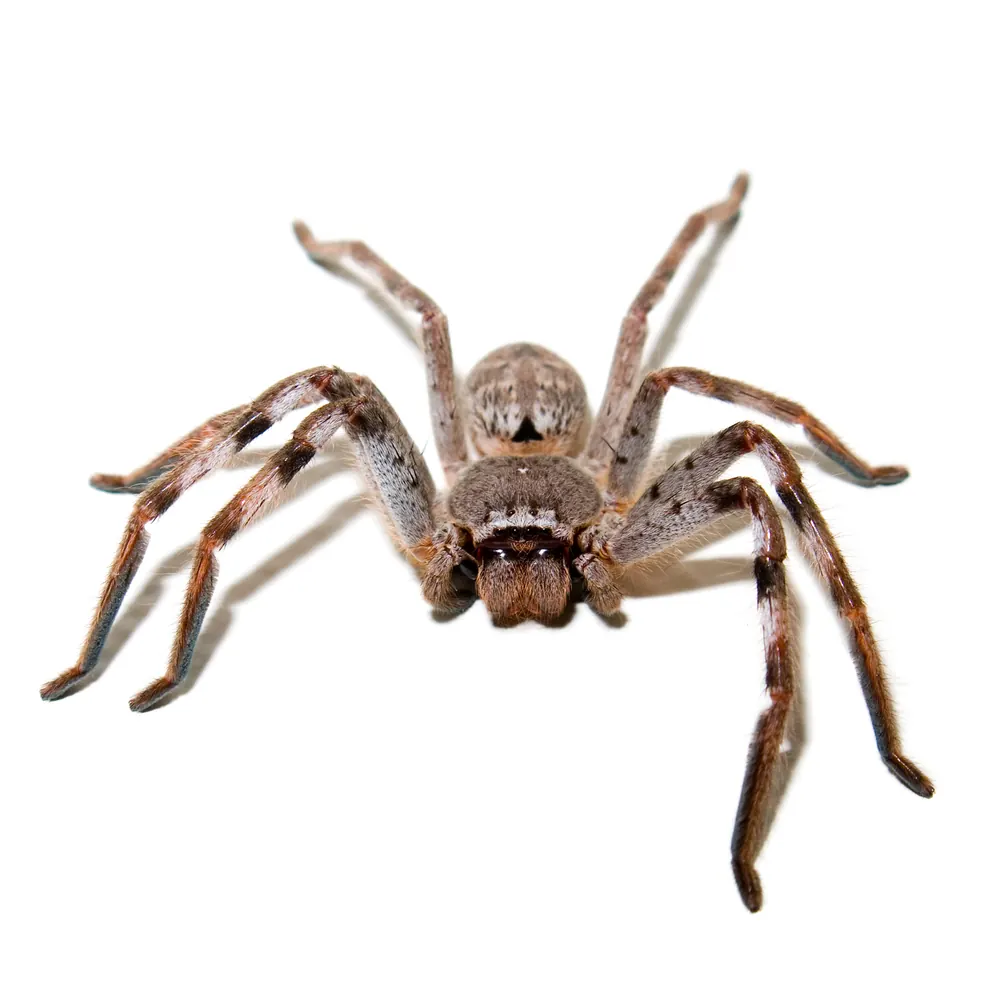
Not every spider needs treating. A rain spider on the wall is big and alarming, but it's a hunter that eats other insects and rarely bites. What makes spiders a problem is numbers, the wrong species in the wrong place, or webs taking over a garage, stoep or warehouse. Our approach in Kariega is to work out which spiders you have, why they're there, and then treat the places they live and the insects they feed on.
Why spiders gather around Kariega properties
Spiders follow food. Kariega's warm evenings bring out moths, beetles and flies, and outdoor lights draw them in. Security lights on houses and the floodlights on factories, warehouses and loading bays become feeding stations, and spiders set up around them. If you've noticed thick webs on the outside walls of a warehouse or along the canopy of a loading bay, that's usually why.
The town's drier climate also suits certain spiders that like sheltered, dry places: garages, outbuildings, garden sheds, meter boxes, stacked bricks, outdoor furniture and the gaps under steps. Older homes with outbuildings, back rooms and storerooms have plenty of those.
The spiders worth knowing
Rain spiders
Large, brown and fast, they often come inside before rain or when it's very hot. Startling, but not considered dangerous. Most people want them moved, not killed, and that's fine.
Sac spiders
Small, pale yellowish spiders that hunt at night and shelter in silk sacs in the corners of ceilings, curtains and behind pictures. They're a common cause of spider bites in homes, which can be painful and slow to heal. If you're finding them in bedrooms, treatment makes sense.
Button spiders
Shiny, round-bodied spiders with a messy web low down in sheltered places such as under garden furniture, in old tyres, behind pot plants, in meter boxes and inside outdoor storerooms. The black button spider's bite needs medical attention. They're one of the spiders we treat for without hesitation, especially where children play.
Web builders
Various web-building spiders cover eaves, window frames and the high steel structure inside warehouses. They aren't dangerous, but the webs collect dust and look neglected, and in food or clean production areas they're a hygiene concern.
How we treat spiders
- Identify. We look at the spiders, the webs and where they're concentrated.
- Remove webs and egg sacs where they can be reached, so treatment reaches the spiders and the next generation is cut down.
- Treat the harbourage. An odourless, non-staining residual spray goes onto eaves, window frames, door frames, the base of walls, garages and outbuildings, and the spots where button spiders shelter.
- Reduce the food supply. Where insects around lights are feeding the spiders, we treat for those too and advise on lighting.
You can stay home. Keep children and pets off sprayed areas until dry.
Warehouses and factories
High racking, roof trusses and roller door frames give spiders a lot of undisturbed space, and in warehouses supplying the automotive industry, clean premises and tidy stock matter. We include spider treatment in scheduled services, focusing on doors, light fittings, loading areas and walls, and use the visits to spot new activity early.
A Kariega tip
Swap white outdoor bulbs for yellow or warm-coloured ones near doors and windows, or move lights away from the house and point them back towards it. Fewer insects at the door means fewer spiders setting up there. It's one of the cheapest changes you can make, and in Kariega's long summer evenings it makes a visible difference.
What gets people bitten
Putting a hand into places without looking. Most bites from button spiders happen when someone reaches under garden furniture, lifts a brick, pulls on a pair of gardening gloves or picks up a hosepipe that's been lying in a corner. Wear gloves for garden and garage work, and give them a shake first.
What does it cost?
The size of the house, the number of outbuildings, the height and size of a warehouse and how many spiders there are all come into it. If you have a few rain spiders, you may not need us at all; a glass and a piece of card will do. Button spiders around where children play, sac spiders in the bedrooms or webs taking over a building are worth a proper treatment. We'll quote after an inspection.
Spiders and scorpions share many hiding places in Kariega; see our page on dealing with scorpions in Kariega, or our overview of pests in Kariega. For more on identifying South African spiders, read the spider guide. We also treat spiders around Port Elizabeth and spider problems in Despatch.
Call 087 012 5550, or WhatsApp us a photo of the spider and we'll tell you whether it needs treating.
Questions we get asked
Are rain spiders dangerous?
No. They look intimidating and move fast, but they're not considered dangerous. Most people just want them moved outside.
Which spiders in Kariega should I worry about?
Button spiders and sac spiders are the main ones. Button spider bites need medical attention, and sac spider bites can be painful and slow to heal.
Why are there so many spiders around my outside lights?
Lights attract insects, and spiders follow the food. Changing bulbs or moving lights reduces both.
Can you remove webs from a warehouse roof?
We treat and remove webs where they can be safely reached, including around doors, racking and light fittings.
How long does a spider treatment last?
A residual treatment keeps working for some weeks, depending on weather and how exposed the surfaces are. Outdoor treatments wear off faster in hot sun.
Should I kill every spider I see?
No. Many spiders help control other insects. It's worth treating dangerous species, or when numbers get out of hand.