
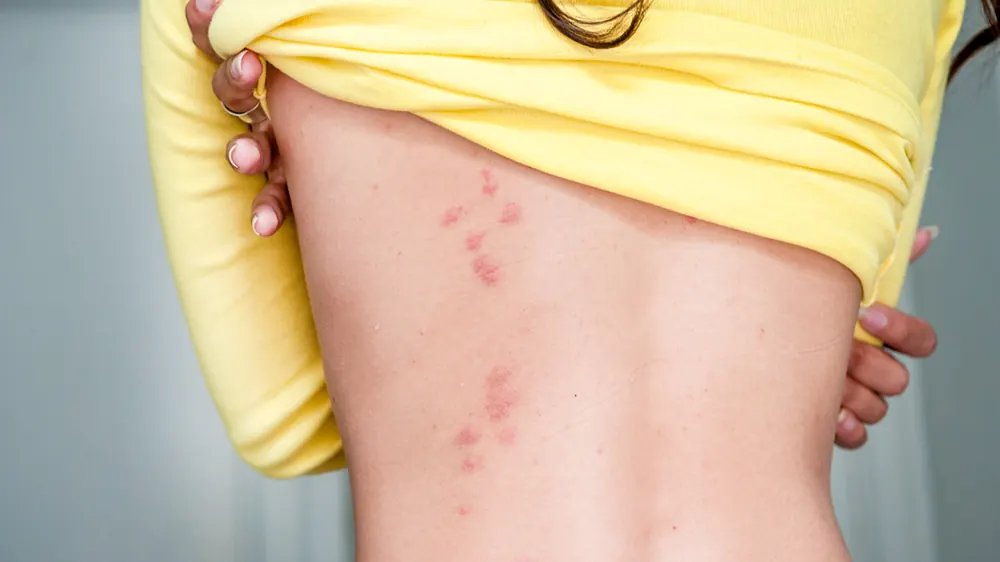
If you or your family are waking up with itchy bites, the first job is not to treat, it's to identify. Bed bugs, fleas, bird mites and mosquitoes all bite people in Port Elizabeth homes, and their bites can look almost the same. But a flea treatment won't touch bed bugs, and bed bug work is wasted if the real cause is a bird's nest in the roof. We spend time on the detective work because it decides everything else.
Who's biting? A quick guide
Bed bugs
Small, flat, reddish-brown insects that hide in mattress seams, bed frames, headboards and furniture near the bed. Bites often appear in a line or cluster on skin that was exposed while you slept: arms, neck, shoulders. You may see tiny dark spots on sheets or the mattress edge. They come in with luggage, second-hand furniture and visitors.
Fleas
Fleas mostly bite around the ankles and lower legs, because they jump up from the floor. They're common where there are cats or dogs, but they also wait in an empty house. Moving into a home where the previous owners had pets, then getting bitten a week later, is a classic flea story.
Bird mites
Tiny mites, barely visible, that live in birds' nests in roofs, gutters, eaves and air conditioning units. When the chicks leave or the nest is abandoned, the mites go looking for a new host and come down through ceilings and light fittings. Bites tend to be all over, and people sometimes feel something crawling on their skin. Find a nest above the bedroom and you've usually found the cause.
Mosquitoes
The easy one, usually, because you hear them. Bites are scattered on exposed skin and get worse in summer and after rain.
Why PE sees all four
The mild coastal climate keeps fleas and bed bugs active all year. The wind lifts roof tiles and opens gaps at the eaves, which lets pigeons, mynas and sparrows nest in roof spaces, and that brings bird mites. A city with a university, student digs, guesthouses and a lot of people moving house means plenty of chances for bed bugs to hitch a ride. Rivers, estuaries and blocked gutters give mosquitoes their breeding water.
How we work out the cause
We ask where and when the bites happen. Only at night in bed? Only in one room? Only on the legs? Do you have pets? Has anyone travelled or bought second-hand furniture? Is there a bird nest near the roof? Then we inspect: mattress seams and bed frames, carpets and pet bedding, ceilings, eaves and gutters.
Once we know, we treat with the method that suits the pest: careful treatment of beds, furniture and cracks for bed bugs, treatment of floors and pet areas for fleas, and targeted treatment and removal of nests for bird mites, along with the rooms below. Bed bugs and fleas usually need a follow-up visit because their eggs survive the first round.
For normal treatments you don't have to move out. Keep children and pets off treated surfaces until they're dry.
Clues that point one way or the other
- Bites only after a night in bed, in rows on the arms or shoulders: think bed bugs.
- Bites around the ankles, worse after walking on carpet or sitting on the couch: think fleas.
- Bites in one bedroom only, starting soon after birds stopped flying in and out of the roof: think bird mites.
- Bites on exposed skin outdoors or with a window open, and a whine in the dark: mosquitoes.
None of these is certain on its own, but together they narrow it down fast.
Guesthouses, rentals and student digs
Accommodation is where biting insects cause the biggest headaches. One guest arrives with bed bugs in a suitcase, and within a few weeks several rooms are affected. A rental changes tenants and the new family moves in with fleas left behind by the last one's pets. If you run accommodation, treating fast and treating the neighbouring rooms too stops a single complaint turning into a closed wing. We can work around bookings.
The mistake that makes it worse
Treating for the wrong insect. We see people throw out mattresses for what turns out to be bird mites, or flea bomb a house that actually has bed bugs. Another one is sleeping in a different room to escape the bites. With bed bugs, that just spreads them to a second bed.
One tip that really helps
If you suspect bed bugs, check the seams and corners of the mattress and the joints of the bed frame with a torch before anything else. If you suspect bird mites, go outside and look at the eaves and roof line above the bedroom for nesting material or birds flying in and out. Five minutes of looking can save a lot of guessing.
What does it cost?
It depends on which insect it is and how widespread it is. Fleas in one room with a pet is a smaller job than bed bugs through a guesthouse. Bird mites need the nest dealt with as well as the rooms. Most bed bug and flea jobs need a follow-up, which is built into the quote. We'll price it once we know what we're treating.
For more detail on each, see our bed bug treatment page, flea control in PE homes and bird mite removal. Our guide to biting insects goes deeper into identification. Living near the beachfront? There's a page for biting insects in Summerstrand too.
Call 087 012 5550, or WhatsApp us a photo of the bites and anything you've found in the bed or on the floor.
Questions we get asked
Can you tell what's biting me from the bites alone?
Not reliably. Bites from bed bugs, fleas and bird mites can look very similar. Where and when they happen, plus an inspection, tells us much more.
Do I need to throw my mattress away?
Usually not. Mattresses with bed bugs can normally be treated. And if it turns out to be bird mites or fleas, the mattress isn't the problem at all.
Why am I getting bitten in a house with no pets?
Fleas can survive in an empty house from previous pets, and bird mites come from nests in the roof. Bed bugs don't need pets at all.
Are bird mite bites dangerous?
They're itchy and unpleasant but bird mites don't live on people. Once the nest is treated and removed, the bites stop.
Should I see a doctor about the bites?
If the bites become infected, swollen or you have a reaction, yes. We deal with the insects; a doctor or pharmacist can help with the skin.