
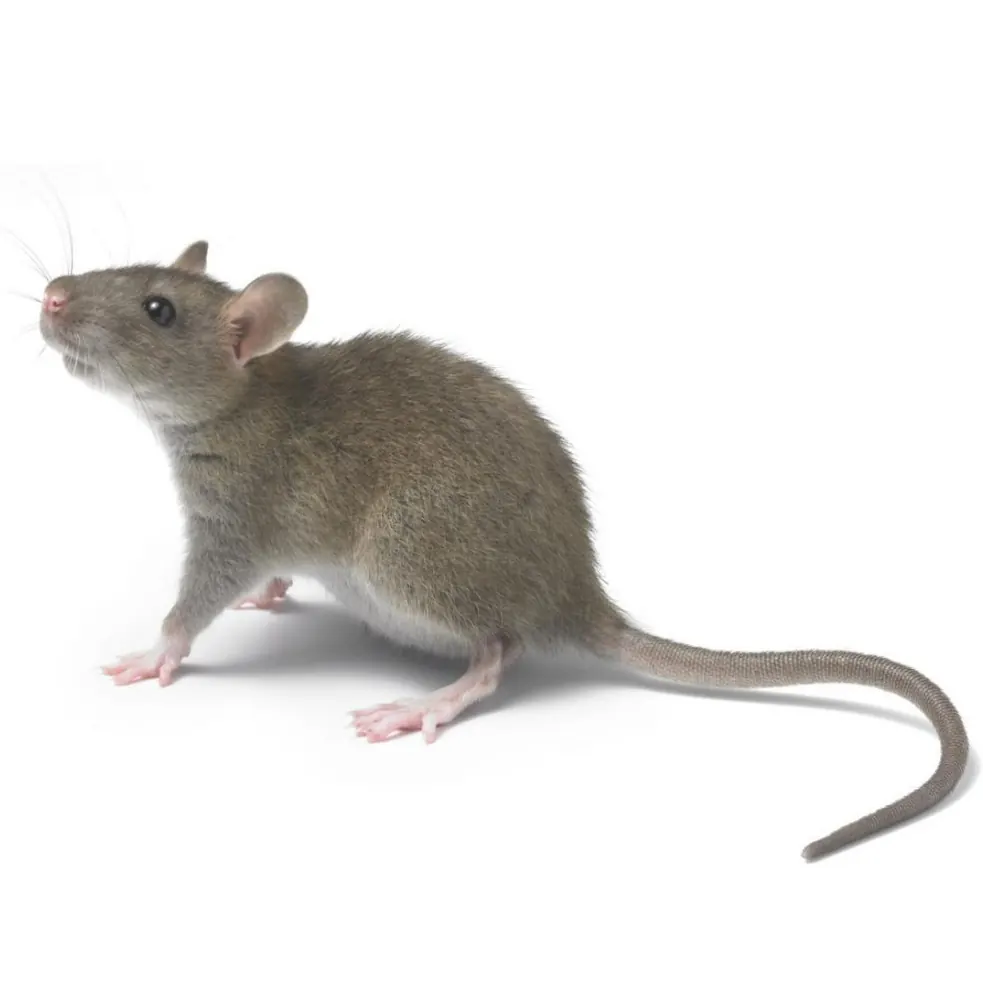
Rodents in Jeffreys Bay are a year-round problem with a seasonal twist. In the quiet months they move into roofs, garages and storerooms nobody is checking. In summer, the food supply explodes: full bins, braai scraps, pet food on the stoep and busy commercial kitchens. Getting rid of them means dealing with both the rodents that are already inside and the reasons they came. That is how we approach every rodent job here, from a single cottage to a shopping centre.
Rats or mice?
The answer changes almost everything about the treatment, so it is worth getting right.
- Roof rats climb. They use trees, fences and wires to reach the roof and are the noisy ones you hear above the ceiling at night. Droppings are about the size of a raisin.
- Norway rats are bigger and stay low, burrowing under sheds, paving and bin areas and following drains. They are more common around restaurants, shops and storage yards.
- House mice are small enough to get through a gap the width of a pencil. Droppings are like grains of rice. They are often the problem in garages, kitchens and houses on the edge of open bush.
If you are not sure, send us a photo of the droppings on WhatsApp. For a species-by-species look, see our pages on rats in Jeffreys Bay and getting mice out of a J-Bay house.
What makes J-Bay attractive to rodents
Houses that stand empty
A roof space that nobody disturbs for months is ideal nesting ground. By the time the owners return, the rodents have chewed insulation, wiring and stored goods, and may have bred more than once.
Coastal wind and loose roofs
Over the years, strong gusts lift ridge tiles, flashing and roof sheeting. Each lifted edge is a gap at roof level, which is exactly where roof rats get in.
Bush and dune margins
Properties that back onto fynbos or dune vegetation share a boundary with wild rodents. Mice in particular move from open ground into garages and homes when the weather turns or when food is easy to find.
The summer food surge
Holiday crowds mean more waste. Bins left open overnight, fish scraps, compost heaps and bird seed all feed rodents, and a well-fed population grows quickly. Rodents often arrive alongside other pests, so it is worth reading our general pest control page for Jeffreys Bay too.
Signs to watch for
- Scratching, scurrying or gnawing sounds in the ceiling or walls after dark
- Droppings along skirting boards, in cupboards or across ceiling boards
- Shredded paper, insulation or fabric gathered into a nest
- Chewed cables, irrigation pipes or plastic containers
- Burrow holes at the base of walls or under paving
- A musty smell in a cupboard or storeroom
How we deal with rodents
- A full inspection of roof space, eaves, garage, kitchen, outbuildings and the garden boundary to find droppings, runways, nests and entry points.
- Lockable, tamper-resistant bait stations outside, placed along the routes rodents actually use, so children, pets and wildlife cannot reach the bait.
- Traps or tracking powder indoors where they suit the situation, such as a ceiling void or a food store.
- Proofing advice covering every gap we find, from a loose tile to a missing air-brick cover.
- Follow-up visits to check stations and confirm activity has stopped.
Shops, restaurants and holiday complexes
For businesses, rodent control works best as a scheduled monitoring contract rather than a call-out when someone spots a rat. We place numbered stations around the premises, check them on each visit and keep a record you can show to an inspector or head office. Busy summer trading is a good reason to have the schedule in place before December, not after.
One local tip
Before you lock up a holiday house for winter, take every bit of food out of the pantry, including pet food, bird seed and the open box of rusks. Then have someone check the roofline once after the first big winter storm. A tile lifted in May is a rat's front door by June.
The mistake that causes the worst smell
Scattering loose poison in the roof before you leave. The rodents eat it, die inside walls and ceilings, and the house greets you with weeks of smell and a fly problem. Loose bait is also a danger to dogs, cats and the owls that hunt rodents along the coast.
What does rodent control cost?
It depends on the size of the property, how many rodents there are, whether we are dealing with rats or mice, and how much proofing is needed. A few mice in a garage is a small job; a restaurant with rats under the bin yard, or a complex of holiday units, needs ongoing monitoring. A single mouse can sometimes be dealt with using a good snap trap, and we will tell you if that is all you need. We quote once we have seen the property. Compare our approach on the city side through rodent control in Walmer or our main Port Elizabeth rodent control page.
Call 087 012 5550 to book an inspection, or WhatsApp us a photo of the droppings and we will tell you what you are dealing with.
Questions we get asked
Can you set up rodent control while my holiday house is empty?
Yes. Lockable bait stations can be checked on a schedule while you are away, as long as someone can give us access when needed.
How do rats get into a roof with no trees nearby?
They climb walls, gutters, downpipes and wires, and get in through lifted tiles, gaps at the eaves or openings around pipes and cables.
Do you provide records for food businesses?
Yes. Businesses on a monitoring contract get a record of every visit and station check.
Will the bait stations harm owls or other wildlife?
The stations are locked and tamper-resistant, so birds and animals cannot reach the bait. We also never scatter loose poison.
Should I trap or poison rodents myself?
For one mouse, a snap trap is fine. For rats in the roof or repeated sightings, you need to find the entry points, and that is where an inspection helps.