
Most of the spiders you'll find in a Port Elizabeth home won't hurt you. But a few local species can give a nasty bite, and nobody wants a rain spider the size of a hand on the bedroom wall every night. Effective spider control is about two things: reducing the places spiders hide and the insects they eat, and treating the areas where they live and travel. Spraying the odd spider you see does almost nothing on its own. Here's how we approach it.
Spiders you're likely to meet in PE
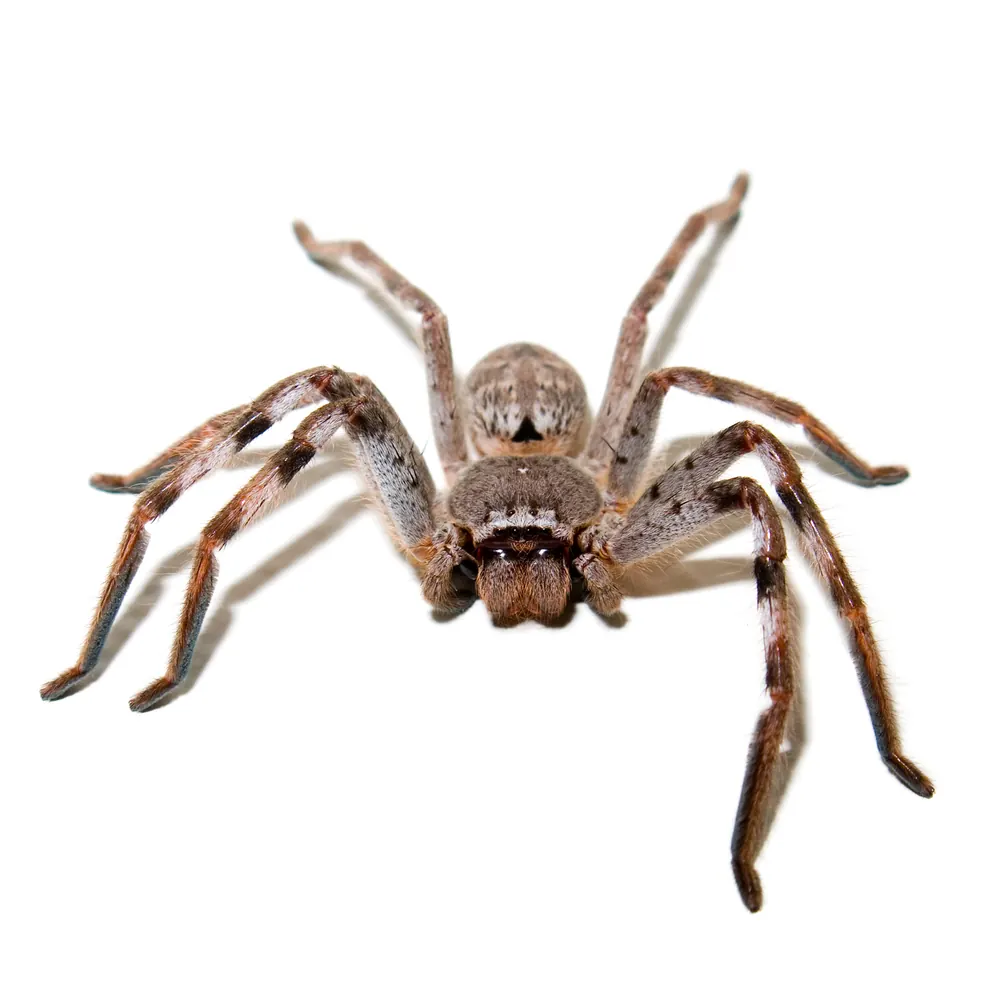
Rain spiders
Large, brown, long-legged hunting spiders. They often come indoors in warmer, humid weather, and the females build a big, papery egg sac in shrubs or under eaves. They're alarming to look at and can bite if handled, but they're not considered dangerous. Most people want them out of the house anyway.
Button spiders
South Africa's widow spiders. The brown button spider is common around homes: under garden furniture, in pot plants, in meter boxes, in gutters and around window frames. Its round egg sacs have little spikes, like a tiny ball of cotton with points. The black button spider is less often found right next to houses but has a more serious bite. Button spider bites need medical attention, especially for children and older people.
Sac spiders
Small, pale, yellowish spiders that hunt at night and rest during the day in a silk sac, often in folded curtains, behind pictures, in the corner of the ceiling or in clothes left lying around. Their bite can cause a sore that heals slowly, and many unexplained bites in the night turn out to be sac spiders.
Daddy long-legs and other web-builders
Thin-legged spiders that hang messy webs in corners, garages and ceilings. Harmless, but they make a place look neglected.
Why spiders are common in the Bay
Spiders follow food. Our mild, humid climate keeps insects active almost all year, so spiders always have something to eat. Gardens with dense shrubs, creepers on walls, wood piles and leaf litter give them shelter. Homes near open veld, coastal bush or nature reserves see more spiders, simply because there are more of them nearby. Outside lights that draw moths and flies to doors and windows are like a dinner bell for spiders.
Signs of a spider problem
- Webs re-appearing in the same corners within days of being cleared
- Egg sacs under eaves, in window frames, in the garage or under garden furniture
- Spiders appearing indoors every evening, often near lights, doors and windows
- Bites that appear overnight with no other explanation
- A lot of insects around outside lights, which feeds spiders
How we treat spiders
- Inspection. Eaves, window frames, garages, outbuildings, garden furniture, meter boxes, pot plants, gutters, and indoor corners, curtains and cupboards.
- Removal of webs and egg sacs. Where we can reach them safely, we remove webs and egg sacs so the next generation doesn't hatch.
- Residual treatment. An odourless, non-staining residual spray around eaves, window and door frames, skirtings, garages and other places spiders hide and walk.
- Treating the food source. If insects are drawing spiders in, we look at what they are and how to reduce them.
- Advice. What to clear away and change in the garden and around the house to make it less attractive.
You don't need to leave the house. Keep children and pets off treated surfaces until they're dry.
What people often get wrong
Treating only inside. Most spiders come from the garden and the outside of the house, and the indoor ones are often wanderers that came in at night. A barrier treatment around the outside, together with clearing the clutter they hide in, makes a far bigger difference than spraying a few corners in the lounge.
A local tip
Swap the bulbs in outside lights near doors and windows for yellow or warm-coloured insect-repellent bulbs, or move lights so they shine towards the house from a distance rather than sit right above the door. Fewer insects at the door means fewer spiders hunting there and fewer coming inside. This makes a big difference in coastal suburbs next to bush.
Spiders and scorpions often go together
The same conditions that suit spiders, such as wood piles, stone walls, garden rubble and bush near the house, also suit scorpions. If you're seeing both, it's worth treating them together and clearing the same hiding places. See our page on scorpion control in PE.
What does spider control cost?
The price depends on the size of the house, how many outbuildings there are and how much of the garden and exterior needs treatment. A regular suburban home with spiders under the eaves is a fairly simple job. A large property next to bush, with garages, sheds and outbuildings, takes longer. Some people choose a seasonal treatment each year. If you're only seeing an occasional rain spider, it may be simpler to catch it under a glass and release it outside.
For identification and spider behaviour in more detail, see our spider guide. We also have pages on spiders in Walmer's leafy gardens and spider treatments in Jeffreys Bay.
Call 087 012 5550, or WhatsApp us a photo of the spider and we'll tell you what it is and whether it's worth worrying about.
Questions we get asked
Are rain spiders dangerous?
No, they're not considered dangerous. They're large and can bite if handled roughly, but the bite isn't a medical concern for most people.
How do I recognise a button spider?
Button spiders have round, shiny bodies. The brown button often has an orange or reddish hourglass mark underneath, and its egg sacs are round and spiky.
What should I do if I'm bitten by a button spider?
Seek medical help, especially for children and older people. Take a photo of the spider if you can do so safely.
Why do spiders keep coming back after spraying?
Because their food and shelter are still there. Reducing insects at lights and clearing clutter near the house matters as much as the treatment.
Can you treat outbuildings and garages?
Yes. Garages, sheds, outbuildings and garden structures are often where most spiders live, so we include them.