
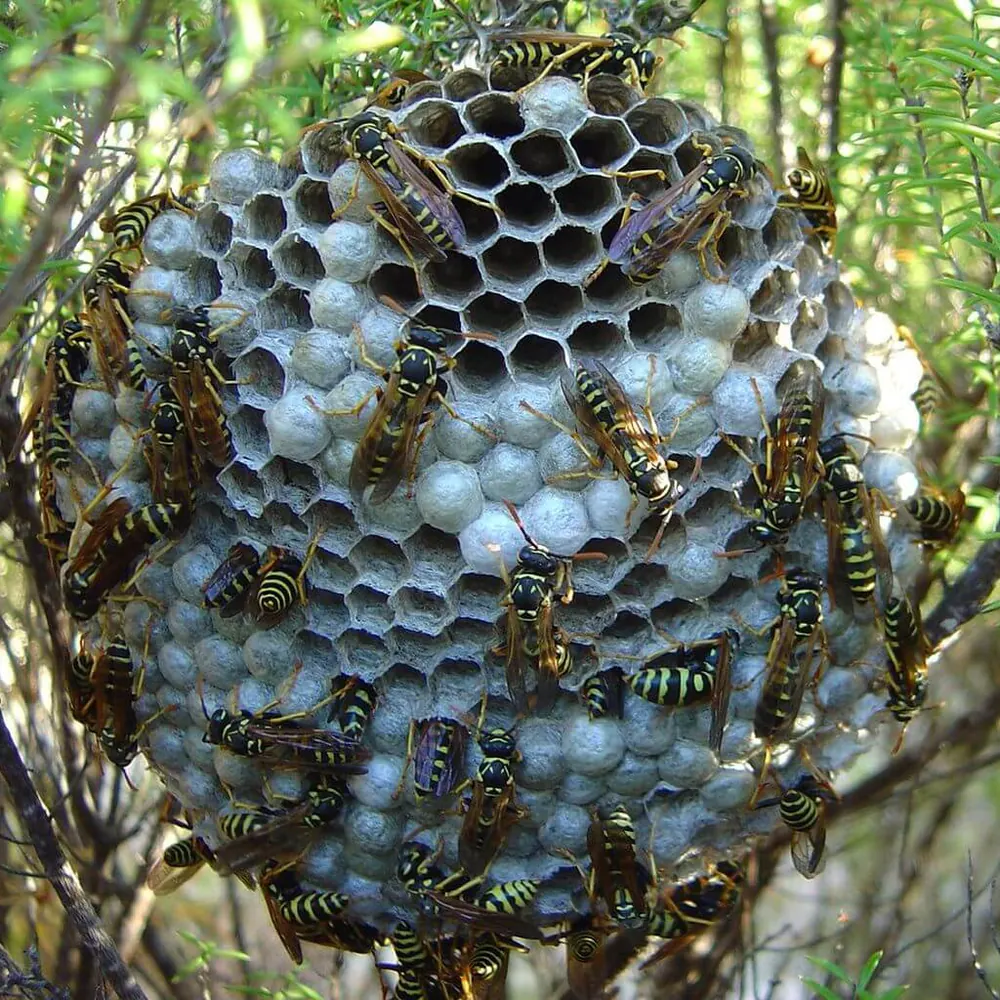
The best way to deal with wasps around your Port Elizabeth home is to treat the nest directly, ideally when the wasps are calm in the early morning or evening, and then remove it. Swatting individual wasps or spraying them in the air just makes them more aggressive and does nothing about the nest. If someone in the house is allergic to stings, don't try it yourself at all. That's what we're here for.
The wasps you're likely to see
Paper wasps
The most common nuisance wasp around homes in the Bay. Slim, with long legs that dangle when they fly, usually brown, yellow or reddish. They build open, umbrella-shaped nests of grey paper with exposed cells, hanging from a single stalk. Favourite spots are under eaves, under gutters, inside garden sheds, behind shutters, in carports, under window sills and in dense shrubs. A single nest can grow quickly over summer.
Mud daubers
Solitary wasps that build small clay cells or tubes on walls, ceilings, in garages and on window frames. They're rarely aggressive and seldom sting, and many people leave them alone. If the mud nests are a nuisance, they can be scraped off once they're empty.
Bees are different
Honeybees are important pollinators, and a swarm or hive in a wall, roof or meter box is a different situation from a wasp nest. Tell us what you're seeing when you call, or send a photo, and we'll talk you through the options.
Why wasps are active here for so long
Wasp numbers build up through spring and peak in late summer, when nests are at their biggest and the wasps start looking for sugary food around bins, fruit trees and outdoor meals. Port Elizabeth's mild climate means wasps can stay active for a long season, and sheltered eaves, carports and outbuildings give paper wasps protected spots to build out of the wind. Gardens with fruit trees, water features and plenty of caterpillars keep them fed.
Signs of a wasp nest nearby
- Wasps flying repeatedly to and from the same spot, such as under the eaves or into a shrub
- Wasps around a door or window, or coming into the house
- Grey, papery, comb-like structures hanging under ledges or in sheds
- Wasps chewing on wooden fences, decks or furniture to collect nest material
- More wasps than usual around the bins, the pool or outdoor eating areas
How we deal with wasp nests
- Find the nest. Often it's obvious; sometimes we need to watch the flight path to track it down to a gap in a wall or a dense hedge.
- Treat the nest directly. We apply a targeted treatment to the nest itself, usually at a time when most of the wasps are home and calmer.
- Remove it. Once the wasps are dead, we take down the nest where it's reachable, so it can't be re-used and doesn't attract other wasps.
- Check for others. Where there's one paper wasp nest, there are often several. We look around the eaves, sheds and garden while we're there.
Stings and allergies
For most people a wasp sting is painful, swollen and itchy for a day or two. For someone with an allergy it can be dangerous, and signs such as swelling of the face or throat, difficulty breathing or dizziness need urgent medical help. If anyone in your household is allergic, treat a nest near the house as a priority and keep them well away while it's dealt with.
The mistake that gets people stung
Knocking a nest down with a broom or hosing it during the day. All that does is release a cloud of angry wasps, and the survivors often rebuild nearby. Spraying a nest with a household fly spray from close up has the same effect. If you must deal with a tiny, new nest yourself, do it after dark, wear protective clothing and keep a clear escape route. For anything bigger, or anyone allergic, call us.
Prevention for Port Elizabeth homes
In early spring, take a walk around the house and look under the eaves, gutters, window sills and in the shed and carport. Paper wasp nests start out the size of a thumbnail, with only one or two wasps. Knocking off a tiny nest at that stage is easy and prevents a much bigger one later. Also keep bins closed, clear fallen fruit and cover sweet drinks outside in late summer.
Wasps at businesses
Wasps can be a real problem at restaurants with outdoor seating, schools, holiday resorts, caravan parks and industrial sites with lots of sheltered structures. A nest near a busy entrance is a safety risk. We can treat nests on commercial properties and check sites regularly through the warmer months.
What does wasp nest removal cost?
It depends on how many nests there are, where they are and how hard they are to reach. A single nest under a low eave is quick. Several nests across a large property, or one inside a wall cavity or high on a double storey, takes longer. We'll give you a price once we know how many nests and where.
For more on wasp behaviour and the difference between species, see the wasp control guide. Wasps are also part of our wider flying insect service across PE. We have local pages on wasp nests in Walmer gardens and wasp removal in Bluewater Bay.
Call 087 012 5550 to have a nest dealt with, or WhatsApp us a photo of the nest and where it is.
Questions we get asked
Should I remove a wasp nest myself?
Only if it's very small, easy to reach and nobody in the house is allergic. Anything bigger, high up or in a wall cavity is safer to leave to us.
Will the wasps come back after the nest is removed?
That nest won't be re-used, but other wasps may build nearby next season. Checking the eaves in early spring catches new nests while they're tiny.
Are mud daubers dangerous?
Generally no. They're solitary and rarely sting. Their mud nests can be scraped off once empty if they bother you.
When are wasps most active?
From spring into late summer, when nests are biggest and wasps go looking for sweet food around homes and outdoor eating areas.
Do you remove bee swarms?
Honeybees are a different situation from wasps. Send us a photo and we'll talk you through the right option for your situation.