
Spiders follow food. A Walmer garden with mature trees, deep flower beds and outside lights that draw insects at night will always have plenty of spiders. Spider control here isn't about wiping out every one on the property, which is neither possible nor a good idea. It's about keeping them out of the house, clearing the ones that could hurt someone, and reducing the insects that bring them close.
The spiders Walmer people phone us about
Rain spiders
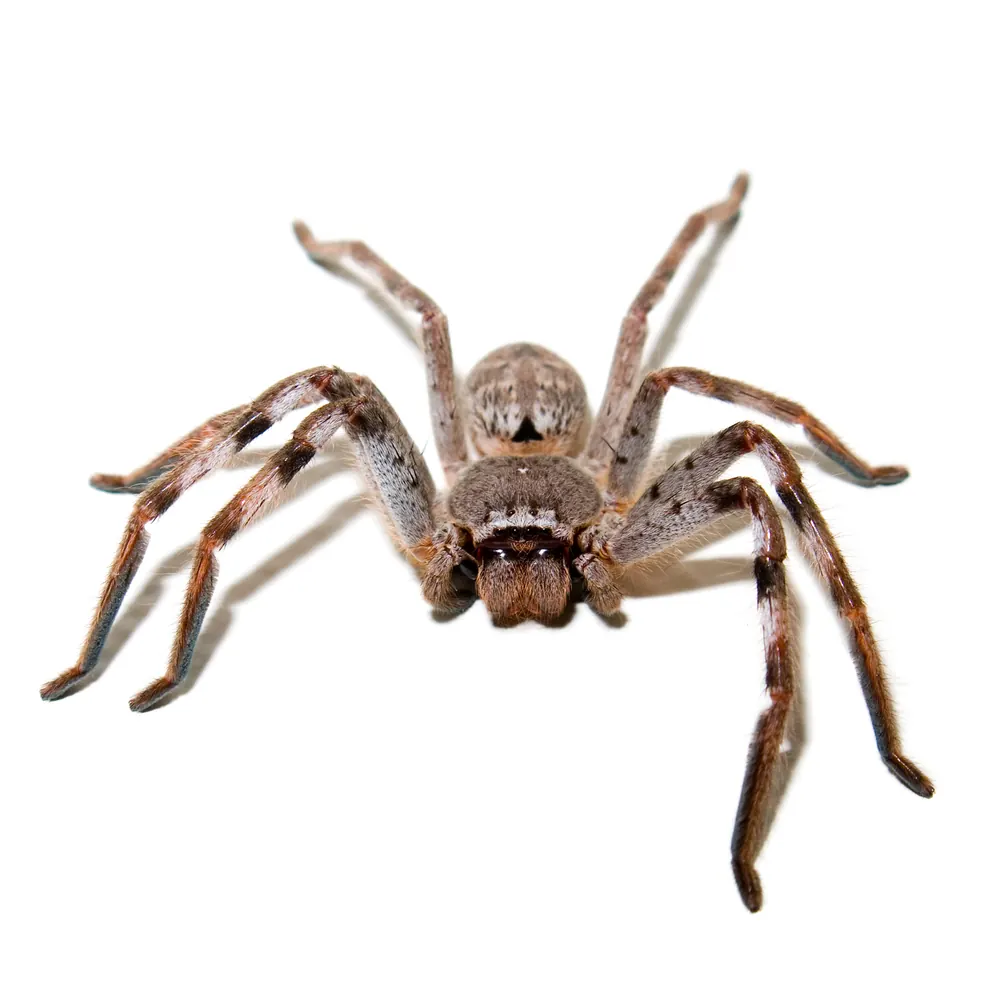
Large, brown and hairy, with a leg span that can cover a hand. They turn up on walls and ceilings, mostly in the warmer months and often before or after rain. They're fast and frightening, but they're not considered dangerous. Females guard a big ball-shaped egg sac in shrubs or behind furniture, and when those hatch you can suddenly have dozens of tiny ones. If one is in the bedroom, a glass and a piece of card are all you need to move it outside.
Button spiders
These are the ones to take seriously. The black button spider is glossy black with red markings, and the brown button spider is mottled brown with an hourglass mark underneath and spiky round egg sacs. They hide under garden furniture, in pot plants, inside meter boxes, in children's toys left outside and in the corners of garages and wendy houses. Their bites need medical attention.
Sac spiders
Small, pale and active at night. They build silk retreats in folded curtains and in the corners of ceilings and sometimes bite people in bed. The bites can cause a painful sore that's slow to heal.
Garden orb weavers
The big webs strung across paths between trees and shrubs. Startling to walk into, but these spiders are not a real risk and they catch a lot of flying insects.
Why your spider count is high
Look at what's around the house. Outside lights near doors attract moths and flies at night, which pulls spiders in to feed. Creepers on walls, shrubs touching windows and tree branches over the roof give them a bridge to the house. Wood piles, stacked pots, old bricks and garden rubbish give them daytime shelter. And in older homes, gaps around window frames and under doors let them walk in.
Garages are a special case. Many Walmer garages double as storerooms, with boxes, garden tools and bikes against the walls, and the gap under the door lets in insects and spiders alike. It is where we most often find button spiders around a house.
How we treat spiders
- Inspection. We check eaves, window frames, garages, outbuildings, patios and garden areas where children play, looking for button spiders and egg sacs in particular.
- Removing webs and egg sacs from eaves, garages and patio corners.
- Residual barrier treatment. An odourless, non-staining spray around the outside of the house, window and door frames, eaves and garages, which keeps working for some time on surfaces spiders walk over.
- Targeted treatment of button spider hiding spots.
- Reducing their food. Where insects are the attraction, we deal with those too.
You can stay at home. Keep children and pets off sprayed areas until they're dry.
The local tip: change your outside lights
Switch the bulbs at your front and back doors to yellow or warm-coloured "bug" lights, or put them on a motion sensor so they're not burning all night. Fewer insects at the door means fewer spiders setting up around it. In a leafy suburb like Walmer, it's one of the easiest changes you can make.
A common mistake
Spraying every spider you see indoors with fly spray. The odd rain spider in the lounge can simply be caught under a container and released outside. It's the hidden button spiders in the garage and under outdoor furniture that matter more, and you won't find those by looking at the walls inside. Check the places children's hands go.
What does it cost?
It depends on the size of the house and garden, the number of outbuildings and whether button spiders are involved. A barrier treatment around an ordinary house is straightforward. A large property with a garage, cottage, wendy house and a lot of garden clutter needs more time. If you only see the occasional rain spider, you may not need treatment at all. We'll say so if that's the case, and quote if it isn't.
For identification tips and spider biology, read our spider guide. Our main spider treatment service in Port Elizabeth covers the rest of the metro, including spiders in Mill Park's older homes. Finding scorpions too? See scorpions in Walmer gardens, or check the Walmer pest overview. Call 087 012 5550, or WhatsApp us a photo of the spider.
Questions we get asked
Are rain spiders dangerous?
No, they're not regarded as dangerous to people. They can give a nip if handled, but they're far more scary than harmful.
How do I recognise a button spider?
Look for a round, glossy body, either black with red markings or brown with an orange hourglass mark underneath. Brown button spiders also leave spiky round egg sacs.
What should I do if someone is bitten by a button spider?
Get medical help straight away. If you can safely catch the spider in a jar, take it along for identification.
Will a spray get rid of spiders permanently?
No. A barrier treatment keeps numbers down for a good while, but spiders will return over time in a leafy garden, especially if insects keep attracting them.
Should I kill garden orb web spiders?
There's usually no need. They're not dangerous and they catch flying insects. Move the web if it's across a path.