
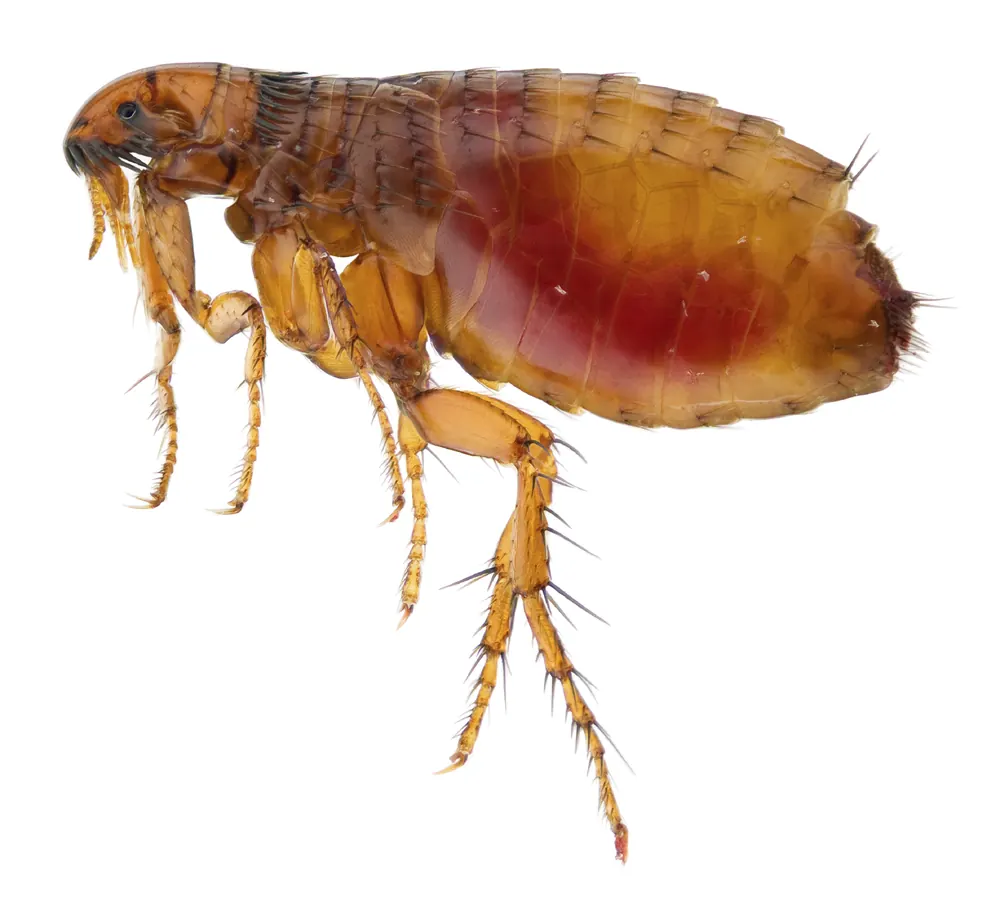
A sudden flea outbreak in a Jeffreys Bay house that has been empty is one of the most predictable problems we deal with. Flea pupae can sit dormant in carpets, rugs and floor cracks for months, and they hatch when they sense warmth, carbon dioxide and vibration: in other words, people walking in. Treating the floors properly and treating your pets at the same time breaks the cycle. Doing only one of those usually does not.
How fleas take hold in J-Bay homes
Fleas need an animal to start the cycle. In a holiday town that might be the family dog that came along last December, a visiting pet, a neighbour's cat that slipped in through an open window, or a previous tenant's animals in a rental. Adult fleas lay eggs on the animal, the eggs fall off into carpets, bedding, couches and sandy corners, and the larvae develop there before spinning cocoons. Then the house is locked up and everything waits.
Sandy yards and shady areas under decks are also ideal for flea larvae, so dogs often pick them up again outside even after the inside has been sorted.
Signs of fleas
- Itchy red bites mostly around the ankles and lower legs
- Small dark insects jumping onto white socks when you walk across a carpet
- Pets scratching, biting at their back near the tail, or losing fur
- Tiny black specks in pet bedding that turn reddish when dampened (flea dirt)
- Bites getting worse in the days after arriving at a house that has been closed
How we treat fleas
- Talk through the history. When did the bites start, which rooms, which pets, and has the house been empty? That tells us where the flea population is concentrated.
- Ask you to prepare. Vacuum all carpets, rugs, couches and floors thoroughly just before we arrive, and empty the vacuum outside. Wash pet bedding on hot.
- Treat floors and soft furnishings. We apply a residual treatment to carpets, rugs, floor edges, under furniture and pet resting areas, including outside areas like shaded corners under the deck or stoep.
- Pets treated by you or your vet on the same day. Without this, a treated house gets reinfested by the dog within days.
- Follow-up if needed, because pupae are protected and can keep hatching for a couple of weeks.
You do not need to leave the house for long. Keep children and pets off treated floors until they are completely dry.
Why you may still see fleas for a while
Flea cocoons are tough and most treatments cannot get through them. The fleas that hatch after treatment are killed when they cross the treated surfaces, but you may still see some for up to two weeks. Keep vacuuming daily during that time; the vibration encourages pupae to hatch out and meet the treatment sooner.
A local tip for holiday-home owners
If you know the house will stand empty, have the floors vacuumed and the pets' sleeping spots cleaned before you leave, not when you come back. Taking the eggs and larvae out before they pupate means far fewer fleas waiting for you next season. Where pets live at the house, ask your vet about a long-acting flea treatment that covers the months you are away.
The mistake that wastes money
Treating the dog and ignoring the house, or the other way round. Most of a flea population is not on the pet at all; it is in the carpets, bedding and floor cracks as eggs, larvae and pupae. Bombing a room with a fogger also tends to miss the underside of furniture and the deep pile of rugs where they live.
What does flea control cost?
The cost depends mainly on the floor area to be treated, how many rooms and outside areas are involved, and whether a follow-up is needed. A small flat with a mild problem after a cat visited is a modest job, and sometimes thorough vacuuming plus a vet treatment for the pet is enough on its own. A large holiday home or rental with fleas in every room takes more. We quote after an inspection.
If the bites are on your arms and shoulders rather than your ankles, it may be something else; our page on bed bugs in Jeffreys Bay accommodation explains how to tell, and biting insects in J-Bay covers the wider range. We also treat fleas in Walmer and across the city; see flea control in Port Elizabeth, or browse our local pest control services in Jeffreys Bay.
Call 087 012 5550 to book, or WhatsApp us a photo of the bites or what you are finding in the pet's bedding.
Questions we get asked
We don't have pets. Why do we have fleas?
A previous owner's or tenant's pet, a visiting animal or a stray cat can leave eggs behind. The pupae can wait months for someone to walk in before hatching.
Do fleas live in sand?
Flea larvae develop well in shaded, sandy soil, such as under decks or in the corners of a yard where pets lie. Those areas should be treated too.
How long before the fleas are gone?
Most homes see a big drop within days, but some fleas may hatch for up to two weeks while the cocoons open. Keep vacuuming daily.
Is the treatment safe for my pets?
Yes, once it is dry. Keep pets off treated floors until then, and treat the pets themselves with a product from your vet.
Should I vacuum after the treatment?
Yes. Vacuuming daily after treatment helps pupae hatch out and contact the treated surfaces sooner. Empty the vacuum outside each time.