
Most of the spiders you'll find in a Newton Park house or garden are harmless, and many are actually eating the insects you don't want. When numbers get out of hand, or when you're finding the few species that can give a nasty bite, we treat the places they hide and the routes they use to get indoors, and deal with the insects that are drawing them in.
The spiders people ask us about
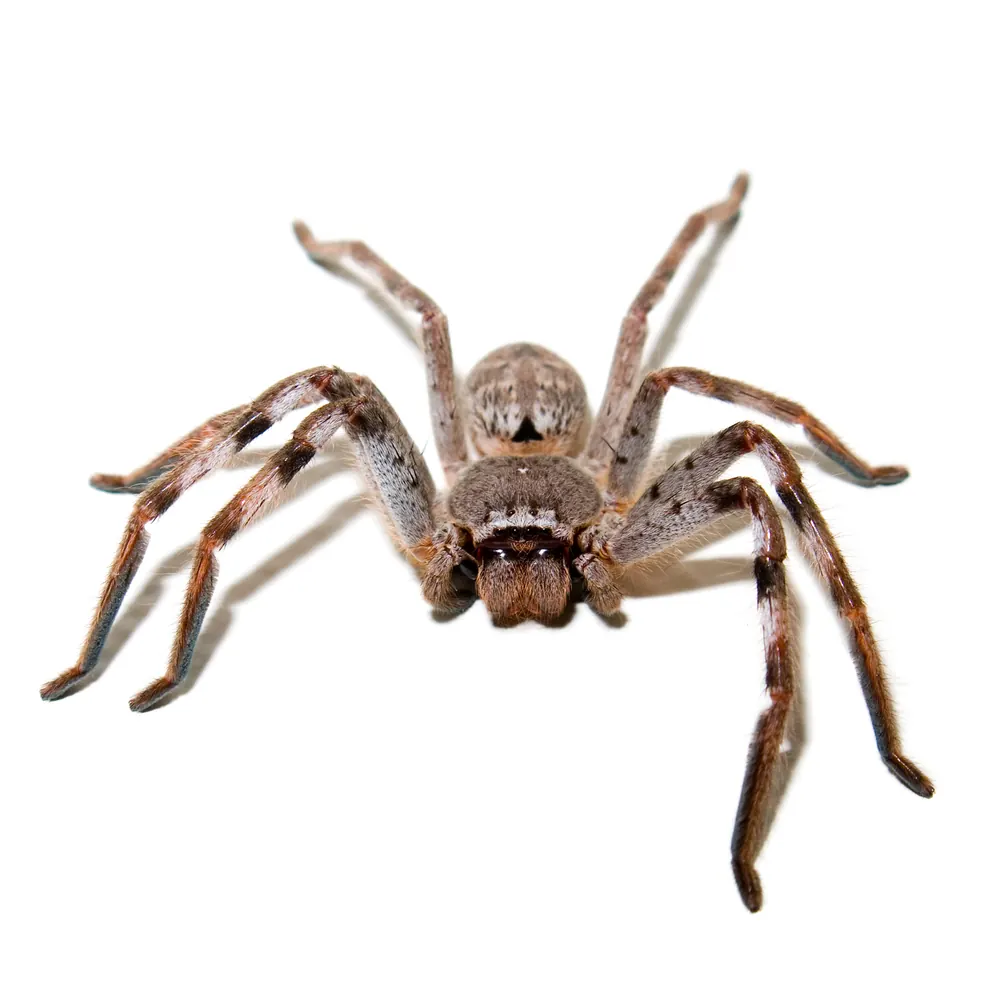
Rain spiders
The big, flat, brown spiders that appear on walls, often before or after rain. They're alarming because of their size and speed, but they're not considered dangerous. Females guard large, papery egg sacs that can hatch hundreds of spiderlings, which is usually when people call us.
Button spiders
Small, round-bodied spiders found in sheltered spots such as under garden furniture, in meter boxes, around pot plants, in sheds and in the dark corners of garages. The black button spider can give a bite that needs medical attention. If you're finding them near where children play, that's worth acting on.
Sac spiders
Small, pale spiders that hunt at night and shelter in silk sacs in corners, behind curtains and in folded clothing. Their bites can cause a sore that's slow to heal. They often end up indoors.
Daddy long-legs and other web builders
Thin-legged spiders that build messy webs in ceiling corners, garages and storerooms. Harmless, but the webs build up quickly in older homes with high ceilings.
Why spiders gather where they do in Newton Park
Spiders follow food. Wherever there are insects, there will be spiders. In Newton Park, that means a few predictable places:
- Outside lights. Stoep lights, security lights and illuminated shopfront signs along the main roads attract moths and other flying insects at night, and spiders set up around them.
- Older homes. High ceilings, picture rails, old wooden window frames and gaps under doors give spiders plenty of quiet corners and easy ways in.
- Garages and outbuildings. Stored boxes, garden tools and the space behind the car rarely get disturbed.
- Established gardens. Creepers on walls, dense shrubs against the house and piles of pots or bricks are ideal for button spiders and rain spiders.
How we treat spiders
- Inspection to identify which spiders you have and where they're living.
- A residual barrier treatment around the outside of the house, at windows, doors, eaves and other entry points, using an odourless, non-staining product.
- Targeted treatment of garages, storerooms, meter boxes and sheltered outdoor spots where button spiders and other species hide.
- Advice on the insects that are feeding them, since cutting down the insect population is what keeps spider numbers low.
Nobody has to go out for the day. Just keep kids and animals away from sprayed areas until they've dried.
Should you kill every spider?
Not really. A few spiders in the garden help keep flies, mosquitoes and moths down. The aim of a treatment is to keep them out of the house, away from doors and play areas, and to deal with the species that can bite badly.
A common mistake
Spraying every spider web you see indoors and never looking outside. The spiders are coming from the garden, the eaves and the outside lights. Unless the outside of the building and the insects attracting them are dealt with, new ones will keep moving in.
For shops and offices
Webs on a shopfront, in the corners of a display window or around a signboard don't make a good impression. For businesses along Newton Park's busy roads, a barrier treatment around entrances, windows and signs, combined with regular cleaning of webs, keeps things looking tidy. It can be added to a regular pest control service.
A local tip
If you can, swap outside lights near doors for warmer, yellow-toned bulbs, or move them a little away from the door. They draw fewer flying insects, which means fewer spiders setting up right where you walk in.
What does it cost?
It depends on the size of the property, how much of the outside needs a barrier treatment and whether garages and outbuildings are included. If you're seeing the occasional rain spider, you probably don't need us: just catch it with a glass and a piece of card and put it outside. Where there are lots of webs, button spiders near play areas, or sac spiders indoors, a treatment is worth it. We'll quote after a look.
Read more in our spider identification guide, or see spider control across Port Elizabeth. If you're finding scorpions in the same sheltered spots, see scorpions in Newton Park gardens. We also handle spiders in Walmer's big gardens, and our Newton Park pest control overview lists everything else.
Call 087 012 5550, or WhatsApp us a photo of the spider and we'll tell you what it is.
Questions we get asked
Are rain spiders dangerous?
No. They're big and fast, but they're not considered dangerous to people. The best thing is usually to catch one and put it outside.
Which spiders in Newton Park should I worry about?
Black button spiders and sac spiders are the ones to take seriously. If you're bitten and feel unwell, get medical advice quickly.
Why do I keep finding spiders inside?
They're following insects. Outside lights, gaps around doors and windows, and dense plants against the house all bring them closer.
Will a spider treatment kill the good spiders in my garden?
We treat the house perimeter, entry points and sheltered spots, not the whole garden, so spiders further out are largely left alone.
Can you treat my shopfront for spider webs?
Yes. We treat around entrances, windows and signs, and it can be part of a regular service for your business.