
Most spiders you'll find around a Mill Park home are harmless, and many are doing you a favour by eating flies, mosquitoes and other insects. The real questions are whether they're in the wrong place, whether there are so many that webs are taking over the veranda or eaves, and whether any of them are the few species worth being careful with. If the answer to any of those is yes, a targeted treatment and a few changes around the house will bring numbers down.
Why spiders like this suburb
Spiders follow food. Mill Park's mature trees, shady gardens and leaf litter support a lot of insects, and where insects are plentiful, spiders do well. Older houses add their own attractions:
- Deep verandas and wide eaves give web-building spiders sheltered corners and plenty of insects drawn to porch lights.
- High ceilings and picture rails are out of reach of the duster, so webs build up undisturbed.
- Large roof spaces with little traffic are home to all kinds of spiders, sometimes in big numbers.
- Gaps around old windows and doors let hunting spiders wander in from the garden.
For guesthouses and offices in converted homes, webs on the front veranda and around signage are often the first thing a visitor notices.
The spiders you're likely to see
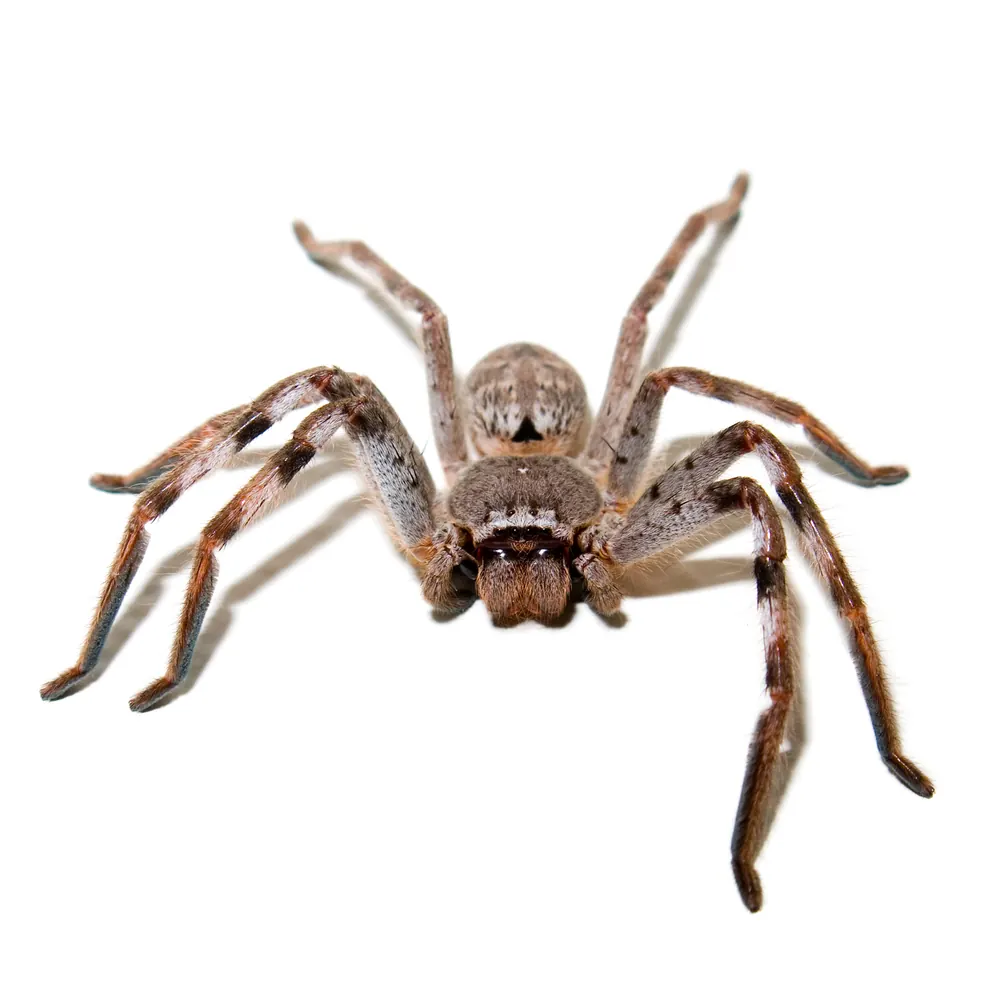
Rain spiders
Large, brown and alarming, these huntsman spiders often come indoors before or during rain. They look far worse than they are. A bite is rare and not considered dangerous. If you can, catch one under a container and put it outside.
Sac spiders
Small, pale and often found in a silky sac in a corner of the ceiling or behind a picture frame. Their bites can cause a localised sore in some people, so they're worth reducing indoors.
Button spiders
Button spiders, including the black and brown types, build untidy webs in sheltered spots like under garden furniture, in meter boxes, under eaves and in rubble. The black button spider's bite needs medical attention. If you think you've found one, don't handle it.
Web builders
Garden orb weavers, daddy longlegs and others that build webs in the eaves, windows and verandas. Harmless, but untidy when there are many of them.
If you're also finding scorpions in rockeries or under pots, see scorpion control in Mill Park.
How we treat
- Inspection. We look at the eaves, verandas, window frames, roof space, garages, garden furniture and any areas where you've seen spiders you're concerned about.
- Web removal and targeted treatment. We treat the eaves, veranda ceilings, window and door frames and other sheltered spots with an odourless, non-staining residual product.
- Perimeter barrier. A barrier treatment around the outside of the house reduces the number of hunting spiders wandering in.
- The insects they feed on. If there's a heavy insect problem driving the spider numbers, we'll address that too, or there'll simply be more spiders next season.
There's no need to leave home. Keep children and pets away from treated surfaces until they're dry.
A tip for Mill Park verandas
Switch porch and veranda lights to warm or yellow bulbs, or keep them off when you don't need them. Bright white lights draw insects from all over the garden, and the spiders set up right where the dinner arrives. Fewer insects at the light means fewer webs in the eaves.
It also helps to brush down webs with a long-handled broom every few weeks in summer. Spiders that keep losing their webs in one spot tend to move on, and the regular sweeping removes egg sacs tucked into corners before a new batch of young hatches across your veranda ceiling.
What people get wrong
Trying to wipe out every spider. You won't, and you don't want to: they're part of what keeps the insect population in a leafy garden under control. The goal is to keep them out of the house and off the veranda, and to deal with the few species that genuinely need respect.
What does it cost?
It depends on the size of the house, how high and extensive the eaves and verandas are, whether the roof space needs treating and whether a perimeter barrier is included. For the occasional rain spider indoors, you don't need us at all. A two-storey house with wide verandas and heavy webbing, or a guesthouse that wants its frontage kept clean, is better treated professionally and often regularly.
Read our guide to South African house spiders, see spider control throughout Port Elizabeth, or how we handle spiders in Walmer gardens. The Mill Park pest page covers the suburb's other pests.
Call 087 012 5550 to book, or WhatsApp us a photo of the spider and we'll tell you whether to worry.
Questions we get asked
Are rain spiders dangerous?
No. They're big and fast, which makes them frightening, but they rarely bite and their bite isn't considered dangerous.
How do I recognise a button spider?
Look for a small, round, glossy body, black or brown, often with red or orange markings, in an untidy web in a sheltered spot. Don't handle it; send us a photo.
Will spraying get rid of webs for good?
It reduces them a lot, but new spiders will move in over time, especially where insects are plentiful. Regular treatment keeps the eaves and verandas clean.
Why are there so many spiders in my roof?
Large, quiet roof spaces with plenty of insects suit them. Treating the roof and dealing with what they're feeding on helps.
Can you treat high eaves and double-storey verandas?
Yes. We bring the equipment to reach high eaves and veranda ceilings.
Is it safe to treat while guests are staying?
Yes. We treat outside areas and eaves mostly, and will tell you which areas to keep guests away from until they're dry.