
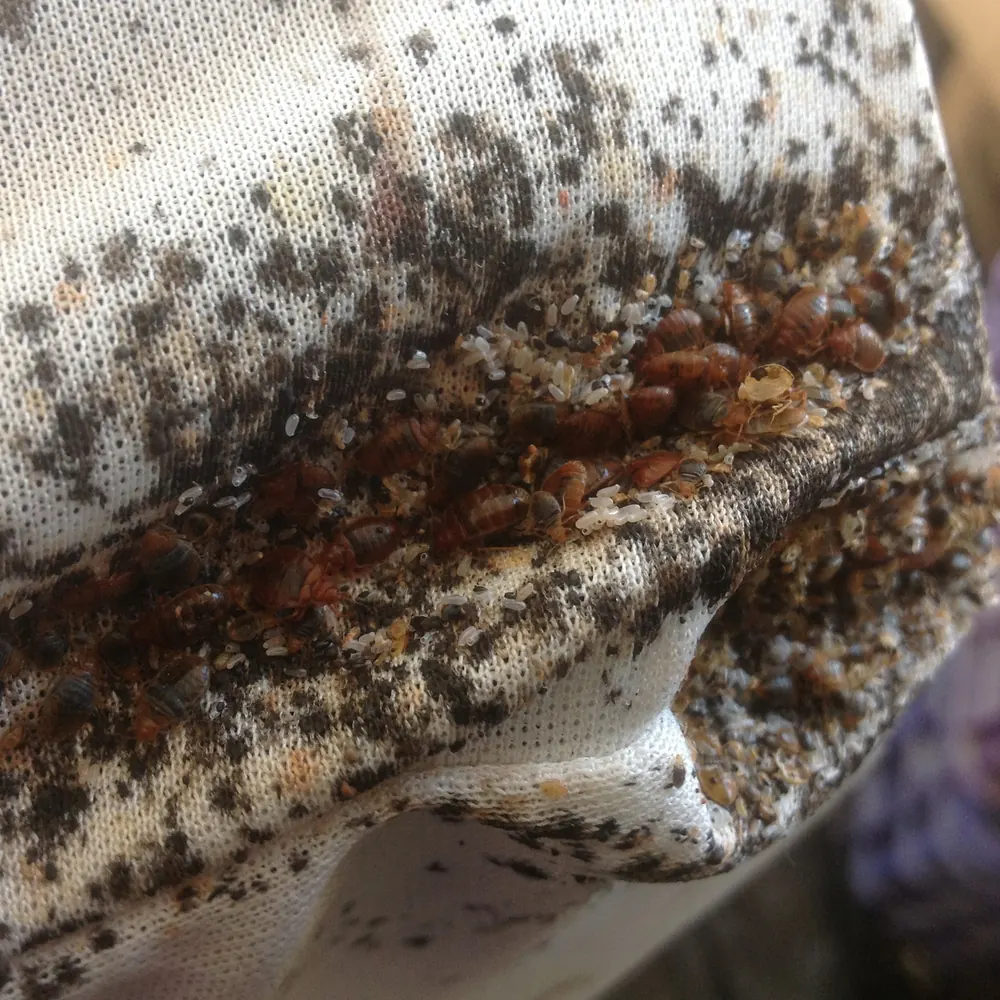
Bed bugs can be cleared, but it takes a careful, thorough treatment and almost always a second visit. They're small, flat and very good at hiding, and their eggs survive most treatments. A quick spray over the mattress won't do it. What works is a proper inspection of every place they could be hiding around the bed and the room, a targeted treatment of those places, and a follow-up timed to catch the eggs that hatch afterwards. That's how we handle bed bugs across Port Elizabeth.
Signs you have bed bugs
- Itchy bites, often in a line or small cluster, on arms, neck, shoulders or back after sleeping
- Tiny dark spots, like a felt-tip pen dot, on sheets, mattress seams and the bed frame. These are droppings.
- Small rust-coloured stains on pillowcases or sheets, from bugs crushed while you slept
- Pale, empty skins shed by growing bugs, in seams and crevices
- The bugs themselves: adults are roughly the size of an apple pip, flat and reddish-brown; young ones are paler and much smaller
- In bad infestations, a faint, sweetish musty smell in the room
Not everyone reacts to bites. One partner can be covered in welts while the other has nothing, so don't rule out bed bugs because only one person is being bitten.
How bed bugs get into Port Elizabeth homes
Bed bugs don't come from dirt, and they don't fly or jump. They hitch a ride. The usual routes are luggage after travel or a stay in a guesthouse, second-hand beds, couches and headboards, visitors who bring them in a bag, and in shared buildings, by walking along walls and through gaps from the flat next door.
Port Elizabeth has a lot of movement: a university with students moving in and out of digs at the start of each year, holidaymakers, business travellers, guesthouses and backpackers, and rental flats changing hands. All of that gives bed bugs plenty of chances to spread. The city's mild climate means they never slow down for winter indoors either.
Where they hide
Mostly within a couple of metres of where people sleep. Mattress seams, piping and tags. The box base, especially underneath where the fabric is stapled. The joints and screw holes of the bed frame and headboard. Bedside tables, skirting boards, picture frames, curtain folds, plug points and the edges of carpets. In heavy infestations, they spread to couches and other rooms.
How we treat bed bugs
- Detailed inspection. We check the bed, the frame, the furniture near it and the room itself, so we know how far the infestation goes. In flats, guesthouses and digs we may need to check neighbouring rooms too.
- Preparation. We'll give you a list before the visit: strip the beds, wash bedding and clothes from the room on a hot cycle and dry them on high heat, bag everything from under the bed, and clear the floor so we can reach the skirtings.
- Targeted treatment. We treat mattress seams, bed frames, headboards, furniture joints, skirtings, cracks and other harbourage with products suited to bed bugs.
- Follow-up. We return to treat bugs that have hatched from eggs since the first visit. For heavy infestations, there may be more than one follow-up.
You don't need to move out for treatment. Keep children and pets off treated surfaces until they're dry, and follow our instructions about when to make up the bed again.
Guesthouses, hotels and student accommodation
For accommodation businesses, speed and discretion matter. A single room with bed bugs, caught early, is a contained job. Left for a few weeks, it can spread to rooms on either side and down the passage. We inspect and treat affected rooms and their neighbours, work around bookings where possible, and can check rooms regularly. For student digs and rental properties, inspecting between tenants catches problems before the next person moves in.
What makes bed bugs worse
Moving to the couch or a spare room. Bed bugs follow their host, and you end up with two infested rooms instead of one. Throwing out the mattress is another common reaction, and often unnecessary. The bugs are also in the frame, the furniture and the skirtings, so a new mattress just gets infested again. And over-the-counter bombs and sprays tend to scatter bed bugs into walls and neighbouring rooms rather than kill them.
A tip for travellers
When you get home from a trip, unpack straight into the washing machine rather than onto the bed, and keep your suitcase off the bed and carpet. While you're away, put your bag on a luggage rack or in the bath and check the mattress seams with a torch before you settle in. It takes a minute.
What does bed bug treatment cost?
The price depends on how many rooms are affected, how much furniture needs treating and how established the infestation is. One bedroom caught early costs less than bed bugs through a whole house, guesthouse or block of flats. Bed bug work almost always needs a follow-up, and we include that in the quote. We'll quote once we've inspected.
Not sure it's bed bugs? Our page on identifying what's biting you compares them with fleas and bird mites, and flea treatment in Port Elizabeth covers the ankle-biters. For the university area there's a page on bed bugs in Summerstrand digs and flats, and for guesthouses in the older suburbs, bed bug treatment in Mill Park.
Call 087 012 5550, or send us a photo on WhatsApp of a bug or the marks on your mattress, and we'll tell you what you've got.
Questions we get asked
Are bed bugs a sign of a dirty home?
No. Bed bugs feed on blood, not dirt. They turn up in clean homes, upmarket hotels and new flats because they travel in luggage and furniture.
Can I get rid of bed bugs myself?
It's very difficult. Their eggs are protected and they hide in tiny cracks. Store-bought sprays often scatter them further, so most infestations need professional treatment and a follow-up.
Do I need a new mattress?
Usually not. Mattresses can normally be treated. A badly torn or heavily infested mattress may be worth replacing, but only after the room has been treated.
Why do you need to come back?
Bed bug eggs survive the first treatment. The follow-up catches the young bugs that hatch before they can mature and lay eggs.
Do bed bugs spread disease?
They're not known to spread disease, but the bites itch, can become infected from scratching, and the stress and lost sleep are real.
Can you treat a guesthouse without closing it?
Usually yes. We treat affected rooms and their neighbours and plan around bookings where we can.