
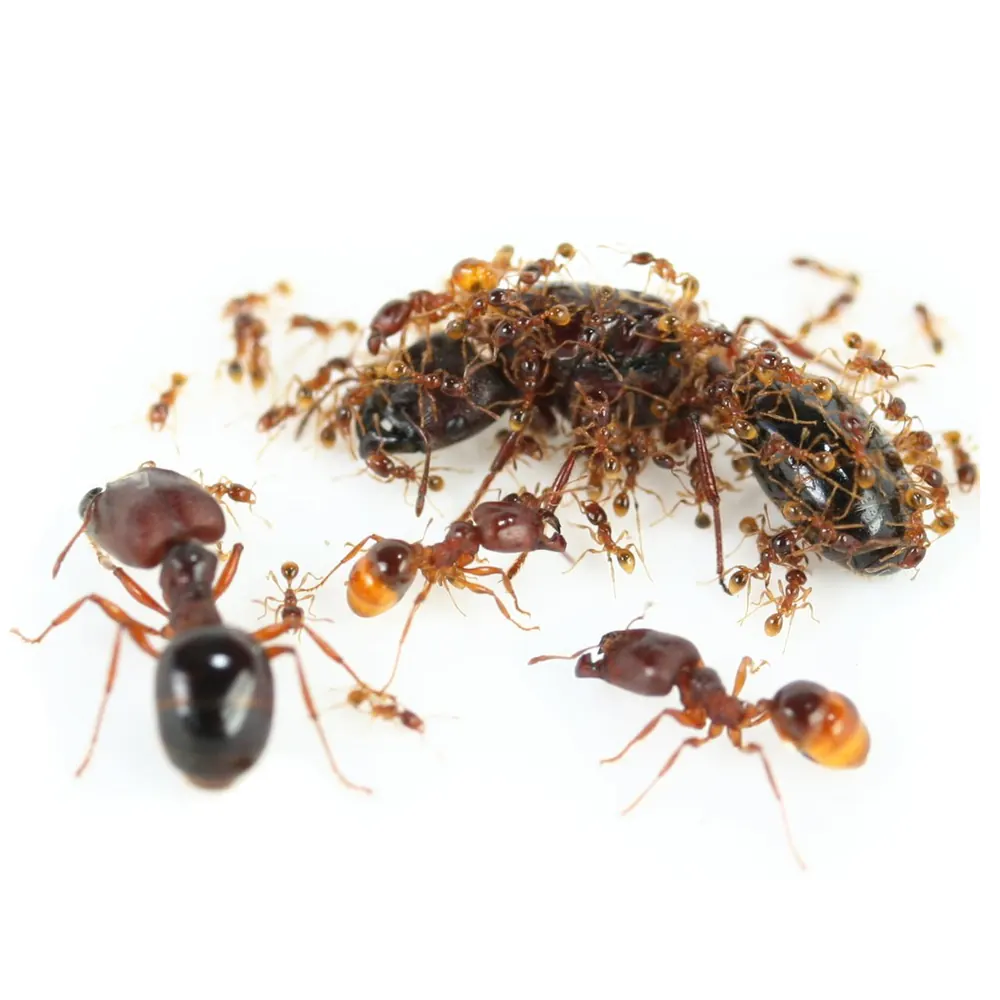
The quickest way to sort out an insect problem in Jeffreys Bay is to name the insect correctly. Half the calls we get start with "some kind of bug", and the right treatment for an ant trail is useless against a fishmoth or a cockroach. So we identify first, then find where it is breeding, then treat that spot rather than spraying the whole house and hoping.
A year of insects in J-Bay
Because the coast here has mild winters, insects never really switch off. What changes through the year is which ones you notice, and that has a lot to do with how the town itself changes.
The quiet months
Out of season, many holiday homes are shut. Fishmoths spread through cupboards of stored linen and boxes of books. Ants find their way into empty kitchens through gaps at the skirting. Paper wasps start nests under eaves and pergolas because nobody is there to knock them down. Most of this goes unnoticed until the doors open again.
The run-up to summer
As it warms up, spiders become more active in gardens that run into fynbos, ants send out more foragers, and flies start breeding in compost and bins. This is the best time to treat, before the house is full.
Peak season
December and the school holidays bring crowds, braais and overflowing bins. Flies and fruit flies take off in busy kitchens. Guesthouses and holiday lets with fast turnover are where bed bugs and German cockroaches tend to arrive in someone's luggage. Fleas can hatch in numbers when people and pets walk back into a house that has been empty for months.
Crawling or flying?
It helps to split the problem in two. Crawling insects such as ants, cockroaches, fishmoths and the like live in cracks, wall cavities, soil and drains, and we treat them with baits and targeted residual sprays. Flying insects such as flies, mosquitoes and wasps need us to find and deal with the breeding site or nest. If you want more detail, see our pages on crawling insects around J-Bay homes and flies, mosquitoes and other flying insects in Jeffreys Bay.
Signs worth taking seriously
- Trails of tiny ants along a skirting board or into a plug point
- Small brown cockroaches that scatter when the kitchen light goes on
- Holes and yellow marks on stored linen, or silvery insects darting from a book
- Bites appearing overnight on guests or family
- Wasps coming and going from the same corner of the roofline
- Flies hanging around a spot even after the bins have been emptied
How we treat insects
- Identify and inspect. We confirm what the insect is and trace it back to where it lives. In J-Bay that is often under paving, inside a geyser cupboard, behind kitchen units or up in the roof.
- Treat the source. Gel baits for cockroaches, ant baits that get carried back to the nest, odourless non-staining residual sprays in cracks and voids, and direct treatment of wasp nests.
- Barrier where it helps. A perimeter treatment around the house is useful where gardens back onto dunes and bush.
- Follow up. Some insects, cockroaches especially, have eggs that hatch after the first treatment, so a second visit is sometimes part of the plan.
You will not need to move out for a normal insect treatment. Keep children and pets off sprayed surfaces until they are dry.
A local tip
Sand gets everywhere in a beach town, and it carries crumbs with it. Sweep sand out of sliding door tracks and from under the kitchen kick plates regularly. Those channels collect food and moisture, and ants and cockroaches use them as highways into the house.
What people often get wrong
Bug-bombing the whole house before the holidays. Foggers drift over open surfaces but rarely get into the cracks where insects actually hide, and with cockroaches they can scatter the colony into neighbouring rooms. A targeted treatment does far more with far less product.
What does insect control cost?
The price depends on which insect it is, how big the property is and how established the problem has become. One ant trail in a kitchen is something you can often handle yourself with good baits. A guesthouse with cockroaches in several units, or a holiday home with a wasp nest, fishmoths and ants all at once, is a bigger job. We quote after we have seen it. For the full range of what we treat across the metro, see insect control in Port Elizabeth, or read our guide to common household insects. You can also get an overview of all our pest services in Jeffreys Bay.
Call 087 012 5550 to book, or WhatsApp us a clear photo of the insect and we will tell you what it is before we visit.
Questions we get asked
Can you tell what insect I have from a photo?
Usually, yes. A clear close-up sent on WhatsApp is often enough to identify it and tell you whether it needs professional treatment.
Is one treatment enough for insects?
For many insects, yes. Cockroaches and some heavy infestations need a follow-up because eggs hatch after the first visit.
Should I treat before or after the holiday season?
Before. Treating a few weeks ahead of peak season stops problems that built up over winter from spoiling the busy months.
Will the spray smell or mark my walls?
No. We use odourless, non-staining residual products applied to cracks, voids and surfaces where insects travel.
Do you treat insects in shops and restaurants in J-Bay?
Yes. Businesses can have a once-off treatment or go onto regular scheduled visits that fit around trading hours.