
The honest answer about spiders in Despatch is that most of them are on your side. They eat flies, mosquitoes and other insects, and the big ones that give people a fright are usually harmless. But a few local spiders can give a nasty bite, and when spiders are coming into bedrooms, kids' toy boxes and shoes, it's reasonable to want them gone. Our approach is to reduce what's coming inside and deal with the spiders that matter, not to wipe out every web in the garden.
The spiders we find around Despatch homes
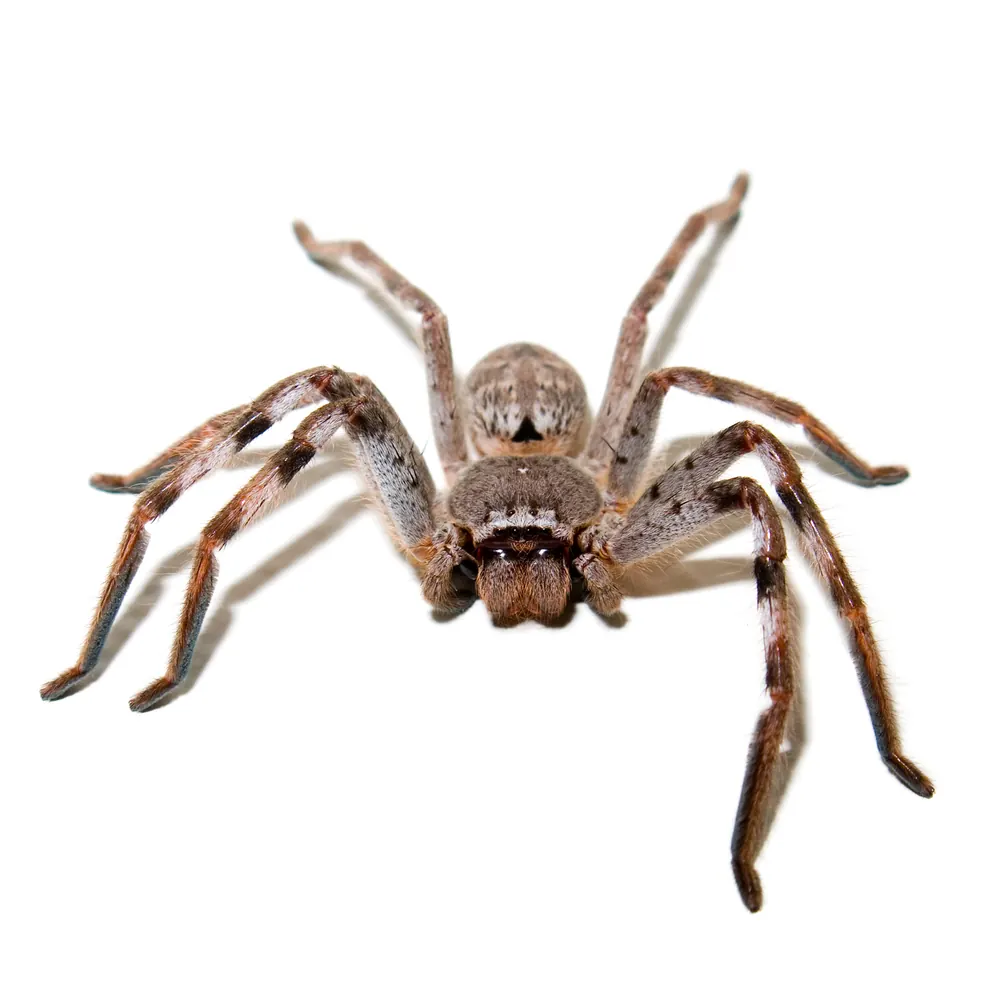
Rain spiders
Big, flat, brown and fast, often seen on walls and ceilings before or after rain. They look alarming but they're shy and not considered dangerous. They usually come in looking for insects or shelter, and catching one under a container and putting it outside is a perfectly good solution.
Button spiders
The brown button spider is common around homes and outbuildings. It's small, with a rounded body and an orange-red hourglass mark underneath, and its egg sacs look like little spiky balls. You'll find them under garden furniture, in pot plants, in the corners of carports and in old tyres and stacked materials. The black button spider is less common around homes and has a more serious bite. Both are worth treating when they're living close to where people sit and children play.
Sac spiders
Small, pale, yellowish spiders that make silk sacs in corners, folds of curtains and behind picture frames. They wander at night and are one of the spiders most often blamed for bites indoors.
Garden orb weavers and other web spiders
The big webs across paths and between trees in summer. Harmless and good for insect control. We'd usually leave them alone unless they're right across the front door.
Why Despatch properties have plenty of spiders
It comes down to shelter and food. Despatch homes with bigger yards tend to have plenty of places spiders like: wendy houses, garages full of boxes, stacked bricks and timber, wood piles, outdoor furniture that isn't moved much and dense shrubs against the walls. Smallholdings add sheds, feed rooms and animal pens, all full of flies and other insects for spiders to eat. The more insects your property has, the more spiders it'll support.
How we treat spiders
- Inspection. We look at where spiders are coming in and where they're living, and identify which kinds you've got.
- Barrier treatment. An odourless, non-staining residual spray around the outside of the house, along eaves, window frames and door frames, and in the garage. This reduces how many make it inside.
- Targeted treatment. Where we find button spiders, we treat their hiding places directly and remove egg sacs.
- Reducing their food. Fewer insects means fewer spiders. We'll advise on outside lights, which attract insects at night, and on any fly or mosquito breeding we spot.
You can stay home during treatment. Keep children and pets off treated surfaces until they're dry.
What people often get wrong
Spraying every web in the garden. It kills the harmless spiders that help control insects, and it doesn't touch the button spiders hiding under the patio chairs. Target the places where dangerous spiders live and the routes into the house, and leave the rest.
A Despatch tip
Before kids play in the wendy house or anyone puts on gardening gloves or boots that have been in the garage, give them a shake and a look. Turn outdoor chairs over every now and then and check underneath. It takes seconds and it's the easiest way to avoid a bite from a spider that's moved in quietly.
What does spider control cost?
It depends on the size of the house and yard, how many outbuildings need treating, and whether we're dealing with button spiders or just high numbers of harmless ones. A perimeter treatment on a family home is a fairly simple job. A smallholding with several sheds and animal pens takes longer. If it's just the odd rain spider, you don't need us at all.
Related pages
Spiders and scorpions often share the same hiding places, so see our page on scorpion treatment in Despatch too. Our spider identification guide has more on the local species, and spider control in Port Elizabeth covers the rest of the metro. Nearby, we also treat spiders in Bluewater Bay, and our main Despatch pest control page lists everything else we do in town.
Call 087 012 5550, or WhatsApp us a photo of the spider and we'll tell you whether it's one to worry about.
Questions we get asked
Are rain spiders dangerous?
No. They're large and fast, which is frightening, but they're not considered dangerous to people. Catch them under a container and put them outside.
How do I recognise a button spider?
Look for a small, round-bodied spider with an hourglass mark underneath. Brown button spiders leave spiky, round egg sacs nearby.
What should I do if someone is bitten by a button spider?
Get medical help straight away, and take a photo of the spider or the spider itself in a closed container if you can do it safely.
Can you get rid of all the spiders?
Not completely, and it wouldn't be good if we did. We reduce how many come indoors and deal with the ones that are a risk.
Why are there so many spiders in my garage?
Garages are dark, quiet and full of boxes, and they attract insects. Clearing clutter and sealing gaps helps as much as treating it.
Is spider treatment safe for pets?
Yes, once it's dry. Keep pets off treated surfaces until then.