
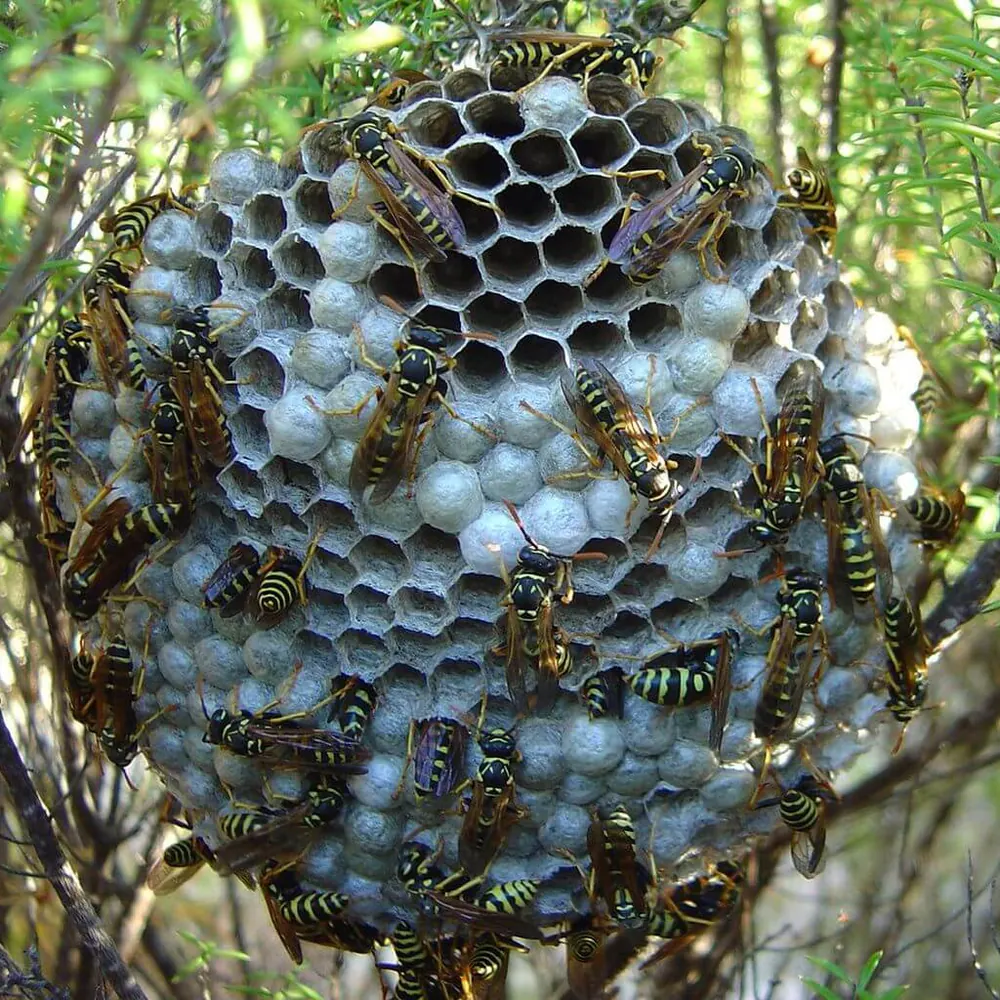
The safest way to deal with a wasp nest in Bluewater Bay is to have it treated directly and then removed, ideally early in the season while it's still small. Wasps defend their nest hard, and knocking one down with a broom or spraying it from a wobbly ladder is how most people get stung. We treat the nest itself, remove it once the wasps are dead, and check the property for others.
Summer in the garden
Bluewater Bay families spend a lot of summer outside. Patios, pergolas, pool areas, kids' jungle gyms and braai corners are all in use, and every one of them has sheltered corners where wasps like to build. Paper wasps in particular attach their open, umbrella-shaped nests to the underside of eaves, pergola beams, gutters, window frames, outdoor light fittings and the frame of a wendy house.
A lot of homes here also have boats, trailers, caravans and outdoor equipment that stand still for weeks. Wasps build happily under boat covers, inside trailer frames, behind the fold of a gazebo and in the gaps of garden furniture. The first people know of it is a sting when they pull the cover off.
Wasps also need water, which brings them to the pool, the birdbath and dripping garden taps on hot days.
Which wasp is it?
- Paper wasps are slender, with long dangling legs in flight, usually brown, yellow or reddish. Their nests are grey, papery and open underneath, so you can see the cells. These are the ones we deal with most.
- Mud wasps build small clay nests or tubes on walls, in garages and inside window frames. They're solitary and rarely aggressive, and usually don't need treatment.
- Bees are not wasps, and a bee swarm or hive needs a different approach. If you're not sure, send us a photo first.
Signs of a nest nearby
- Wasps flying repeatedly to and from the same spot
- Several wasps around the eaves, a gutter or a pergola corner
- Wasps chewing at untreated wood on fences or garden furniture to collect nest material
- More wasps than usual around the pool, a dripping tap or the braai
- Stings when someone brushes past a hedge or pulls a cover off
How we deal with wasp nests
- Locate every nest. We check eaves, gutters, pergolas, outbuildings, play equipment, boats and covers, because where there's one nest there are often a few.
- Treat the nest directly. A targeted treatment goes onto and into the nest, so the wasps returning to it are also affected.
- Remove it. Once activity has stopped, the nest is removed so it isn't reused and other wasps aren't drawn to the same spot.
- Residual treatment on favoured nesting spots, using odourless, non-staining products, where it makes sense.
We'll ask you to keep children and pets indoors or well away while we work, and off treated surfaces until they're dry.
The mistake that gets people stung
Trying to knock the nest down with a hosepipe or broom, or spraying it at midday. The wasps come out angry, and if you're on a ladder at the time, a fall is a bigger risk than the stings. If you must do anything yourself, a very small nest treated in the cool of early morning or dusk is lower risk, but anything larger than a golf ball or out of easy reach is best left to us.
A local tip
Walk around the house once a month in spring and early summer and look up: eaves, the pergola, under the gutter, the boat cover and the kids' play fort. Wasp nests start the size of a thumbnail with a single queen, and at that stage they're quick and easy to remove. By late summer, the same nest can hold a lot of wasps.
Allergies and stings
Some people react badly to wasp stings. If anyone in the household has a known allergy, get nests treated quickly rather than waiting. If someone is stung and has swelling of the face or throat, difficulty breathing or feels faint, get medical help immediately.
What does it cost?
It depends on how many nests, how big they are and how hard they are to reach. A single small nest at the front door is a quick job. Several nests across the eaves, a pergola and a boat cover, or a large nest up high, takes more time and equipment. We'll quote once we know what's there.
Wasps are one of a few flying pests here; see our page on flies and other flying insects in Bluewater Bay. The wasp control guide explains wasp behaviour in more depth. We also remove wasp nests all over Port Elizabeth and offer wasp nest removal in Despatch.
Call 087 012 5550, or WhatsApp us a photo of the nest and where it is.
Questions we get asked
Should I remove a wasp nest myself?
Only a very small nest within easy reach, treated early in the morning or at dusk. Anything bigger, higher or near a door is safer left to a professional.
When are wasps most active?
From spring through late summer, with the biggest nests and most stings towards the end of summer. Nests are easiest to deal with early in the season.
Will wasps come back to the same spot?
They often build in similar sheltered spots, which is why we remove the old nest and can apply a residual treatment where they like to build.
How do I know if it's bees or wasps?
Bees are hairy and rounder, and build wax combs. Wasps are smooth and slender, and build papery nests. Send us a photo if you're unsure.
Are the products safe around the pool?
Yes, when used properly. We treat the nest directly and keep children and pets away until treated surfaces are dry.
Why do wasps keep coming to my pool?
Wasps need water, especially on hot days. A nest nearby is likely, so it's worth checking the eaves and pergola around the pool area.