
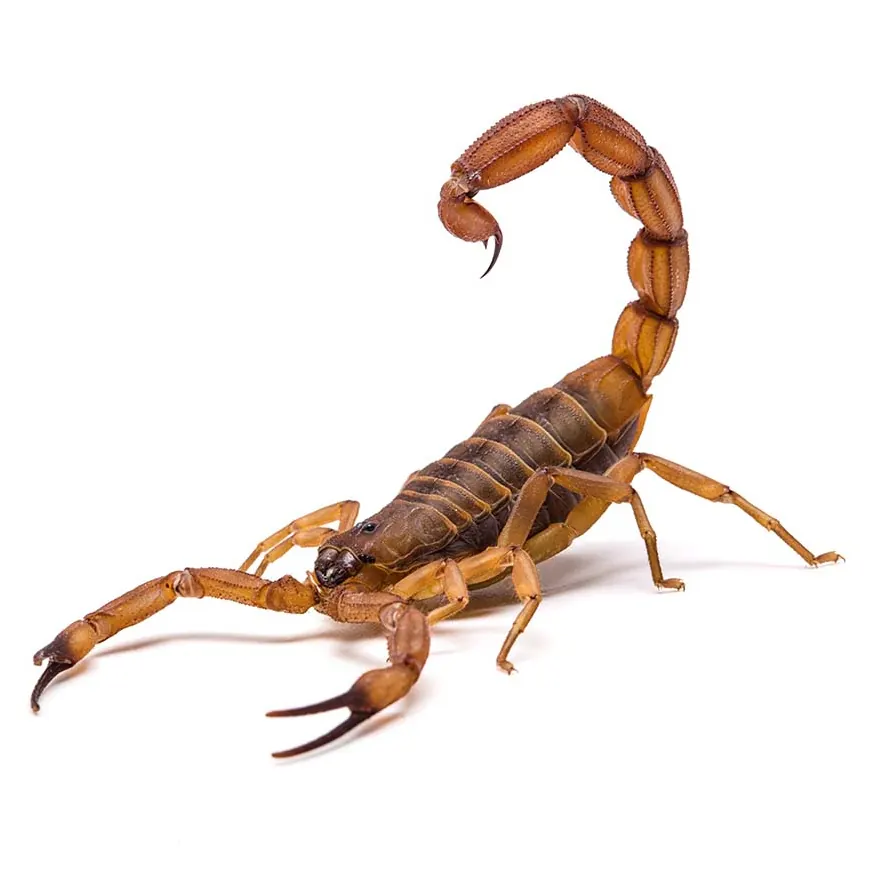
Finding a scorpion in Bluewater Bay usually means there's good scorpion habitat close to the house: loose sand, rocks, stacked bricks, wood piles or thick ground cover. They shelter there by day and hunt at night, and sometimes they end up in a shoe, a towel or a corner of the garage. We treat the edges of the house so they're far less likely to come in, and help you remove the hiding places that keep them close.
Sand, scrub and scorpions
Scorpions are well suited to coastal sandy ground. Many species dig shallow burrows or scrapes, and loose sand under paving, around the base of walls and in garden beds is easy for them to work. The dune vegetation and coastal bush around the edges of the suburb support the insects and other small creatures they feed on.
In the garden itself, the hiding spots are usually obvious once you look: a pile of left-over pavers, a rockery, logs, firewood, old boat parts or a sheet of corrugated iron lying on the ground. Scorpions favour anything flat that sits on sand and stays still.
How to tell which scorpion it is
The rule of thumb in South Africa is about the pincers and the tail:
- Big pincers, thin tail: these rely on their claws to catch prey. Their sting is generally comparable to a bee sting.
- Small pincers, thick tail: these rely on their venom and can give a much more serious sting. Treat these with respect, especially around children.
If you're unsure, take a photo from a safe distance with something for scale and send it to us.
Signs of scorpions around the house
- Scorpions found under pots, pavers or logs when you move them
- Small scrapes or burrow entrances at the base of walls and under paving edges
- Scorpions in the garage, laundry or bathrooms, especially near doors
- Finding them in shoes, boots, gloves or towels left on the floor
How we deal with scorpions
- Inspection. We walk the outside of the house and garden, looking at what's stored against walls, under paving edges and in outbuildings.
- Barrier treatment. An odourless, non-staining residual treatment around the foundations, door thresholds, garage entrances and weep holes, where scorpions would cross to come inside.
- Targeted treatment of harbourage such as wall bases, rockeries and outbuildings, where it's safe and sensible.
- Habitat advice. What to move, raise or clear, so there are fewer places for scorpions to shelter near the house.
Because scorpions also eat insects, reducing crickets, cockroaches and other prey around the house helps as well. Our page on spiders around Bluewater Bay homes covers another pest that shares the same hiding places.
A common mistake
Spraying a scorpion directly with a household insecticide and assuming it's dealt with. Scorpions are tough and many sprays barely affect them. It also does nothing for the ones still under the paving. A barrier at the house and fewer hiding places is what lowers the numbers.
A local tip: go out with a UV torch
Scorpions glow a bright greenish-blue under ultraviolet light. An inexpensive UV torch, used on a warm evening along the walls, paving edges and rockeries, will show you exactly where they're active. It's the quickest way to see whether you have one stray or a garden full of them, and it makes it easier to find and clear the spots they're using.
Keeping the family safe
Shake out shoes and boots before putting them on, especially ones left by the door or in the garage. Keep children's sandals and towels off the floor in summer. Don't let kids turn over rocks and pavers with bare hands. If someone is stung by a thick-tailed scorpion, or by any scorpion and they're a child or feel unwell, get medical help straight away.
What does it cost?
It depends on the size of the property, how much of the garden needs treating and how many outbuildings there are. If you've found one big-pincered scorpion in the garage, clearing that corner may be all you need, and we'll say so. Regular sightings indoors, thick-tailed scorpions or a garden full of them is where a treatment makes sense. We quote after a look.
For the metro-wide picture, see our scorpion control service across Port Elizabeth, or our scorpion treatment in Despatch. Other pests in the area are on our Bluewater Bay pest page.
Call 087 012 5550, or WhatsApp us a photo of the scorpion and we'll tell you which kind it is.
Questions we get asked
Are the scorpions in Bluewater Bay dangerous?
Most have big pincers and a thin tail and give a sting comparable to a bee sting. Those with small pincers and a thick tail can be more serious and deserve care.
Why are scorpions coming into my house?
They're hunting insects at night and looking for shelter. Gaps under doors, open weep holes and things stored against outside walls make it easy for them to wander in.
Do scorpions live in sand?
Many do. Some species dig burrows or scrapes in loose sand, especially under paving, around wall bases and beneath flat objects lying on the ground.
How do I find scorpions in my garden?
Use a UV torch at night. Scorpions glow under ultraviolet light, which makes them easy to spot along walls and rockeries.
Can a barrier treatment keep scorpions out?
It greatly reduces the number getting inside, especially combined with clearing their hiding places near the house. It won't remove every scorpion in the garden.
What should I do if my child is stung?
Get medical help straight away, especially if it was a thick-tailed scorpion or your child seems unwell. If possible, take a photo of the scorpion.