
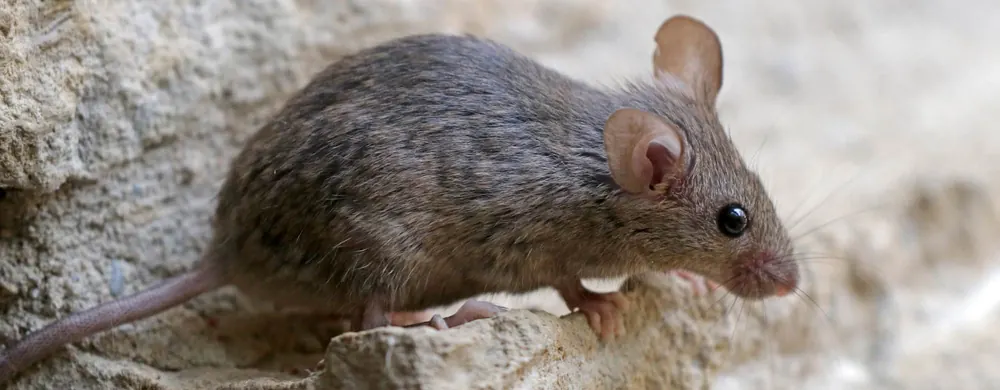
Mice in a Bluewater Bay home usually start in the garage or a storeroom and work their way into the kitchen and roof. They're small enough to squeeze through a gap about the width of a pencil, they breed quickly, and a few can become dozens within a couple of months. The way to beat them is to deal with the ones already inside and, just as importantly, find every small gap they're using to get in.
The garage is usually where it starts
Bluewater Bay garages work hard. They hold the fishing rods and tackle boxes, the camping gear, the surf and boogie boards, the kids' outgrown toys, boxes of old school books and often the dog food and bird seed. Many open straight into the house through an internal door. To a mouse, that's shelter, nesting material and a food supply in one place, with a door into the kitchen.
Garage doors rarely seal tightly at the bottom, especially roller and tip-up doors on uneven driveways, and coastal sand gradually wears down any rubber seal. That gap is often all it takes.
Boats, caravans and trailers parked at home for months between trips are another favourite. Mice nest in the cushions, cupboards and wiring, then move into the house when the vehicle is used or disturbed. If yours stands for long periods, open it up and check it every few weeks.
Signs of mice
- Small droppings like grains of rice, often lots of them, along walls, in drawers and on shelves
- Shredded paper, cloth or insulation balled up in a quiet corner or inside a box
- Nibbled packets in the pantry, especially cereal, rice, seed and pet food
- Light, quick scratching in the ceiling or walls at night
- A musty smell in cupboards or the garage
- Small gnaw marks on plastic containers, cables or cardboard
If the droppings are much bigger and the noise is heavier, it's more likely rats. Our page on rats and mice around Bluewater Bay explains how to tell them apart.
How we deal with mice
- Inspection. Garage, storerooms, kitchen, pantry, roof space where accessible and the outside walls. We're looking for nests, runs and every gap of a centimetre or so.
- Traps and stations inside. Mice travel short distances and stay close to the walls, so placement matters more than quantity. We use traps and lockable stations along those routes, and tracking powder in voids where it's appropriate.
- Outside stations. Lockable, tamper-resistant bait stations around the perimeter to catch mice before they reach the house.
- Proofing. We show you the gaps to seal: under the garage door, around pipes and cables, at the eaves, and around the internal door to the house.
- Follow-up to check activity and make sure the population has gone, not just quietened down.
Winter brings them in
Mice are around all year in Port Elizabeth, but they push indoors more as the evenings cool and the wet weather sets in. If you've had mice before, autumn is a good time to check the garage door seal and clear out the boxes. Our article on rodents coming indoors in the colder months has more on this.
A mistake we see a lot
Setting one trap, catching one mouse, and calling it done. Where there's one mouse there are usually several, and a nest somewhere close by. Keep checking for fresh droppings for a few weeks. If they keep appearing, the problem hasn't gone.
A local tip
Swap cardboard boxes in the garage for sealed plastic crates, and keep pet food and bird seed in a metal bin with a tight lid. Cardboard is both bedding and cover for mice. It's also worth lifting stored items off the floor onto shelving, so you can see underneath and sweep easily. You'll spot the first droppings early instead of when the problem is already big.
What does it cost?
It depends on how many mice, how many areas of the house are affected, and how much proofing is needed. A few mice in a garage that you catch early is a quick job, and sometimes a couple of well-placed traps and a new door seal is all it takes. We'll tell you if that's the case. A roof and kitchen with an established population needs more visits. We quote after we've seen it.
For more on how mice behave, read our mouse control guide, or see mouse control throughout Port Elizabeth. We also deal with mice in Despatch homes.
Call 087 012 5550, or WhatsApp us a photo of the droppings and we'll tell you whether it's mice or rats.
Questions we get asked
How small a gap can a mouse fit through?
About the width of a pencil. If a mouse can get its head through, the rest of the body follows, which is why proofing needs to be thorough.
Are mice dangerous?
They contaminate food and surfaces with droppings and urine and can carry disease. They also chew wiring, which can be a fire risk.
Why do I only hear mice at night?
Mice are mostly active after dark, when the house is quiet. The scratching you hear at night is them moving between the nest and food.
Can I use bait inside the house?
We usually prefer traps indoors so the mouse doesn't die somewhere you can't reach. Where bait is used, it's in a lockable station.
Will a cat solve a mouse problem?
A cat may catch a few, but it won't stop mice nesting in the roof or the garage. Sealing the gaps does more.
How long does it take to get rid of mice?
A small problem can be sorted within a week or two. An established population takes longer and needs follow-up checks.