
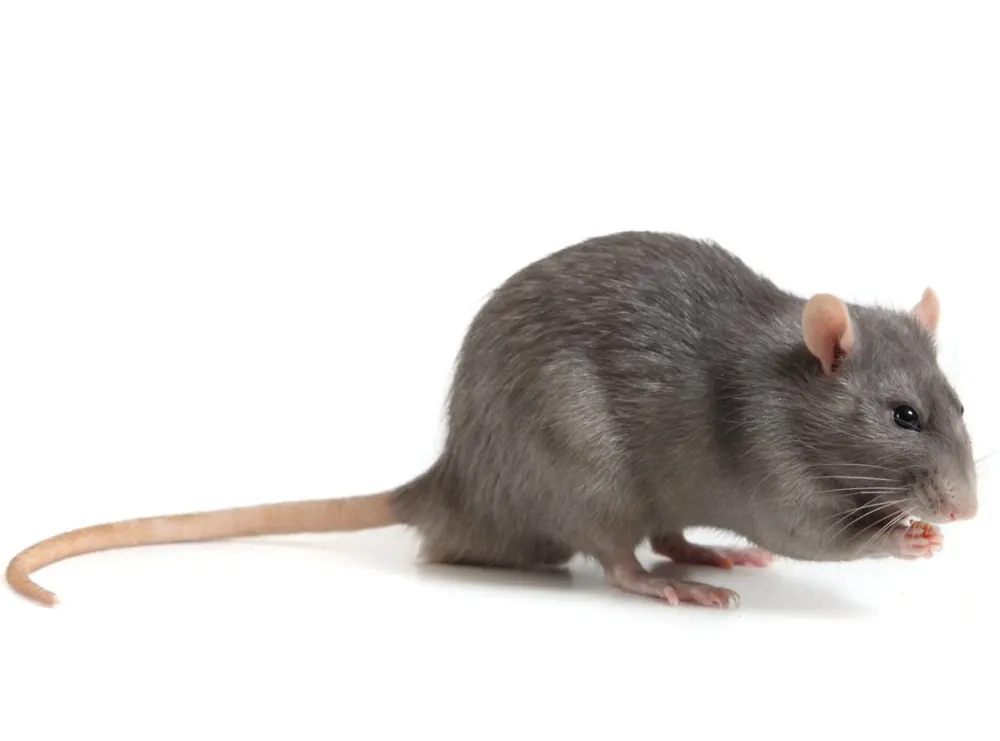
If you're seeing rats in Bluewater Bay, there's a good chance they're living closer than you think: in a burrow under the shed, in the compost heap, in a stormwater pipe or in the roof. Removing them is only part of the job. The other part is cutting off the route that brought them, because rats use the same paths again and again. That's how we approach every rat job here.
River rats and roof rats
Bluewater Bay gets both of the common rat species, and the suburb's setting explains why.
Norway rats (brown rats) are ground-dwellers and good swimmers. They live along riverbanks, in stormwater drains and under rubble, and they dig. Being close to the Swartkops River and the network of drains that carry water towards it gives them easy travel routes into the suburb. Soft sandy garden soil makes burrowing easy, so we often find their holes under paving, along the base of boundary walls and beneath sheds and wendy houses.
Roof rats (black rats) are climbers. They use trees, creepers, fences and cables to reach the roof and get in under loose tiles or gaps at the eaves. The wind in Port Elizabeth loosens roofing over the years, which gives them plenty of openings.
When the rats aren't only yours
Rats don't stay on one plot. A colony under a neighbour's shed or in a vacant stand down the road will use your garden as part of its feeding range, and your treatment can only cover your side of the wall. If we find runs crossing a boundary, we'll tell you, because a quick word with the neighbours about their compost, feed and rubble often does as much good as anything we put down. Where a few houses in the same street are affected, treating them around the same time works far better than each one dealing with it alone, months apart.
Signs of rats around the house
- Holes about the width of a fist or a bit smaller in the garden, often with a smooth, well-used entrance
- Dark, greasy smears along walls, beams and pipes where they run
- Droppings about the size of a raisin or bigger
- Heavy running or gnawing sounds in the ceiling after dark
- Fruit eaten on the tree, chicken feed disappearing, or pet food bowls cleaned out overnight
- Gnawed irrigation pipes, cables or wooden door edges
How we get rid of them
- Tracing the route. We follow the burrows, runs and rub marks back to where the rats are coming from, whether that's a drain, a neighbour's property, a gap under the wall or a tree touching the roof.
- Bait stations and traps. Lockable, tamper-resistant bait stations along the runs outside, and traps or stations inside where needed. Tracking powder may be used in voids and burrows where it's safe to do so.
- Closing the way in. We show you what to seal or cut back: overhanging branches, broken air bricks, gaps around pipes and lifted roof tiles. Burrows get collapsed and filled once activity stops.
- Checking back. Follow-up visits to see what's been eaten and whether new burrows have appeared.
The mistake that makes it worse
Leaving out food without realising it. A chicken run with spilled feed, a compost heap with kitchen scraps, a bird feeder dropping seed and a dog bowl left outside overnight will keep feeding rats faster than any treatment can remove them. Clearing the food is half the cure.
A local tip
Keep a gap between the ground and anything stored outside. Firewood, old boat trailers, building rubble and stacks of pavers make perfect cover for Norway rats in sandy ground. Raise things off the ground, keep them away from the house and move them now and then so rats can't settle in underneath.
What does it cost?
It depends on how many rats, how established they are, the size of the property and how much proofing is needed. A pair of roof rats in a house is quicker to deal with than an established colony burrowing under a whole garden. Commercial and industrial premises usually go onto regular monitoring. We quote after the inspection.
Wondering whether it's mice instead? Our page on mice in Bluewater Bay homes will help. You can also read the complete rat control guide, see rat control across Port Elizabeth, or look at our rat treatments in Despatch upriver. For other pests here, see our Bluewater Bay pest control page.
Call 087 012 5550, or send us a photo of the burrow or droppings on WhatsApp.
Questions we get asked
Do rats really come up from the river?
Norway rats live along riverbanks and in stormwater drains, and they travel along them. Being near the Swartkops River means there are natural routes for them into the suburb.
What do rat holes in the garden look like?
Round holes roughly the width of a fist or smaller, usually with smooth edges and loose soil nearby. You'll often find them under paving, along walls or under sheds.
Should I fill in rat burrows straight away?
Not before treatment. The burrows show us where the rats are active. Once activity has stopped, we'll tell you when to collapse and fill them.
Can rats get in through the toilet?
It's possible but rare. Far more often they get in through gaps in the roof, around pipes, through air bricks or under doors.
Are rats a health risk?
Yes. They contaminate food and surfaces with urine and droppings and can spread disease, so it's worth acting quickly.
Will my chickens attract rats?
Spilled feed will. Store feed in sealed metal bins, feed only what the chickens will eat in a day and raise the coop off the ground if you can.