
If cockroaches, ants, fishmoths or beetles are turning up on your floors in Bluewater Bay, the answer is usually found at ground level: the strip of sand and paving around the house, the gaps under doors and the drains. Crawling insects can't fly in, so they all use the same few routes. Find those routes, treat where the insects shelter and close the gaps, and the numbers inside drop quickly.
Where the sand meets the house
A lot of Bluewater Bay is built on sandy coastal ground. Sand is easy for ants to nest in, it drains quickly but stays damp underneath, and it drifts. Over time it builds up against walls, covers weep holes and creeps under sliding doors to the patio. That gives crawling insects a sheltered path right up to the house and, in many homes, under the skirting.
Families spend a lot of time outside here. Patio doors stand open on warm days, kids run in from the garden and dogs carry sand in on their paws. None of that is a problem on its own, but it all lowers the barrier between garden and kitchen.
What's usually crawling in
- Ants trail in from nests under paving and lawn edges, especially after rain floods them out. See our approach to ants in local gardens.
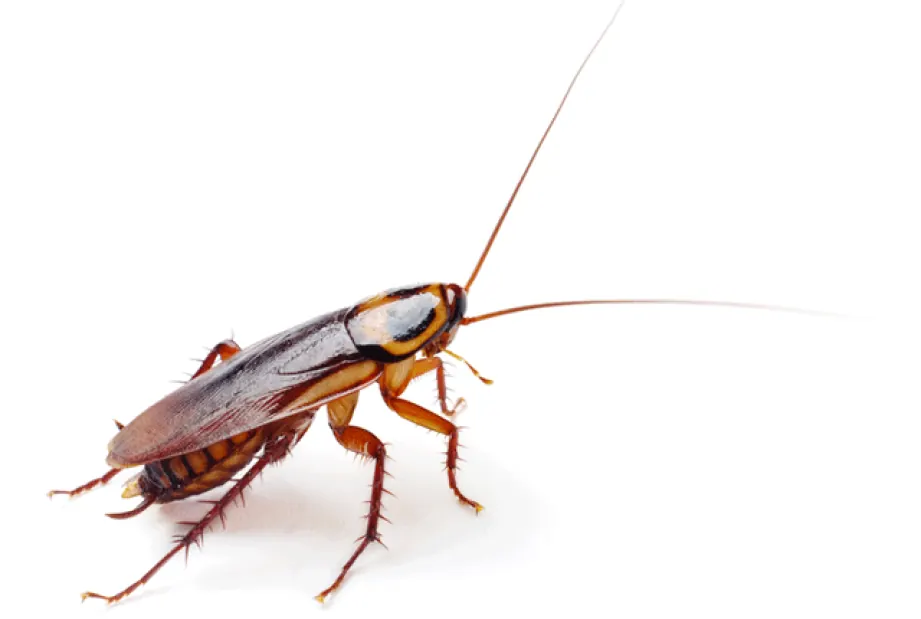
- American cockroaches come in from drains, manholes and garden debris on humid nights.
- German cockroaches live indoors in kitchens and arrive in shopping boxes and second-hand appliances.
- Fishmoths live in damp, dark spaces such as built-in cupboards and bookshelves.
- Crickets, beetles and earwigs wander in from the garden and shelter under mats and boxes.
Signs to look for
Small dark droppings like ground pepper in kitchen corners and behind appliances point to cockroaches. Ant trails along skirtings and window frames, piles of fine sand by a crack in the floor or tiles, and yellowing nibbled patches on paper or fabric all tell their own story. Notice where you see them, too. Insects you find near outside doors are coming in; insects you find in the middle of a kitchen at night are probably already living there.
When it tends to get worse
Crawling insect calls in Bluewater Bay pick up in two situations. The first is the warm, muggy stretch of summer, when American cockroaches are most active and ant colonies are at their biggest. The second is straight after heavy rain. Water fills the nests in the sand and the galleries under paving, and the whole colony moves somewhere drier, which is often your kitchen, your pantry or the cavity under a bath. If insects suddenly appear after a storm, that's usually why, and it's a good moment to treat because they're out in the open.
How we deal with crawling insects
- Inspection at floor level. Thresholds, weep holes, drains, skirtings, the back of kitchen units and the strip of ground around the walls.
- Baits inside. Gel baits for cockroaches in cracks and crevices, and ant baits along trails so workers carry the bait to the nest.
- Barrier outside. An odourless, non-staining residual treatment around the foundations, door frames and paving joints, so insects crossing it pick it up before they get inside.
- Proofing advice. Door sweeps, sealed pipe gaps, drain covers and clearing sand from the walls.
- Follow-up for cockroaches or heavy ant activity, because eggs and new queens can restart the problem.
Something that catches people out
Sweeping sand back against the walls after cleaning the patio. It feels tidy, but it buries the weep holes and gives ants a fresh nesting spot right against the house. Sweep it away from the walls instead, or onto the lawn.
One local tip
Check the base of your sliding doors. Coastal sand wears down the rubber seals and the runners, and the gap that opens up is often big enough for cockroaches and beetles. A new brush strip is cheap and makes a real difference.
What does it cost?
It comes down to which insects, how many, the size of the property and whether we're treating inside only or the outside perimeter as well. A single ant trail in the kitchen is often something you can handle with a bait from the shop, and we'll tell you if that's enough. A house with cockroaches in the kitchen and ants coming in from three sides needs a proper treatment and probably a follow-up.
To learn more about how these insects behave, read our crawling insect guide, or see crawling insect treatments across Port Elizabeth. We do the same work in Despatch homes along the river and right across Bluewater Bay.
Call 087 012 5550, or WhatsApp us a photo of what's crawling across your floor.
Questions we get asked
How do crawling insects get into my house?
Mostly at floor level: under doors, through weep holes, along pipes and up through drains. In sandy gardens, sand banked against the walls makes it even easier for them.
Is a barrier treatment safe for pets?
Yes, once it's dry. Keep pets and children off the treated area until then, which is usually a couple of hours.
Why do I see more insects straight after a treatment?
Baits and residual treatments flush insects out of hiding for a few days. Activity should drop after that. If it doesn't, let us know.
Can I just put down ant powder myself?
For a small trail, a shop bait can work. Powders and sprays tend to split colonies into new nests, so if the ants keep returning, a proper baiting programme is better.
Do weep holes need to be blocked?
No, never block them, because they let walls breathe and drain. Keep them clear of sand and soil instead, and fit insect mesh covers if insects are using them.
How often should I treat for crawling insects?
Most homes only need treatment when there's a problem. If you have recurring cockroaches or ants, a seasonal treatment of the outside perimeter can keep numbers down.