
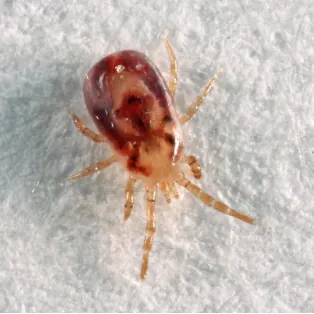
If you're itching at night in Bluewater Bay and can see tiny moving specks on the bedding, walls or ceiling, check whether birds have been nesting in your roof. Bird mites live in nests and feed on the chicks. When the chicks leave or die, thousands of mites go looking for a new host, and they find their way down into the rooms below. The fix has two parts: remove the nest and treat where the mites have spread.
Birds and roofs in Bluewater Bay
A suburb by the sea, the estuary and the river has a lot of birdlife, and some of it moves into roofs. Pigeons, sparrows, starlings and mynas all nest in gaps under roof tiles, at the eaves, in gutters and behind fascia boards. Port Elizabeth's wind plays a part here too: over the years, gusts lift ridge tiles and loosen sheeting, and every gap is a ready-made nesting hole.
Warehouses, factory buildings and other large structures in the industrial areas to the north often attract nesting pigeons, so businesses there can be affected as well as homes.
How to tell it's bird mites
- Itching or a crawling feeling, often worse at night or in one room
- Tiny specks, smaller than a full stop, moving on walls, ceilings, windowsills, light fittings or bedding
- The problem starting soon after birds stopped visiting a nest in the roof or eaves
- Activity concentrated near ceiling openings, downlighters, air vents or curtain rails under the nest
- Specks that look pale or greyish, turning reddish after they've fed
Bird mites can be confused with other biting pests. Our page on the different biting insects in Bluewater Bay helps narrow it down.
How we deal with bird mites
- Find the nest. We check the roof space where accessible, eaves, gutters, under tiles and around any ceiling openings near where the mites are showing up.
- Remove it carefully. The old nest, along with nesting material and droppings, is removed so the mites lose their home base.
- Treat the nest site and roof void with a targeted treatment to kill mites left behind.
- Treat the affected rooms. An odourless, non-staining treatment around ceiling openings, window frames, skirtings and furniture where mites are active.
- Proofing advice. We show you the gap the birds used, so you or a roofer can close it with mesh, bird spikes or proper mortar and tiles.
There's no need to move out while we do this. Wash bedding on a hot cycle, and keep children and pets clear of treated surfaces until dry.
What people get wrong
Blocking up the hole while the birds are still nesting, or before the old nest has been dealt with. If you seal the entrance with a nest inside, any chicks die, and the mites move straight into the house in larger numbers. The nest and the mites have to be dealt with first, then the gap is closed.
Another common mistake is treating the bedroom only. As long as the nest is still in the roof, mites keep coming down.
A local tip
After a strong windy spell, take a look at your roofline from the street. Look for lifted ridge tiles, gaps under the bottom row of tiles and birds flying in and out of the same spot. If you see nesting activity, it's best to sort out the access point once the season is over and the nest has been removed, before birds return the following spring.
Are bird mites harmful?
Bird mites are a nuisance rather than a known disease risk to people. They can't live long on humans and they don't breed on us, which is why removing the nest makes such a difference. The bites and itching can be very unpleasant, though, so if you have a skin reaction, see a doctor.
What does it cost?
It depends on how many nests there are, how easy they are to reach, how far the mites have spread and how much proofing is needed. A single nest at the eaves above one bedroom is a fairly simple job. Several nests across a large roof, or a business building with pigeons, takes longer. We'll quote after the inspection.
Read our guide to bird mites for more detail, or see bird mite control across Port Elizabeth and our bird mite treatments in Despatch. Other pests in the suburb are covered on the Bluewater Bay pest control hub.
Call 087 012 5550, or WhatsApp us a photo of the specks or the nest site and we'll help you work out what's going on.
Questions we get asked
What are bird mites?
They're tiny mites that live in bird nests and feed on birds. When the birds leave, the mites move out looking for a new host and can bite people.
Can bird mites live on people?
No. They can bite people but can't survive or breed on us for long, so removing the nest is what ends the problem.
Why did the bites start after the birds left?
That's typical. While the chicks are in the nest, the mites feed on them. Once the chicks go, the mites spread out in search of food.
Should I seal the hole the birds used?
Yes, but only after the nest has been removed and the mites treated. Sealing it with the nest still inside makes the mite problem worse.
How long does it take to get rid of bird mites?
Once the nest is removed and the area treated, activity usually drops quickly. Heavier infestations may need a follow-up visit.
Do bird mites affect businesses?
Yes. Warehouses and factory buildings with nesting pigeons can have bird mite problems, and we treat those as well.