
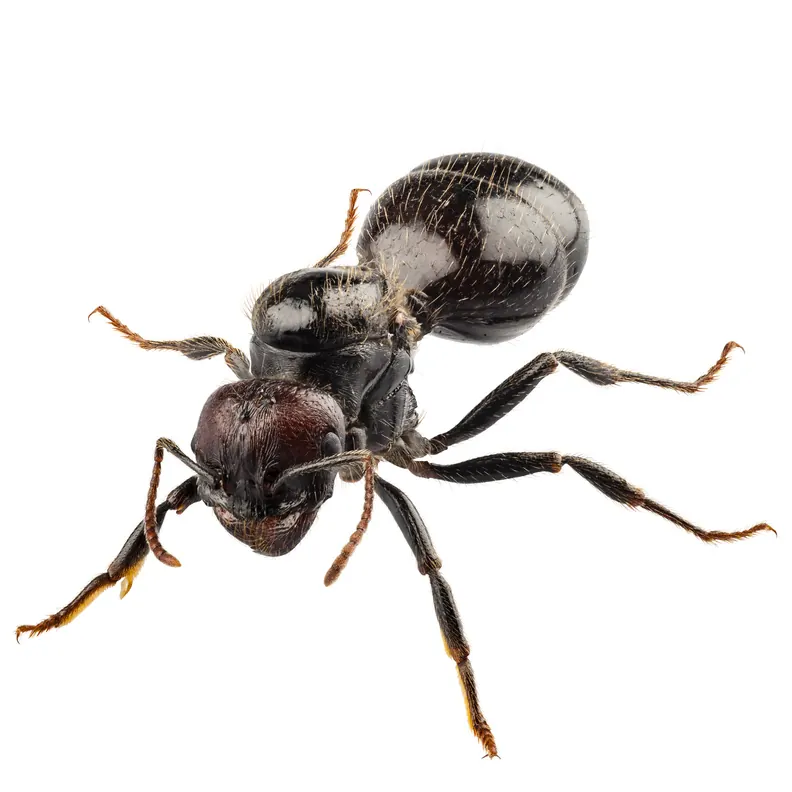
To get rid of ants in Bluewater Bay for good, you have to reach the nest. The ants you see in the kitchen are workers foraging for the colony, and the queens stay hidden underground, usually in the sandy soil under your paving, lawn edges or garden beds. Kill the workers on the counter and the queens just send more. Baits that the workers carry home are what take the colony down.
Why Bluewater Bay has so many ants
Much of the suburb is built on loose, sandy coastal soil. It's easy to dig, warms up quickly and drains well, so ant colonies can grow very large. Paving laid on a sand bed is a favourite: you'll see small heaps of fine sand pushed up between the bricks along the driveway or patio, which is the colony clearing out its tunnels.
Gardens make it better for them. Aphids and scale insects on roses, citrus and hibiscus produce a sweet honeydew that ants farm, so a garden with aphids often has ants protecting them. Pet food bowls, fallen fruit and the sugar on kids' juice cups do the rest.
Not all ants behave the same way. Some colonies send long, single-file trails to sweet food. Others, often the ones pushing sand up through paving, prefer protein and grease and will swarm a dropped bit of braai meat or the dog's bowl. Some have many queens and spread from nest to nest along a whole street. Noticing what they're feeding on helps us pick the right bait, so a photo of the ants on the food they're after is genuinely useful.
After the rain
The biggest ant calls we get in the area come right after heavy rain. Water floods the nests in the sand, and the whole colony packs up and moves somewhere dry, often into the wall cavity, under the bath, behind kitchen units or into electrical boxes. A trail that suddenly appears across the kitchen floor after a storm is usually a colony on the move.
Signs of an ant problem
- Steady trails along skirtings, window frames and cupboard edges
- Small heaps of fine sand between paving bricks or along the base of walls
- Ants in the sugar, honey, pet food or around the kettle
- Winged ants appearing in numbers, usually after rain, which means a mature colony nearby
- Ants coming out of plug points or light switches
How we treat ants
- Follow the trail. We trace the workers back to where they enter the house and, as far as possible, to the nest.
- Bait, not spray, along the trail. Ant bait is placed where the workers are feeding. They carry it back to the nest and share it with the queens and the brood. It takes a few days, and that's the point: the bait needs time to spread through the colony.
- Treat the nest directly where we can find it, in paving joints, lawn edges or beds.
- A barrier treatment around the outside of the house where needed, using an odourless, non-staining residual product, so new colonies don't simply move in.
The mistake almost everyone makes
Spraying the trail with a household insecticide. The workers die, but the colony senses the danger and splits, with queens setting up new nests in different spots. You go from one nest to three. If we've put down bait, don't spray near it or wipe up the ants feeding on it for a few days, even though it's tempting.
A local tip
Deal with the aphids in the garden. If your roses or citrus trees are covered in ants, look closely at the new growth and the underside of the leaves. Controlling the aphids removes the ants' sugar supply, and the colony shrinks with it. Also keep pet bowls on a saucer with a little water around them, a moat the ants won't cross.
What does it cost?
It depends on how many colonies, whether they're inside or outside, and how big the property is. One trail into the kitchen from a single nest can often be handled with a good shop-bought bait, and we'll tell you if that's all you need. Several nests around the house, ants in the walls or electrical boxes, or a big garden with ants everywhere needs a proper baiting and barrier treatment.
For other insects coming in at floor level, see crawling insect control in Bluewater Bay. Our in-depth guide to ants explains how colonies work, and we treat ants all over Port Elizabeth as well as ant problems in Despatch. Other local pests are covered on our main Bluewater Bay page.
Call 087 012 5550, or WhatsApp us a photo of the ants and where they're coming from.
Questions we get asked
Why do ants come inside after rain?
Rain floods their nests in the sand, so the colony moves somewhere dry. Your kitchen, wall cavities and the space under the bath are all dry and close.
How long does ant bait take to work?
Usually a few days to a week. Workers have to carry the bait back and share it through the colony, which is why you shouldn't spray them while they're feeding.
Why are there piles of sand between my paving bricks?
That's an ant colony clearing out its tunnels under the paving. In Bluewater Bay's sandy soil it's very common.
Are ants in plug points dangerous?
They can be. Ants nesting in electrical boxes can damage wiring and cause faults, so it's worth having them treated.
Can ants damage my garden?
Indirectly, yes. Ants protect aphids and scale insects, which then multiply on your plants. Controlling the ants and the aphids together works best.
Is ant bait safe with pets around?
Yes, when it's used properly. We place bait where pets can't easily get to it and use stations where needed.