
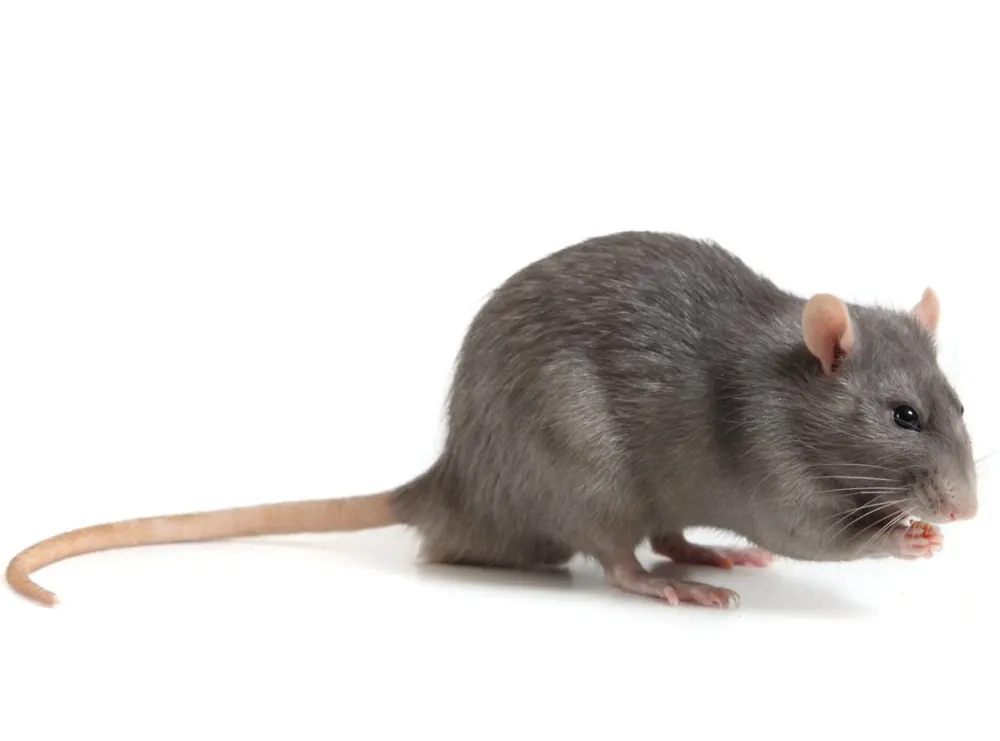
The short answer to getting rid of rats is this: remove the ones that are there, take away what drew them in, and close the gap they used. Most failed attempts skip the last two steps. This guide explains why, by looking at how rats actually behave, so that whatever you decide to do, you do it with your eyes open.
Meet the two rats you are likely to have
In South African homes and businesses, almost every rat problem involves one of two species. They look similar at a glance, but they live very different lives.
The roof rat (black rat)
Slender, with large ears, a pointed nose and a tail longer than its body. It is an agile climber that prefers to live high up: in ceilings, roof voids, palm trees and thick creepers. It travels along walls, fences, cables and branches, and it likes fruit, seeds and pet food.
The Norway rat (brown rat)
Heavier and stockier, with small ears, a blunt nose and a shorter, thick tail. It is a digger rather than a climber. Norway rats burrow under paving, slabs, sheds and compost heaps, and they are strong swimmers that use drains and sewers as highways. They eat almost anything and are the rat of warehouses, refuse areas and commercial kitchens.
Why it matters: a bait station on the ground does little for a roof rat living in the ceiling, and a trap in the roof will never meet a Norway rat living under the garden shed.
How a rat thinks
Rats are wary of anything new in their environment. Biologists call it neophobia, and it is the single biggest reason home attempts stall. Put a trap or a new food in a rat's path and it may walk around it for days before it tests it. Many people give up just before the rats would have started feeding.
Rats also follow fixed routes. They run along the edge of a wall with their whiskers touching it, and over time they leave greasy rub marks on beams, pipes and corners. A trap placed in the middle of a room is in the wrong place. A trap set flush against the wall on a runway is in the right one.
Their front teeth never stop growing, so they gnaw constantly. That is why they damage wiring, irrigation pipes, plastic water tanks and door frames, and why a small gap can quickly become an entrance.
Signs that tell you it's rats
- Scratching, scurrying or gnawing in the ceiling, usually after dark
- Dark droppings roughly the size of a raisin, often grouped along a route
- Rub marks at the edges of beams, holes and corners
- Holes chewed in food bags, especially dog pellets and bird seed
- Burrow entrances along foundations, under slabs or beside bins
- Half-eaten fruit under trees, or chewed avocados and citrus
If the droppings are tiny and pointed, you may be dealing with mice instead. Our guide to mice and how they differ from rats covers that in detail.
The health risks are real
Rats carry and spread disease through their urine, droppings and fleas. Leptospirosis, salmonella and rat-bite fever are the well-known ones, and contaminated food and surfaces are the usual route. In a roof space, the bigger day-to-day risks are chewed electrical cables, which can start fires, and contamination of insulation and stored items. For food businesses, a rat problem is also a hygiene and compliance problem.
Why DIY rat control often fails
We are not against homeowners dealing with a single rat themselves. A well-placed snap trap baited with peanut butter is fine. But these are the patterns we see again and again when a problem has dragged on:
- Loose poison in the roof. The rat eats it, dies inside a wall cavity and the smell lasts for weeks.
- Poison in the open garden. Dogs, cats, owls and other wildlife can be poisoned, either by the bait or by eating a dying rat.
- Too few traps, moved too often. Rats need time to get used to them. Moving them every day restarts the clock.
- Nothing done about the entry point. Kill the rats in a roof, leave the gap at the eaves open, and new rats move into the empty space.
- Food left on offer. Pet bowls outside overnight, fallen fruit and open feed bins will out-compete any bait.
What professional rat control involves
A proper treatment starts with a thorough inspection: roof void, eaves, garage, kitchen, outbuildings and the garden. We are looking for droppings, runways, nests, and above all how the rats are getting in. From there:
- Targeted treatment. Lockable, tamper-resistant bait stations outside and traps or stations inside, placed on real runways rather than wherever is convenient. Tracking powder is used in some situations to work out where rats are travelling.
- Proofing advice. A clear list of what needs closing: a lifted tile, a broken air brick, gaps around pipes and cables, overhanging branches. Some are DIY jobs, others need a builder or roofer.
- Follow-up visits to check the stations, remove dead rodents where they can be reached and confirm activity has stopped.
- Monitoring for businesses, with scheduled visits and records of each one.
If you are in the Bay, you can read about how this works on the ground on our rat control service page for Port Elizabeth. If mice are part of the picture too, our rodent control across Nelson Mandela Bay page covers both together.
Prevention that actually works
Cut branches back so they don't touch the roof. Store pet food and feed in sealed metal or thick plastic bins. Pick up fallen fruit. Keep compost in a closed bin. Fix lifted roof tiles and sheeting, which in a windy city like ours is worth checking after every big blow. Rats often move indoors as the weather cools, so autumn is the time to do a walk-around; our article on why rodents head indoors in winter explains what to look for. For the thinking behind keeping bait away from pets and owls, see how responsible pest control is done.
What does it cost?
The price depends on the size of the property, which species you have, how established they are and how much proofing is needed. A few roof rats in a house is a smaller job than Norway rats living under a warehouse floor. Businesses usually move onto a monitoring contract. We'll give you a quote after we've seen the site.
Pest Arrest has been dealing with rats for 25 years. Call 087 012 5550, or WhatsApp us a photo of the droppings or damage and we'll tell you what you're up against.
Questions we get asked
Can rats really get through a small gap?
Yes. A young rat can squeeze through a gap not much wider than a thumb, so cracks around pipes and under doors are worth sealing.
Why won't the rats take the bait?
Rats are naturally suspicious of new objects and food. They often avoid a station or trap for several days before they start feeding, which is why patience and correct placement matter.
Do rats live in the roof all year?
Roof rats can, if they have food and shelter nearby. Many people notice them more in the cooler months, when rats move in from the garden.
Are rat droppings dangerous to clean up?
They can be. Don't sweep or vacuum dry droppings; dampen them with disinfectant first, wear gloves and wipe them up to avoid breathing in dust.
Will a cat solve a rat problem?
Rarely. A cat may catch the odd rat, but it won't reach rats in the ceiling or burrows, and a large Norway rat is more than many cats will take on.
Is it rats or something else in the ceiling?
Rats and mice are the usual culprits, but birds, geckos and even bats can make noise. Night-time scurrying with droppings in the roof almost always points to rodents.