
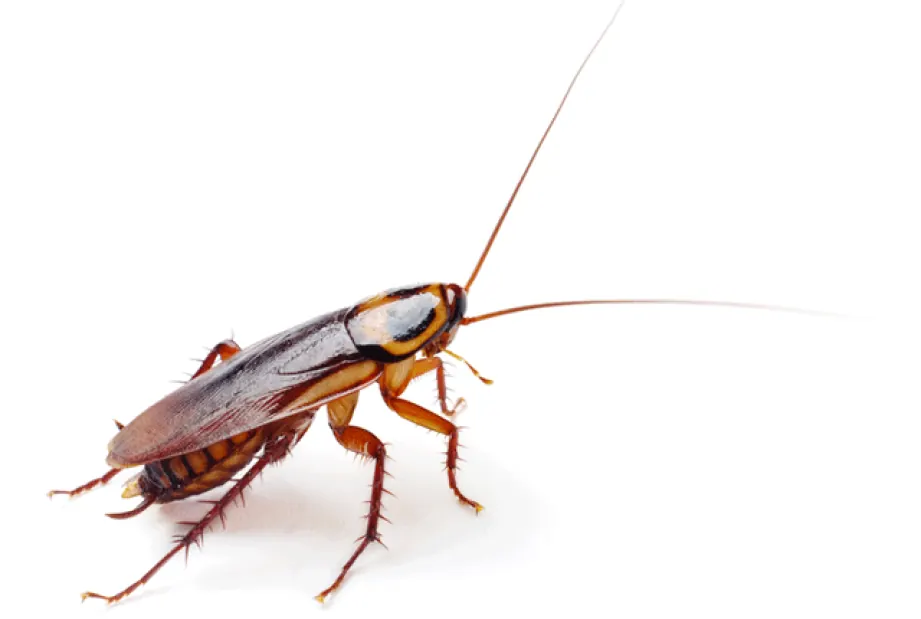
Crawling insects get into Despatch homes the simplest way possible: they walk in. Under the back door, along the gap where the paving meets the wall, through a drain, up a pipe. Once you know the routes, crawling insect control becomes much more effective, because you're treating the path they use rather than chasing individual insects around the house.
What counts as a crawling insect?
In our work it covers the things that walk rather than fly into your home: cockroaches, ants, fishmoths (silverfish), crickets, beetles, and the eight-legged visitors like spiders and scorpions that most people lump in with insects. Each has its own habits, but they share one thing in Despatch. Most of them live outside and come in when the conditions suit them.
Why yards matter so much here
Despatch homes usually stand on bigger plots than you'd find closer to the city, and a lot of that space is at ground level. Paving, flower beds, lawn, a wood pile, the pool pump housing, a stack of old roof tiles behind the garage. Every one of those is a hiding place.
When it's very hot, very dry or very wet, crawling insects move. They look for cool, damp, sheltered spots, and the house is often the closest one. That's why you suddenly see more of them after a storm or during a heatwave.
A few strays, or something bigger?
Seeing the odd beetle or cricket inside on a summer night is normal for a Despatch home with a garden. It doesn't need a treatment. These are the signs that you're past that point:
- Cockroaches in the kitchen when you switch the light on, especially small light-brown ones
- Ant trails that come back in the same place every day
- Fishmoths or their damage in linen cupboards, bookshelves and stored boxes
- Spiders or scorpions turning up inside more than once a week
- Droppings that look like ground pepper in drawers and behind appliances
If two or three of those sound familiar, the insects aren't wandering in by accident. They've found a way in and a reason to stay, and a planned treatment will do far more than a can of spray.
Where they get in
- Gaps under exterior doors, especially kitchen and laundry doors that open onto the yard
- Cracks where the paving has pulled away from the house wall
- Outside drains and gullies without a grid, or with a broken one
- Holes around pipes where plumbing goes through the wall
- Weep holes and air bricks at the base of the wall
- Garage doors with worn rubber seals
How we treat crawling insects
- Inspection. We check the outside perimeter, the drains, and inside areas where you're seeing activity, and identify which insects we're dealing with.
- Perimeter barrier. An odourless, non-staining residual spray along the base of the walls, door thresholds and entry points. Insects crossing it pick it up.
- Targeted treatment. Gel bait for cockroaches in kitchens, ant bait where trails lead, and treatment of drains where American cockroaches are coming up.
- Proofing advice. What to seal, what to move away from the walls, and which drains need covers.
Kids and pets need to stay off sprayed areas until they're dry. You don't need to leave the house.
The thing that undoes a good treatment
Hosing down the paving right after a perimeter treatment. We understand the habit, especially when dogs use the yard, but washing the barrier away takes the protection with it. Ask us when it's fine to wash, and keep the dog's spot to a part of the yard we haven't treated.
A Despatch-specific tip
Look at what's stacked against your house walls. Bricks, timber, garden furniture covers, firewood. Moving those things even a metre away from the wall takes away the shelter that crawling insects use as a stepping stone into the house. It's the cheapest proofing you'll ever do.
What does it cost?
The cost depends on the size of the house and yard, which insects are involved, and whether you need a follow-up. A basic perimeter treatment on a family home is straightforward. A house with cockroaches inside as well as ants and spiders outside takes more time. We'll give you a quote once we've seen the property.
Specific crawling pests
If you know what you're dealing with, these pages go deeper: cockroach treatments in Despatch and fishmoths in Despatch cupboards. Our crawling insect guide explains how the main species live, and crawling insect control in Port Elizabeth covers the wider metro. Just down the river, we also handle crawling insects in Bluewater Bay.
Call 087 012 5550 to book, or WhatsApp us a photo of the insect and we'll identify it for you.
Questions we get asked
Can you treat just the outside of the house?
Yes. A perimeter treatment on its own is often enough for ants, spiders and beetles that are coming in from the yard.
How long does a perimeter treatment last?
It depends on weather and how much the area gets washed or walked on. We'll tell you what to expect for your property and when a repeat makes sense.
Why do I see more insects after rain?
Rain floods nests and hiding places in the soil, so insects move to drier ground, which is often your house.
Are crickets and beetles worth treating?
Usually only if they're coming in in numbers. Our perimeter treatment takes care of them along with the more serious crawling pests.
Is the treatment safe for my dogs?
Yes, once it's dry. Keep pets off treated areas until then, and we'll show you exactly where we've sprayed.