
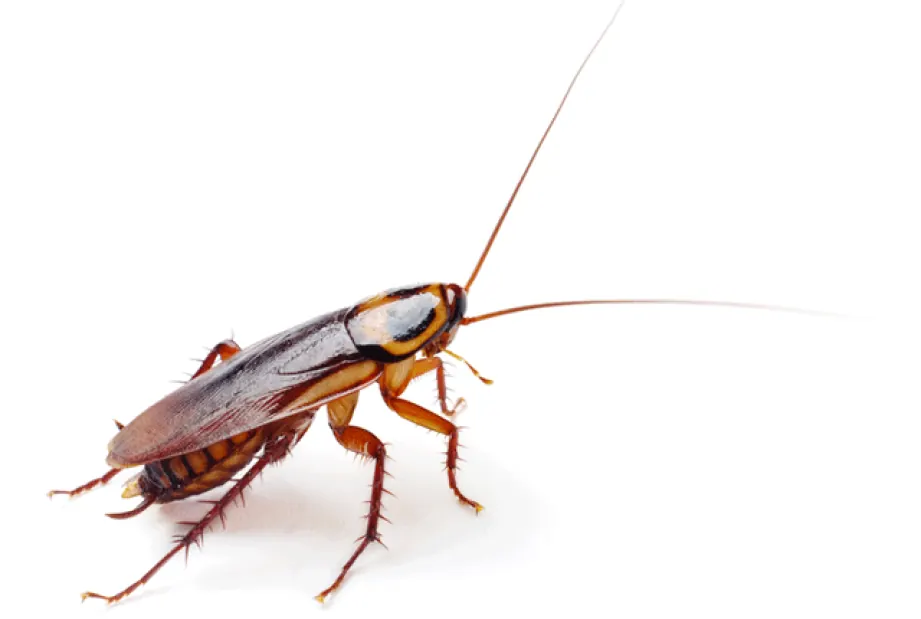
Crawling insects are a hiding problem before they are anything else. The ones running across your floor are a small share of what's in the walls, under the units and behind the skirting. Effective crawling insect control is about getting a product, usually a bait, into those hidden spaces, and about making the house less welcoming so they don't come straight back.
The usual suspects
Cockroaches
The German cockroach is small, light brown and lives indoors, mainly in kitchens and bathrooms. The American cockroach is large and reddish and comes up from drains and outside. Both are most active at night. Cockroaches like to press their bodies into tight spaces, which is why you find them in the hinge side of cupboard doors, inside appliance housings and in the gap behind a stove. Our cockroach guide covers them in full.
Ants
Ants arrive in trails, following scent markers left by scouts that found food. They may nest in the garden, in wall voids, under paving or in potted plants. What you see is the foraging team; the queen is elsewhere. Read our guide to how ant colonies work before reaching for a spray.
Fishmoths and silverfish
Silvery, carrot-shaped and quick, these feed on starches: paper, book bindings, wallpaper paste, cardboard boxes and some fabrics. They like damp, still air and are common in bookcases, wardrobes, garages and storerooms. For treatment in the Bay, see our page on fishmoth control in Port Elizabeth.
Others that crawl in
Crickets, beetles in stored food, earwigs and woodlice turn up from time to time. Scorpions and spiders are arachnids rather than insects, but they crawl in through the same gaps and are often treated with the same barrier approach. Where scorpions are a worry, our scorpion treatments around Port Elizabeth page has more.
What crawling insects need
Every crawling insect problem comes down to three things: shelter (cracks, voids, clutter), moisture (leaking pipes, condensation, damp cupboards) and food (crumbs, grease, pet food, paper, other insects). Take one away and the problem shrinks. Take two away and it often disappears.
Moisture is the one people underestimate. A slow leak under the sink or behind the washing machine can support cockroaches, fishmoths and ants all at once.
Signs to look for
- Small dark specks, like ground pepper, in cupboard corners and hinges: cockroach droppings
- Brown, purse-shaped egg cases behind appliances
- Lines of ants along skirting, window frames or electrical cables
- Irregular holes or scraped surfaces on paper, labels and book spines
- Small piles of soil or sand where ants are nesting under paving or in walls
- A musty, oily smell in kitchens with a heavy cockroach population
Why spraying the floor doesn't fix it
A spray on an open floor kills what walks across it while it's wet. The colony in the wall cavity carries on. With German cockroaches, spray can push them deeper into the building. With some ants, it can make the colony split and set up new nests. And sprays spread over areas where bait has been placed can make insects avoid the bait altogether.
That doesn't mean residual sprays are useless. Applied properly into cracks, along skirting, around pipe entries and as an outside barrier, an odourless, non-staining residual product stops insects coming in and kills them where they travel. The point is precision, not coverage.
How professional treatment works
- Find the harbourage. We check under and behind appliances, inside cupboard plinths, under sinks, around geysers, in drains and outside along the foundation.
- Bait where it counts. Gel bait in tiny spots inside cracks for cockroaches; ant bait along active trails, which workers carry back to feed the nest and queen.
- Residual treatment in cracks, crevices and outside entry points, keeping it off surfaces where food is prepared.
- Fix the cause. We point out leaks, gaps and storage habits that are feeding the problem.
- Follow-up. Cockroaches in particular often need a second visit to catch nymphs that hatch from protected eggs.
For our local service, see crawling insect control across Nelson Mandela Bay.
Prevention
Seal gaps around pipes under sinks and behind appliances. Fix drips. Store dry food in sealed containers. Don't keep cardboard boxes in damp garages for years. Wipe surfaces and sweep under the toaster and kettle. Keep firewood, rubble and pot plants away from the house walls, because they give crawling insects a place to wait before they come inside.
Homes and businesses are different jobs
In a house, crawling insects are usually confined to the kitchen, bathrooms and a garage or storeroom, and a single thorough treatment with a follow-up sorts most problems. In a restaurant, a factory canteen, a block of flats or a hotel, insects move between units and rooms through shared ducts, drains and service voids. Treating one area at a time just pushes them next door. These sites do best with the whole building treated together and then kept on a monitoring schedule, with records of each visit for health inspections.
What does it cost?
The main factors are which insect you have, how established it is, the size of the property and whether a follow-up is needed. A trail of ants in one kitchen is a quick job; a block of flats with German cockroaches in the ducts is not. We'll quote once we've seen it.
Send us a photo on WhatsApp and we'll tell you what's crawling around, or call Pest Arrest on 087 012 5550.
Questions we get asked
What is the most common crawling insect in kitchens?
The German cockroach is the one we treat most often in kitchens, especially in flats and food businesses. Ants come a close second in summer.
Are fishmoths harmful?
They don't bite or spread disease, but they damage books, papers, photos, wallpaper and some fabrics, especially in damp, closed rooms.
Will a barrier spray keep ants out?
It helps stop new ants coming in, but if a colony is already nesting inside a wall, baiting is what clears it.
Is gel bait safe in a kitchen?
Yes, when it's placed properly. It goes in small amounts into cracks and crevices, away from food surfaces and out of reach of children and pets.
Why do crawling insects come inside after rain?
Rain floods nests in the soil and drives insects to higher, drier ground, which is often your house. Ants especially tend to move in after a wet spell.