
Crawling insects can't fly over a problem, so they have to walk in through it. In a Walmer house that usually means a flower bed built up against the wall, a gap under a back door, an old air brick or a drain without a proper cover. Find those routes, treat the insects at their source and close what can be closed, and a house that's been overrun for years can settle down quickly.
The three we find most
Ants
Walmer's established gardens hold big, settled ant colonies. They nest under paving, in the soil along foundations and around the roots of old trees, and send foragers indoors looking for sugar, grease and water. You'll often see sand pushed up between the bricks of a patio, or a line of ants coming out of a crack in the kitchen skirting. Our page on ant treatments for Walmer properties goes into the species and the baits we use.
Cockroaches
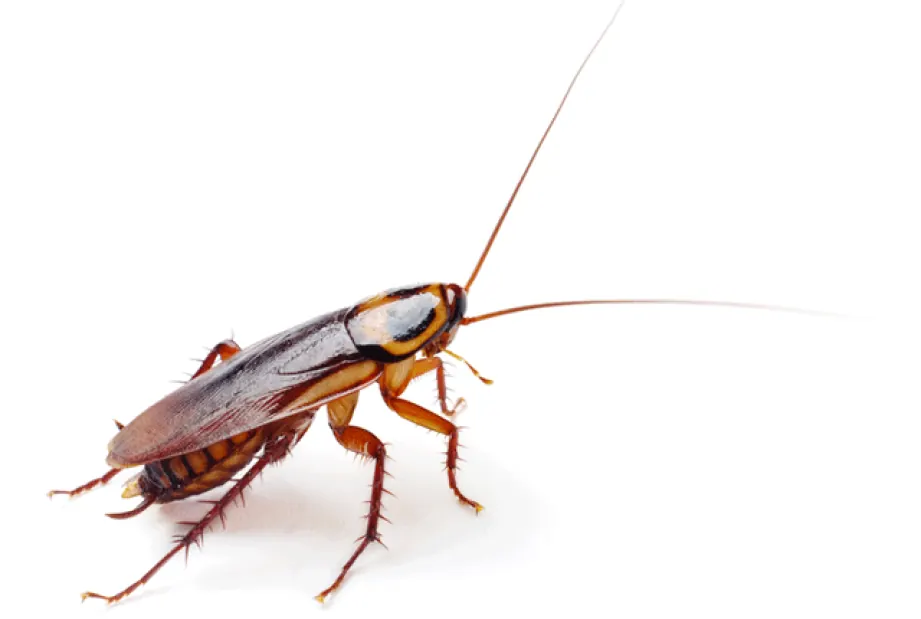
The large American cockroach lives in drains, manholes and damp garden spots and wanders indoors at night through floor drains, gaps around pipes and under doors. The small German cockroach is a kitchen insect that lives entirely indoors, usually arriving in a box, a second-hand appliance or a bag of shopping, then breeding behind the fridge and stove.
Fishmoths
Silvery, fast and fond of paper, starch and fabric. They do well in older homes with deep built-in cupboards, bookshelves against outside walls and roof spaces full of stored boxes. They don't bite, but they will damage books, wallpaper and clothes over time.
Why older Walmer houses let more in
Many homes in Walmer were built long before anyone thought about insect proofing. Some have suspended timber floors with air bricks underneath. Many have been extended, leaving joins where an old wall meets a newer one. Door frames have shrunk, skirting boards have pulled away from the wall and decades of garden beds have crept up above the damp course. Each of those is a gap at ankle height, which is exactly where crawling insects travel.
How we deal with them
- Inspection at ground level. We walk the outside of the house looking at beds, paving, drains, air bricks and door thresholds, then check kitchens, bathrooms, cupboards and under sinks inside.
- Bait where baits work. Ant baits are taken back to the nest and shared. Gel baits go into cracks and crevices for cockroaches, who carry it back to their hiding places.
- Residual treatment. An odourless, non-staining spray along skirtings, door frames, drains and a perimeter band outside stops new insects walking in.
- Proofing advice. We point out the gaps, from a missing drain cover to a door that needs a seal, and tell you which ones are worth fixing first.
You don't need to leave home for these treatments. Keep pets and children off sprayed surfaces until they've dried.
A Walmer-specific tip
Look at how high your garden beds sit against the house. In many older Walmer gardens, years of compost and mulch have raised the soil until it touches the wall above the air bricks or the damp course. Ants and cockroaches use that soil as a ramp straight into the wall. Pulling the bed back and leaving a narrow strip of gravel or bare paving along the wall makes a real difference.
What people get wrong
Using an ant powder or spray on the trail and calling it done. The trail stops for a day because the foragers on it are dead, but the nest has hundreds more, and the colony may split and set up new nests nearby. With cockroaches, spraying the kitchen sends them deeper into wall cavities. Baiting is slower to see but far more effective.
What does it cost?
The size of the house, which insects you're dealing with and how many areas are involved all count. One ant problem in the kitchen is quick. A large older home with cockroaches in the drains, ants along the foundations and fishmoths in the cupboards takes a full visit and sometimes a follow-up. If a few supermarket ant baits are likely to sort out your problem, we'll tell you. Otherwise we quote after the inspection.
For the background on how these insects live and breed, read the crawling insect guide. We also treat crawling insects in Newton Park and across the Bay through our Port Elizabeth crawling insect service. If something bigger is going on, like rats in the roof, see our Walmer pest control overview. Call 087 012 5550, or send us a photo on WhatsApp.
Questions we get asked
Which crawling insects are most common in Walmer homes?
Ants are the most common, followed by American cockroaches from drains and fishmoths in older cupboards and roof spaces.
Why do I only see cockroaches at night?
Because they hide during the day. American cockroaches come out of drains and damp corners after dark, so a sighting at night usually means a drain or gap nearby.
Will a perimeter spray stop ants coming in?
It helps, but on its own it won't clear the colony. We combine a perimeter treatment with ant baits so the nest itself is dealt with.
Do fishmoths mean my house is damp?
Not always, but they do like humid, undisturbed spots. Port Elizabeth's coastal air and closed cupboards in older homes are often enough.
Can I stay in the house during treatment?
Yes. Baits and residual sprays don't require you to move out. Keep children and pets away from sprayed surfaces until they're dry.