
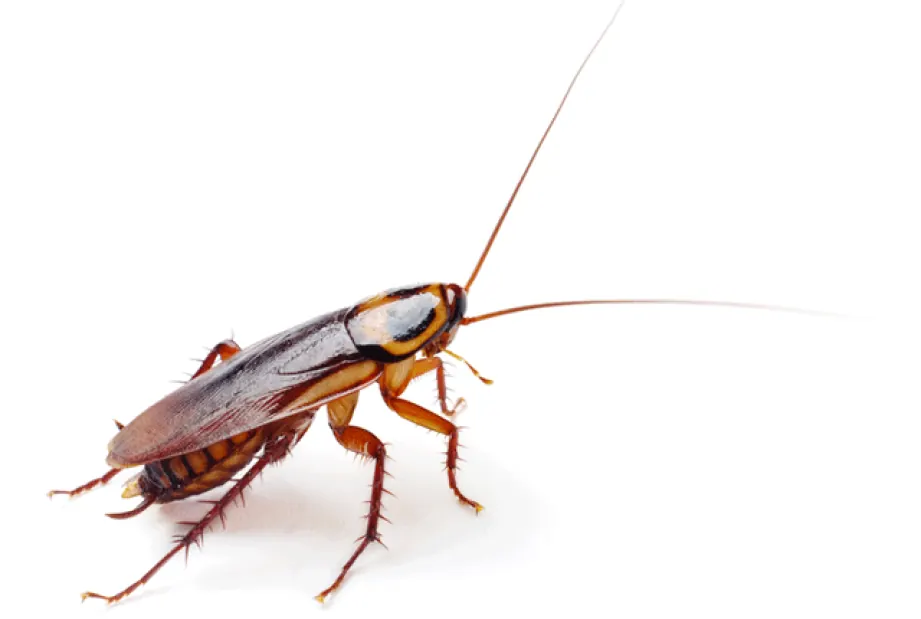
If something keeps scuttling across your floor in Summerstrand, it is almost always one of three things: a cockroach, an ant or a fishmoth. All three live in hidden spaces and only come out to feed, which is why spraying the ones you see rarely fixes anything. We find where they live and treat there.
A block of flats is one big habitat
A large part of Summerstrand lives in flats and townhouse complexes, and to a crawling insect a block is one connected building. Pipes run from the ground floor to the roof through shared ducts. Electrical conduits link one unit to the next. Refuse rooms collect food waste from every household. Behind the kitchen units, a gap around a waste pipe can lead straight into the neighbour's kitchen.
That's why crawling insects in a block need to be treated as a building problem. The refuse room, the bin area, the service ducts and the ground-floor drains are often the source, and the flats are simply where the insects end up. We work with body corporates and managing agents to treat common areas and units together.
What you're likely seeing
Cockroaches
Small, light-brown German cockroaches in kitchens; big reddish American cockroaches coming up through floor drains and from the bin area. They're the crawler we're called about most in the suburb. Our page on getting rid of cockroaches in Summerstrand explains why the two need different treatment.
Ants
Ants nest outdoors in sandy soil and under paving, then follow wall cavities, cable runs and window frames inside, sometimes several floors up. Without knowing where to look, the trail is easy to lose. There's more on treating ant trails in Summerstrand homes.
Fishmoths
Silvery, carrot-shaped and quick, fishmoths live in damp, undisturbed places: built-in cupboards, bookshelves, storerooms and roof spaces. They eat paper, glue and fabric, and they thrive in the moist sea air here.
Ground floors and sea-facing units
Ground-floor flats and the houses closest to the sea tend to see the most crawlers. They're nearest to the drains, the bins and the garden soil, and damp is at its worst at ground level. Garden flats with paving right up to the walls often have ant nests directly beneath them. If you're on the ground floor, a barrier treatment outside combined with drain treatment inside usually makes a clear difference.
How we deal with crawling insects
- We trace them back. We follow the trail or the droppings to the harbourage, whether that's under the fridge, inside the stove, in a duct or under the paving outside.
- Gel bait goes into cracks and crevices for cockroaches, so they carry it back and it spreads through the group.
- Ant bait goes on active trails, where workers take it back to the nest and the queen.
- Odourless, non-staining residual sprays go into voids, drains, skirting and outside perimeters.
- A follow-up visit is booked where eggs or a heavy infestation mean one round won't finish the job.
Nobody needs to move out. Keep kids and pets off any sprayed surface until it's dry.
Where people go wrong
Setting off a fogger in the flat. Foggers settle on open surfaces, which is exactly where crawling insects don't live. They barely touch the cockroaches inside wall gaps and appliance housings, and they can push them into the neighbouring flats, which then send them straight back.
One thing you can do today
Look at where the pipes come through the wall under your kitchen sink and behind the washing machine. In a lot of Summerstrand flats those holes were cut much bigger than the pipe and never sealed. Filling them with sealant or filler closes one of the main highways between units, and it costs very little.
Refuse rooms deserve more attention
In many Summerstrand blocks the refuse room is the single biggest source of crawling insects. Bags split, liquid pools under the bins and nobody wants to clean it. A refuse room that's hosed down and dried regularly, with bins that close, takes away the food and moisture that keep cockroaches breeding next to the building. If you sit on a body corporate, this is one of the cheapest changes you can push for.
What does it cost?
A single unit with a light problem is a quick job. A whole block with common areas, or a restaurant kitchen, takes longer and usually needs follow-up visits or a schedule. The type of insect matters too: a single ant trail can sometimes be handled with good shop bait, while German cockroaches nearly always need professional gel baiting. We quote after an inspection.
There's more detail in our guide to crawling insects and on crawling insect control across Port Elizabeth. Older homes inland have their own issues, which we cover under crawling insects in Mill Park, and the main Summerstrand pest page covers everything else.
Call 087 012 5550 or WhatsApp us a photo of what's crawling, and we'll tell you what it is.
Questions we get asked
Can you treat just the common areas of our block?
Yes, and it often helps a lot, because refuse rooms and ducts are common sources. It works best when the affected units are treated at the same time.
Is a fogger ever a good idea for cockroaches?
Rarely. Foggers miss the cracks and voids where cockroaches actually live, and they can drive them into neighbouring flats.
Why do I only see cockroaches at night?
Because they hide in dark gaps during the day and come out to feed when it's quiet. Seeing them in daylight usually means a large population.
Do crawling insects come up from the beach?
Not from the sand itself. Ants come from garden soil and paving, cockroaches from drains, bins and other buildings, and fishmoths from damp, undisturbed spaces indoors.
Will the treatment mark my tiles or walls?
No. The residual sprays we use are odourless and non-staining, and gel bait is applied in small spots inside cracks.