
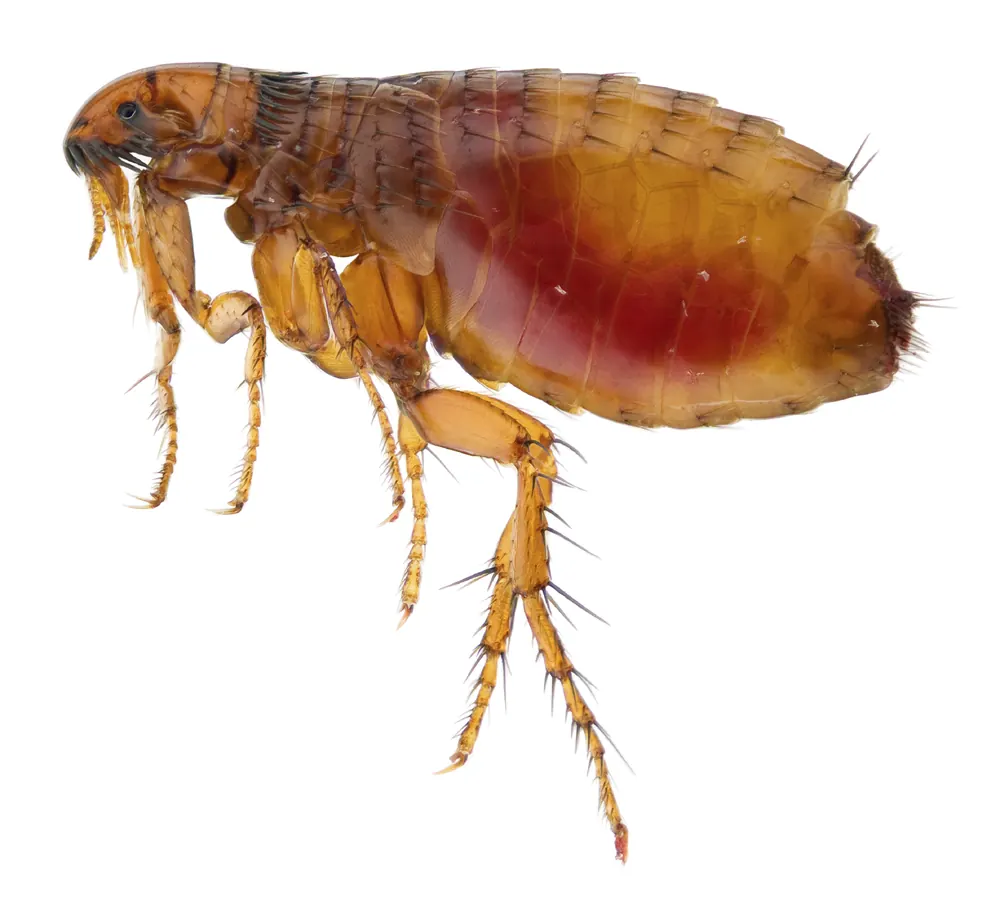
If you've got fleas in a Mill Park house, the pet is only part of the story. Most of the flea population at any time is eggs, larvae and pupae living in carpets, rugs, pet beds and the gaps between floorboards, not adult fleas on the dog or cat. To get rid of them you need to treat the pets and the house at the same time, and keep going long enough to catch the fleas still developing in the floor.
How fleas settle into older homes
Adult fleas lay eggs on your pet, and those eggs fall off wherever the animal walks, sleeps and lies in the sun. The larvae that hatch avoid light and burrow down into carpet pile, under rugs and into cracks. In many older Mill Park homes with original timber floors, the narrow gaps between boards and along the skirtings are exactly the dark, sheltered spots larvae look for. A quick vacuum over the surface doesn't reach them.
The larvae spin cocoons and wait as pupae, sometimes for weeks or months, until they sense vibration, warmth or carbon dioxide. That's why fleas can seem to explode out of nowhere when you move into a house that's been empty, or come back from holiday.
Where fleas come from in Mill Park
- Your own pets, picking them up in the garden or on walks and bringing them home.
- Previous occupants' pets. Moving into an older house that had dogs or cats can mean a floor full of waiting pupae.
- Wildlife and strays in the garden. Big, leafy gardens attract cats, birds and other animals, and fleas can drop off where they rest.
- Shady, damp areas outside. Flea larvae survive best in moist, shaded soil, such as under a deck, beneath trees or in a dog's favourite resting spot.
Signs of fleas
- Bites around ankles and lower legs, often in small clusters
- Pets scratching, biting at their back or losing fur near the tail
- Tiny black specks in the pet's coat or bedding that turn red on a damp tissue (that's flea dirt)
- Small dark insects jumping onto socks when you walk across a rug
Bites in rows on the upper body after sleeping are more typical of bed bugs. If that sounds familiar, read bed bug treatment in Mill Park instead. For bites you can't place at all, our guide to biting insects in Mill Park will help narrow it down.
Our flea treatment
- Inspection. We find where the pets spend their time inside and outside, and where larvae are likely to be developing.
- Preparation. Before we arrive, vacuum thoroughly, including along skirtings and between floorboards, wash pet bedding hot, and lift loose items off the floor.
- Treatment. We apply an odourless, non-staining residual treatment to carpets, rugs, floors, skirting gaps and pet resting areas, plus shaded outdoor spots where the pets lie.
- Pet treatment. At the same time, your pets need a flea product from the vet. We don't treat animals ourselves, but the two must happen together.
- Follow-up if needed to catch fleas emerging from pupae after the first round.
You can stay in the house, but keep the children and animals off the treated floors and rugs until they have dried.
A tip for timber floors
Keep vacuuming every day or two for the weeks after treatment, using the crevice tool along the skirtings and the gaps between boards. The vibration encourages waiting pupae to hatch so the treatment can reach them, and the vacuum removes eggs and larvae. Empty the vacuum outside afterwards.
What people get wrong
Treating the dog and nothing else. The pet looks better for a while, but new fleas keep hatching from the floor and jump straight back on. Or the opposite: treating the house but not the pets, so the pets keep laying new eggs into the freshly treated floor. Both halves have to happen together.
What does it cost?
It depends on the size of the house, how many rooms the pets use, whether outdoor areas need treating and how heavy the infestation is. A light problem caught early, in a home where the pets are already on a good vet product, can sometimes be sorted with thorough vacuuming and washing alone. A heavy infestation, or a house you've just moved into that's full of hatching fleas, is where a professional treatment pays off.
See flea control across Port Elizabeth and our work on fleas in Newton Park homes. The Mill Park pest control overview covers the suburb's other pests.
Call 087 012 5550 to book, or WhatsApp us a photo of what's jumping and we'll confirm it's fleas.
Questions we get asked
Why do I have fleas when I don't have a pet?
Fleas left behind by a previous occupant's animals can wait in the floor as pupae for a long time, then hatch when you move in. Animals visiting the garden can also bring them.
How long does it take to get rid of fleas?
Most homes see a big drop within a couple of weeks, but pupae keep hatching for a while, so expect some fleas for a few weeks after treatment.
Do you treat my dog or cat?
No. Pets should be treated with a product from your vet, at the same time as we treat the house.
Will the treatment harm my wooden floors?
No. We use odourless, non-staining products that are suitable for timber floors and rugs.
Why am I seeing more fleas after the treatment?
Pupae are hatching and coming into contact with the treated surfaces. Keep vacuuming, as this speeds the process up.
Do you need to treat the garden?
Only the shaded spots where pets lie and rest. Treating the whole garden isn't usually necessary.