
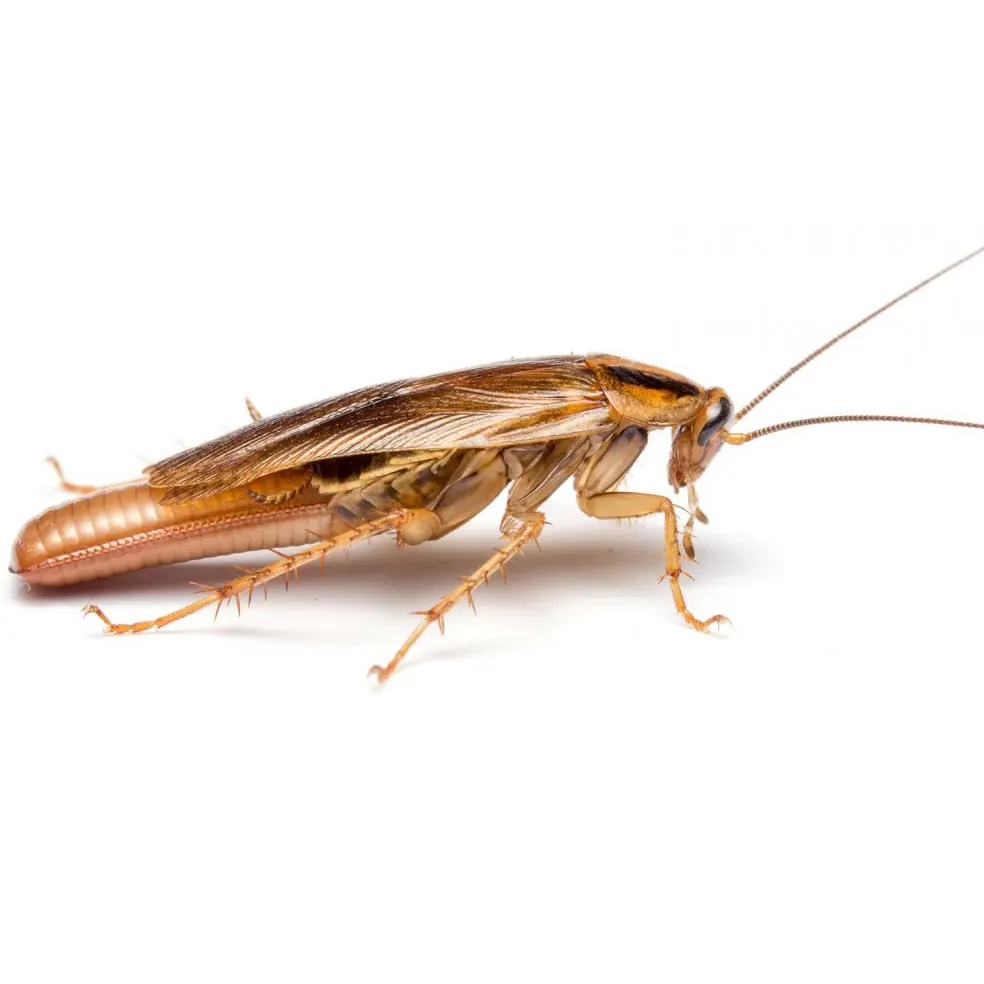
The cockroach you're seeing in a Mill Park house tells you where the problem is. A large, reddish-brown cockroach in the bathroom or scuttling across the passage at night has most likely come up from a drain or the space under the floor. Small, light-brown cockroaches in the kitchen, especially in daylight, mean a breeding population is living in your cupboards and appliances. We treat the first at the drains and entry points, and the second with gel baits in the kitchen.
Older plumbing and the American cockroach
The large American cockroach lives in sewers, stormwater lines, manholes and damp underfloor areas. Older suburbs tend to have older drainage, with cracked pipes, loose inspection covers, dried-out traps in unused basins and gullies with broken grids. In Mill Park we regularly find these cockroaches coming in through:
- Floor drains and shower drains, particularly in rooms that aren't used every day
- Gully traps outside the kitchen and bathroom where the grid is missing or cracked
- Gaps around waste pipes where they go through the floor or wall
- Air bricks into the underfloor space
They'll forage indoors at night and go back out, so you may only see one now and again, but where there's one there are usually many more in the drain system.
Busy kitchens and the German cockroach
The small German cockroach doesn't come from outside. It's carried in with grocery boxes, appliances or second-hand furniture, then breeds indoors in warm, tight spaces near food and water: behind the fridge, inside the stove, under the sink, in the dishwasher housing and in the hinges of kitchen units.
In Mill Park we see German cockroaches most in kitchens that work hard. A guesthouse kitchen serving breakfast every morning, a shared tearoom in a house converted into offices, or a big family kitchen in an older home with plenty of gaps behind old cupboards all give them what they need.
Signs of cockroaches
- Cockroaches running when you switch on the light
- Small dark droppings like ground pepper in drawers and on shelves
- Brown egg cases tucked into corners and hinges
- A musty, oily smell in cupboards with a heavy infestation
- Seeing them during the day, which means the hiding spots are full
Our treatment
- Inspection and identification. We confirm which species you have and find where they're hiding and getting in.
- Gel baits for German cockroaches. Small spots of bait go into cracks and crevices near where they shelter. They feed, return to their hiding places and pass it on to others. This is what clears a kitchen.
- Drains and entry points for American cockroaches. A targeted, odourless residual treatment in drains, gully traps, pipe gaps and around air bricks, plus outdoor areas where they shelter.
- Follow-up where needed. German cockroach eggs are protected in a case and hatch after the first treatment, so a second visit is often part of the plan.
There's no need to go anywhere while we treat. Children and pets should stay off sprayed surfaces until they're dry, and we'll tell you what to cover in the kitchen.
Ants in the same kitchen? They often turn up together. See ant control in Mill Park for how we bait those.
A Mill Park tip that works
Pour a jug of water down every floor drain, basin and shower once a week, including in spare rooms and outside toilets. A drain trap only blocks cockroaches and smells when it's full of water, and in big older houses the drains in unused rooms often dry out and become open doors.
What people get wrong
Spraying the kitchen with an aerosol, then putting gel bait on top. The spray repels cockroaches from the bait and can contaminate it, so neither works properly. If you're going to use bait, keep sprays well away from it.
What does it cost?
The species makes a big difference. American cockroaches from drains are often a single treatment with some plumbing advice. A German cockroach infestation in a busy kitchen usually needs a follow-up. After that it's the size of the property and the number of kitchens: a guesthouse with a main kitchen and kitchenettes in each room is a bigger job than one family kitchen. Businesses do well on a regular schedule with records kept. If you've seen a single large cockroach once, topping up dry drains may be all you need to do.
For the full picture see cockroach control across Port Elizabeth and our cockroach species and treatment guide. We also handle cockroaches in Summerstrand's flats and digs, and the Mill Park area page covers other local pests.
Call 087 012 5550 to book, or WhatsApp us a photo of the cockroach and we'll tell you which one it is.
Questions we get asked
Why do I only see big cockroaches at night?
American cockroaches shelter in drains and underfloor spaces by day and come out to forage after dark. Seeing one usually means they're getting in through a drain or gap.
Are the small kitchen cockroaches harder to get rid of?
They breed faster, but gel baits deal with them very well when placed properly. A follow-up visit catches any that hatch after the first treatment.
Do I need a plumber?
Sometimes. If a drain is cracked, a gully grid is missing or a pipe gap is open, fixing it stops the large cockroaches getting in.
Is gel bait safe in a guesthouse kitchen?
Yes. It's placed in cracks and crevices away from food preparation surfaces, and we'll tell you what to keep covered.
Will cockroaches come back after treatment?
German cockroaches can be brought back in with boxes or appliances, and American ones will try the drains again. Keeping traps full and checking deliveries helps.
Can you work around office hours?
Yes. For offices and practices in converted homes we can treat early or after hours.