
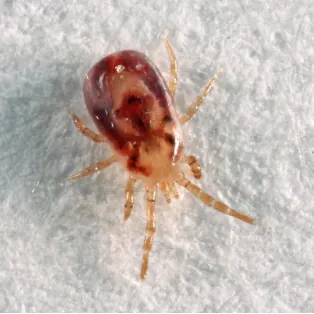
If you're suddenly being bitten by tiny, almost invisible mites in a Mill Park house, and especially if you've noticed birds nesting in the roof or eaves, you're very likely dealing with bird mites. They come from the nest, not from you or your house, and they appear when the young birds have left and the mites go looking for new hosts. Treating the bedrooms alone won't stop it. The nest has to be found and dealt with, and the gap the birds used closed.
Why Mill Park roofs attract nesting birds
Large, older roofs have more places for birds to get in than newer ones. Over the years, the wind lifts edge and ridge tiles, fascia boards come away, and gaps open under the eaves where there was never any bird mesh. Pigeons, mynas, starlings and sparrows all take advantage, and the mature trees and open green spaces nearby, including St George's Park, mean there are plenty of birds around looking for a place to nest.
Inside, a big roof void is quiet, warm and dry. A nest can sit above a bedroom ceiling for a whole breeding season without anyone noticing, until the birds leave and the mites start coming through light fittings, ceiling gaps and cornices.
How bird mites behave
Bird mites live in and around nests and feed on the blood of birds, especially chicks. They multiply quickly while the nest is active. When the chicks fledge or the nest is abandoned, the mites lose their food source and spread out looking for another. Some find their way into the rooms below.
They'll bite people, but they can't complete their life cycle on humans. That's good news: once the nest is dealt with and the house treated, the mites die out.
Signs it's bird mites
- Itchy bites, often on the upper body, arms and neck
- Tiny, moving specks, pale or reddish, on bedding, pillows, walls or windowsills
- Mites concentrated near a ceiling light, cornice, window frame or a wall under the roof
- Birds seen flying in and out under the tiles or eaves in recent weeks
- Bites that started suddenly, with no pets and no recent travel
Bites can come from several different pests, and it's worth being sure before treating. Our page on identifying biting insects in Mill Park compares the signs of bird mites, fleas and bed bugs.
How we deal with them
- Find the nest. We go into the roof space and check eaves, gutters and gaps under the tiles above the affected rooms.
- Treat the nest site. The nest and the surrounding area are treated so the mites there are killed. Where possible and appropriate, the old nest material is removed.
- Treat the affected rooms. An odourless, non-staining residual treatment around cornices, light fittings, window frames, skirtings and the areas where mites are appearing.
- Advise on closing the gap. Bird mesh at the eaves, a roofer to re-bed lifted tiles, or a repair at the fascia, so birds can't nest in the same spot next season.
- Follow-up if mites are still active after the first treatment.
Nobody has to move out. Once the bedrooms are treated, leave them to dry before children or pets go back in.
A tip for older roofs
Close nesting gaps in autumn or winter, after the breeding season and once you're sure no birds are using the nest. Blocking a hole while there are chicks inside traps them and creates exactly the problem you're trying to avoid, along with a smell. A roofer who fits bird mesh along the eaves in the quiet season prevents most repeat problems.
What people get wrong
Pulling the nest out or blocking the hole straight away. With the birds gone, every mite in that nest moves at once, and the bites get worse, not better. The nest needs to be treated as part of a plan that also covers the rooms below. Another common mistake is replacing the mattress or spraying the bed for bed bugs, when the source is several metres above the ceiling.
What does it cost?
It depends on how many nests there are, how easy they are to reach in the roof or eaves, how many rooms are affected and whether a follow-up visit is needed. A single nest above one bedroom is a fairly contained job. Several nests across a large, steep roof take more time. The proofing work itself, such as bird mesh or re-bedding tiles, is usually done by a roofer or handyman and costs separately.
See bird mite treatment across Port Elizabeth, our bird mite life cycle and treatment guide, and how we deal with bird mites in Newton Park. The main Mill Park page covers the suburb's other pests.
Call 087 012 5550 to book, or WhatsApp us a photo of the mites on a piece of white paper or tape and we'll help confirm what they are.
Questions we get asked
Can bird mites live on people?
No. They bite people when they can't find birds, but they can't breed on humans. Once the nest is treated, they die out.
Why did the bites start suddenly?
Usually because the young birds left the nest. The mites lose their food source and spread into the house looking for another.
Should I remove the nest myself?
Not before it's treated. Removing an untreated nest sends all the mites into the house at once.
Can you tell it's bird mites from the bites alone?
Not reliably. Seeing the mites, often near a ceiling or window, and finding a nest in the roof is what confirms it.
When should I bird-proof the roof?
Once the nest is no longer in use, ideally in autumn or winter. Never block a gap while chicks are still inside.
Do I need to throw out my bedding?
No. Wash it hot and dry it on high. The mites can't survive long without birds once the source is dealt with.