
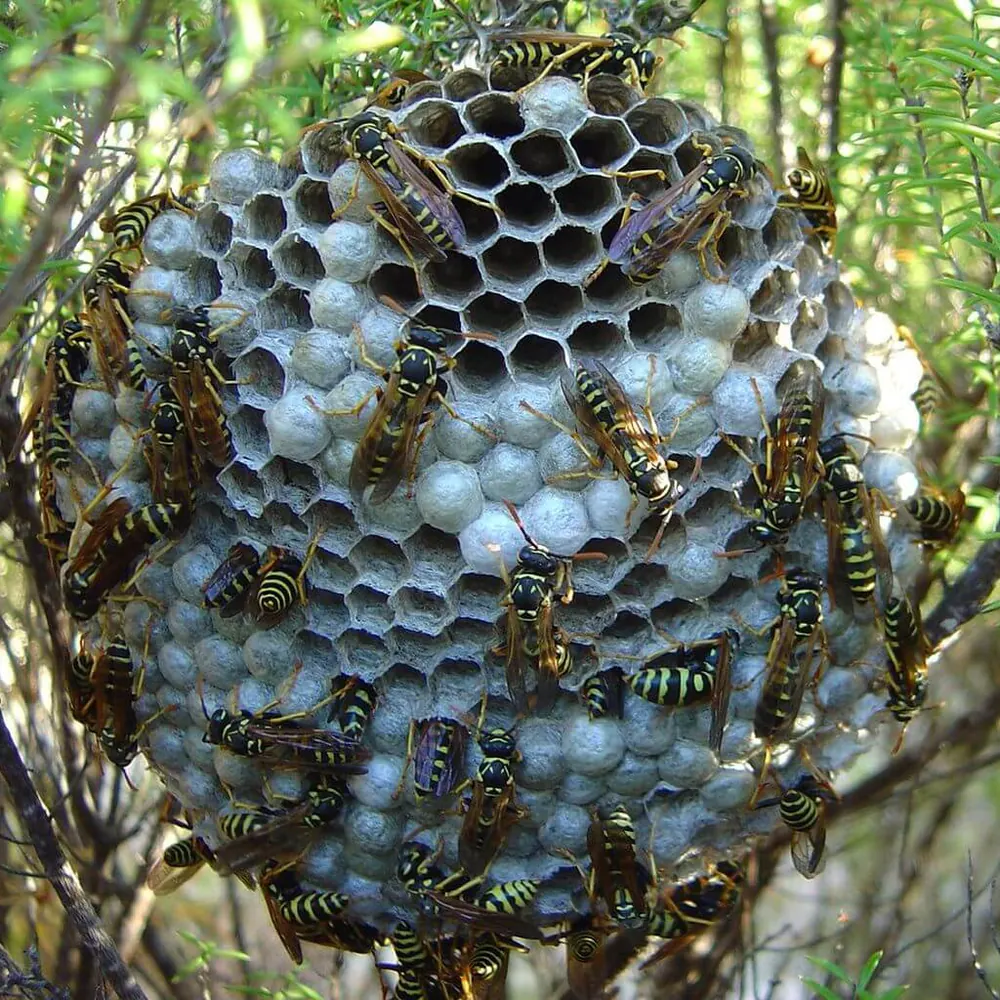
If wasps are building a nest at your Mill Park home, the safest move is to leave it alone and have it treated directly. Knocking a nest down with a broom or spraying it from a distance usually leaves angry wasps, a few stings and a new nest a metre away a week later. Treating the nest itself, at the right time of day, deals with the colony and lets the nest be removed cleanly.
Where wasps build in Mill Park
Most of the wasps we're called out for in the suburb are paper wasps, which build open, umbrella-shaped nests of grey papery cells. Mill Park's older homes and big gardens give them plenty of options:
- Under wide eaves and veranda roofs, sheltered from wind and rain.
- Inside large roof spaces, entering through a gap under a tile or at the fascia, where nests can grow for a whole season unnoticed.
- In the branches of mature trees and shrubs, often at head height where someone gardening walks straight into them.
- Behind shutters, in window frames and under gutters.
- In creepers growing up the walls, which hide nests until they're quite large.
- Around outbuildings, garages and old garden sheds.
Why it matters more for guesthouses and offices
For a family home, a nest at the back of the garden can sometimes be left alone. But in a converted house running as a guesthouse, practice or office, a nest by the front door, above the parking area or next to a breakfast patio is a real risk. Guests and clients don't know it's there, and someone who reacts badly to stings may be among them. Those nests should be dealt with promptly.
Signs of a nest you haven't found yet
- Wasps flying repeatedly to and from the same spot on the roofline
- Wasps inside the house near a ceiling or light fitting, which can mean a nest in the roof
- Wasps scraping wood from fences, garden furniture or old timber to make paper
- A steady stream of wasps in and out of a tree or creeper
How we treat wasp nests
- Locate the nest. We find the nest, including in the roof space if wasps are getting in under the tiles.
- Treat the nest directly. We apply a targeted treatment to the nest itself, usually early or late in the day when most of the wasps are home.
- Remove it. Once the colony is dealt with, we take the nest down where it's reachable, so it doesn't attract more wasps or leave dead brood behind.
- Treat favourite spots. Where wasps keep returning to the same eaves or veranda year after year, a residual treatment on those surfaces discourages new nests.
You can stay home. Keep children and pets inside or away from the area during treatment and until treated surfaces are dry.
A Mill Park tip: check in spring
Walk around the house in early spring and look under the eaves, the veranda roof and in the trees and creepers nearest the doors. A nest started by a single queen is the size of a coin and easy to deal with. The same nest in late summer may house a large colony. Trimming creepers back from the eaves also takes away some favourite building sites.
What people get wrong
Spraying a nest with a garden hose or household insecticide from a ladder. It's a fast way to be stung on a ladder, which is how people fall. Even when it works, the surviving wasps usually rebuild close by. If the nest is high, in the roof or near a doorway, have it treated professionally.
Wasps aren't the only thing nesting in big old roofs. If you've had birds nesting under your tiles and are now finding tiny biting mites indoors, read about bird mites from Mill Park roof nests.
What does it cost?
It depends on how many nests there are, how big they've grown and how hard they are to reach. A single small nest under a low eave is a quick job. Several nests, one inside a roof void, or nests high up in a large tree take longer. A tiny nest you've spotted early, low down and away from doors, can be dealt with yourself after dark with a suitable product, provided you're not allergic and can do it from the ground.
For more, see wasp removal throughout Port Elizabeth, our wasp identification and safety guide, and how we handle wasps around Summerstrand homes and flats. The Mill Park pest control page covers the suburb's other pests.
Call 087 012 5550 to have a nest dealt with, or WhatsApp us a photo of it and we'll advise.
Questions we get asked
Should I knock the wasp nest down myself?
It's not a good idea. Knocking it down scatters angry wasps and they usually rebuild nearby. Treating the nest first and then removing it is safer and more effective.
What time of day do you treat wasp nests?
Usually early morning or late afternoon, when most of the wasps are on the nest.
Can wasps nest inside my roof?
Yes. In older Mill Park houses they often get in under a tile or at the fascia and build in the roof void, where the nest can grow unnoticed.
Will the wasps come back to the same spot?
Wasps often favour the same sheltered eaves each year. A residual treatment on those surfaces and early spring checks help prevent new nests.
Are wasps a risk at my guesthouse?
They can be, especially near entrances and outdoor seating. Nests where guests walk should be treated promptly.
Do you remove nests from trees?
Yes, where they're reachable safely. Very high nests may be treated in place and left once inactive.