
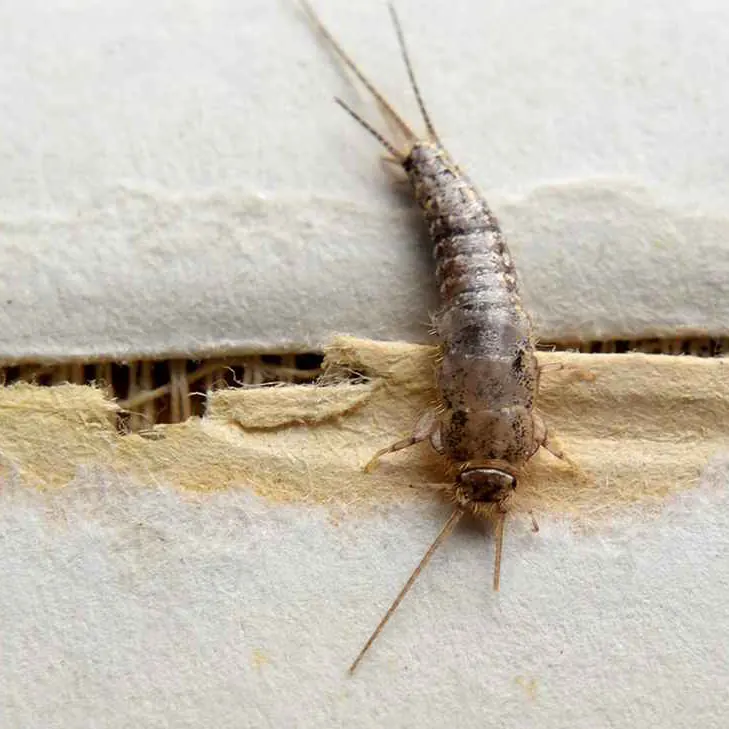
Fishmoths, also called silverfish, are a slow-burn problem. You might see one dart out of a book or slide down the bath, and think nothing of it. Meanwhile they've been eating the glue in book bindings, grazing on wallpaper paste and leaving yellowish marks on stored linen. In older Mill Park homes and the converted houses used as offices, there's usually a lot for them to eat and a lot of undisturbed places to hide. Treating those hiding places, and drying them out, is how you get on top of them.
What fishmoths want, and why Mill Park has it
Fishmoths need three things: food that's high in starch or protein, darkness, and a bit of humidity. Port Elizabeth's coastal air already gives them the humidity. Mill Park's older buildings supply the rest:
- Deep built-in cupboards and linen presses that are rarely emptied completely.
- Bookshelves and libraries, with paper, cloth bindings and starch-based glues.
- Wallpaper and old paint, particularly where the paste behind it is starch-based.
- Stored files and archive boxes in converted offices, practices and guesthouse storerooms, often in a back room or roof space that nobody visits.
- Gaps behind skirtings and under timber floors, where they shelter between meals.
Shade from big trees also keeps some older houses a little cooler and damper than they would be, especially on the south side, which suits fishmoths well.
Signs of fishmoths
- Silvery, carrot-shaped insects with three tails that move in quick bursts
- Irregular holes or scraped surfaces on paper, book covers, photos and labels
- Yellowish stains or small holes in stored linen, cotton and rayon
- Tiny dark droppings like pepper on shelves and inside drawers
- Small, shiny scales left behind on surfaces they've crossed
Because they feed at night and hide during the day, one fishmoth seen in daylight often means a busy population close by. Take a torch to the backs of shelves, the folds of stored linen and the undersides of boxes after dark. That's when you'll see how many there really are, and where they're concentrated.
How we treat them
- Find the hiding places. We check cupboards, bookshelves, storerooms, bathrooms, the roof space if items are stored there, and skirtings and floor gaps.
- Targeted residual treatment. An odourless, non-staining product is applied into cracks and crevices, along cupboard edges and shelving, behind skirtings and into the voids where fishmoths shelter. It doesn't mark books, fabric or timber when applied properly.
- Advice on storage and humidity. Where items are stored, how they're boxed and how to keep moisture down.
- Follow-up on larger or older infestations, especially where there's a lot of stored paper.
You'll need to empty the cupboards and shelves we're treating, and keep children and pets away until the surfaces are dry. There's no need to leave the house.
Fishmoths are one of several crawling insects that use the gaps in older timber floors. Our page on crawling insects in Mill Park homes explains how we treat those routes.
A tip for converted offices
Move archive boxes out of cardboard and into sealed plastic crates, and get them off the floor and away from outside walls. Cardboard is food for fishmoths as well as shelter, and boxes left against a cool external wall in a back room or store collect moisture. Lift them, seal them, and check them once a season.
What people get wrong
Using mothballs or cedar blocks and calling it done. They may put off clothes moths to a degree, but they do very little against fishmoths, which will carry on feeding in the same cupboard. Treating the cracks where they hide, and reducing damp, is what makes the difference.
Fishmoths or cockroaches?
Both are night-time insects that hide in cupboards and leave pepper-like droppings, so people sometimes confuse the signs. Fishmoths are silver, flat and have three tails; cockroaches are brown and have long antennae and legs. If you're not sure, see cockroach treatment for Mill Park kitchens or send us a photo.
What does it cost?
The main factors are how many rooms and cupboards need treating, how much stored material there is, and whether there's a roof space or storeroom involved. A few fishmoths in a bathroom may not need a professional at all: drying out the room and clearing clutter can be enough. A house full of books, or an office with years of stored files, is where treatment is worth it.
For more see fishmoth treatment across Port Elizabeth, our work on fishmoths in Walmer's older homes, and the Mill Park area overview.
Call 087 012 5550, or WhatsApp us a photo of the insect or the damage and we'll tell you what you've got.
Questions we get asked
Are fishmoths harmful to people?
No. They don't bite or carry disease. The problem is the damage they do to books, papers, photos, wallpaper and stored fabric.
Will the treatment damage my books?
No. We apply the product to the shelving, cracks and voids where fishmoths hide, not onto the books themselves.
Why do I find fishmoths in the bath?
They're attracted to damp bathrooms and can't climb smooth surfaces, so they get trapped in the bath or basin.
Can fishmoths live in the roof space?
Yes, if there are boxes of paper, old books or fabric stored up there. We check it when items are stored in the roof.
Do I need to empty all my cupboards?
Only the ones we're treating. We'll tell you which ones before the visit.
How do I stop them coming back?
Keep humidity down, store paper and fabric in sealed containers off the floor, and clear out cupboards now and then so nothing sits undisturbed for years.