
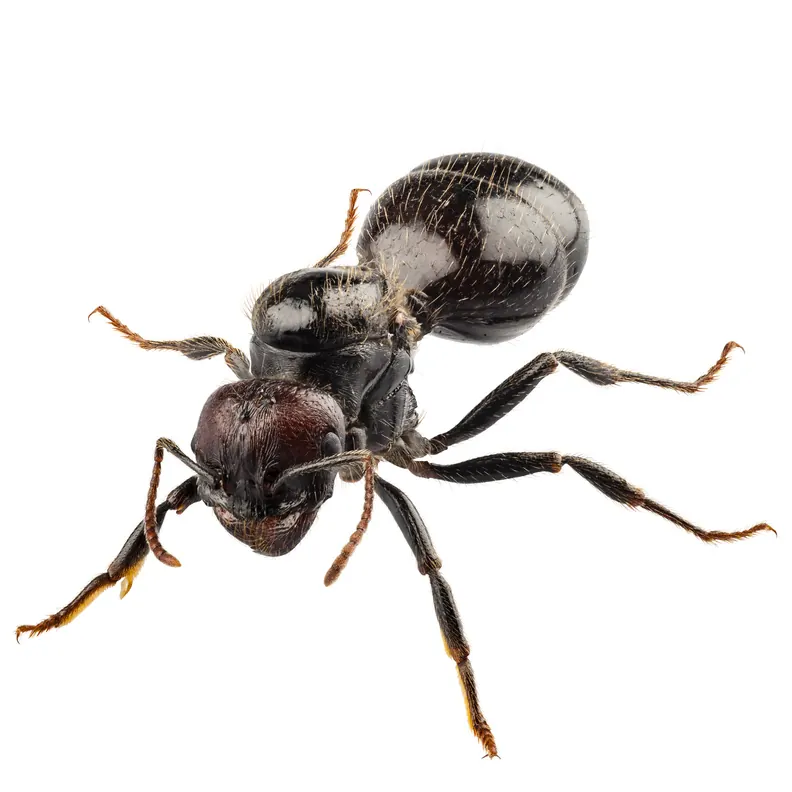
To stop ants in a Mill Park home, you have to reach the nest, and in this suburb the nest is often further away than you'd expect. Workers will trail from a colony under the paving, at the base of a big tree or inside an old wall cavity, across the garden and into your kitchen. Killing the trail with spray only removes the workers you can see. A bait that the workers carry back to the nest is what brings the colony down.
Why ants do well here
Mill Park's mature trees are a large part of it. Many ant species farm aphids, scale insects and mealybugs on trees and shrubs, collecting the sweet honeydew they produce. A big tree can support a huge colony, and the workers will happily extend their foraging into your house when they find sugar, pet food or crumbs.
The ground under old trees also helps. Leaf litter, roots lifting the paving and soil that stays damp in the shade give ants plenty of places to nest. And older buildings offer their own nesting spots: hollow cavities in walls, gaps behind skirtings, under the floorboards and in window frames.
Which ants are you seeing?
- Small brown or black trailing ants are the most common indoor nuisance. They follow scent trails in long lines to food and water.
- Pugnacious or larger black ants often nest outside and forage in from the garden, especially around trees.
- Ants coming out of walls or floors may be nesting inside the structure, which is common in older timber-floored homes.
- Winged ants appearing in a swarm are a colony sending out new queens, often after rain. It's a sign of a mature nest nearby.
If you're not sure what you're looking at, a close-up photo on WhatsApp helps us choose the right bait.
Signs of a bigger problem
- Trails that come back within a day of being wiped away
- Small heaps of soil or fine debris along skirtings or between floorboards
- Ants inside electrical sockets or appliances
- Trails running up the trunk of a tree next to the house and across to the wall
How we treat ants
- Follow the trails. We trace them back from the kitchen to where they enter and, as far as possible, to the nest.
- Bait the colony. We place ant baits along active trails and near nest entrances. Workers carry the bait back and share it with the queen and the brood. Results take a few days, and that's the point: the bait has to reach the whole nest.
- Treat the perimeter where it helps. An odourless, non-staining residual barrier around the outside of the house and at entry points cuts down on new trails, without disturbing the baited areas.
- Follow up if a large or stubborn colony needs another round.
You can stay home throughout. Keep children and pets away from treated areas until dry.
A local tip: watch the trees
If ants keep marching up the trunk of a tree near the house, look at the leaves. Sticky, shiny leaves or black sooty mould mean the ants are farming sap-sucking insects up there. Dealing with the aphids or scale on the tree, and cutting back branches that touch the house, removes both the ants' food source and their bridge to your roof and walls.
The mistake almost everyone makes
Spraying the trail. It kills the workers in front of you, but the colony simply sends more, and some species respond to the stress by splitting into several new nests. You can end up with more ants in more places. If you're using bait, leave the trail alone and let them take it.
Cockroaches often share the same kitchen hotspots. Our cockroach treatment for Mill Park kitchens explains how we handle both together.
What does it cost?
It depends on how many colonies are involved, whether they're nesting inside the building or out in the garden, and how big the property is. One trail in a small kitchen is a quick job, and a good shop-bought ant bait placed on the trail is sometimes all you need. Ants nesting in the walls of a large house or around several big trees take more work.
See ant control for the whole of Port Elizabeth, our full guide to ants and how baiting works, and how we deal with ants in Walmer's big gardens. The Mill Park pest overview covers the suburb's other pests.
Call 087 012 5550 to book, or WhatsApp us a photo of the ants and the trail.
Questions we get asked
Why do the ants come back a day after I wipe the trail?
Because the nest is untouched. Wiping removes the scent and the workers, but the colony sends more out. Bait that reaches the nest is what stops them.
Can ants nest inside my walls or floor?
Yes, especially in older homes with hollow walls and timber floors. Soil or debris along skirtings is a common sign.
Why do I see more ants after a treatment?
Bait draws workers in to feed, so for a day or two there may be more on the bait. Leave them; they're carrying it back to the nest.
What are the flying ants in my house?
They're new queens and males leaving a mature colony, often after rain. Their appearance indoors can mean a nest in or close to the building.
Do I need to treat the tree?
If ants are farming aphids or scale on it, treating that pest and cutting back branches from the house helps a lot.
Is ant bait safe with pets around?
We place baits where pets can't easily reach them and will tell you which areas to keep them away from.