
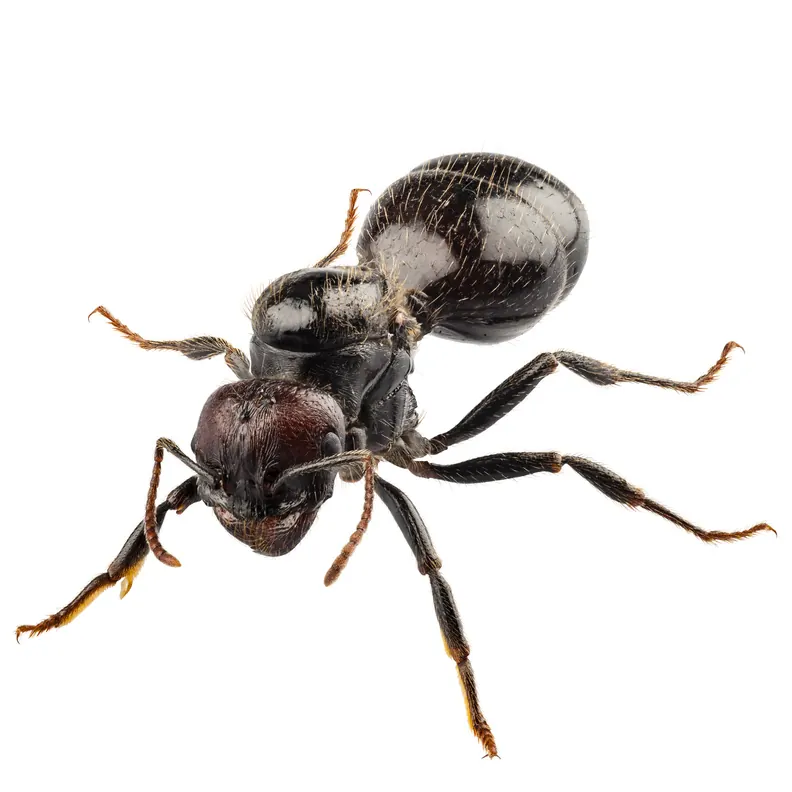
To get rid of ants in a Walmer home for good, you have to reach the queen, and the queen is outside, usually under paving, in a flower bed along the foundations or among the roots of a big tree. Ant baits work because the workers carry them back and share them through the colony. That's the core of every ant treatment we do here, supported by a barrier around the house to stop new foragers walking in.
Why Walmer gardens have so many ants
Ants thrive in gardens that have been left to mature. In many Walmer properties, the beds, lawns and paving have been in place for decades. Colonies have had years to grow without being disturbed, and some species form networks of nests that stretch across a whole garden and into the neighbours'. Sandy soil makes digging easy. Mature trees and shrubs provide another food source that people often overlook: the sweet honeydew produced by aphids, scale insects and mealybugs.
The ants and the garden pests
If you see ants running up and down the trunk of your citrus tree or along the stems of your roses, look closely at the leaves. You'll often find aphids or scale. Ants protect these sap-sucking insects from predators and feed on the sugary honeydew they produce, almost like farming. That's bad news for the plants and for you, because a well-fed colony grows bigger and sends more foragers into the house. Treating the ants helps the garden too.
Ants we often find in Walmer
- Brown house ants. Small, with some workers that have oversized heads. They nest under paving and in walls and push up little piles of sand.
- Argentine ants. Small, dark brown, and travelling in long, busy trails. Colonies have many queens, so spraying tends to spread them rather than kill them.
- Pugnacious ants. Larger, quick and inclined to bite. They make nests with crater-like openings in lawns and beds.
Different ants prefer different baits, some sweet and some protein, so identifying them is part of the job.
Odd places ants nest
In Walmer we regularly find colonies inside electrical boxes, gate motor housings and pool pump covers, where it's dry and warm. Ants in electrical equipment can cause faults, so it's worth checking these if you see ants coming and going from them. We also find nests under pool coping, inside hollow walls and behind skirting boards that have pulled away from older walls.
How we treat ants
- We follow the trail. From the kitchen, out through the gap they use, across the garden to the nests.
- We identify the species and choose a bait to match.
- We place ant bait along trails and near nests, where workers will collect it and take it home.
- We apply an odourless, non-staining barrier treatment around the outside of the house and at entry points, keeping it well away from the bait so it doesn't stop the workers carrying it.
- We come back if needed. Big colonies, or species with many queens, sometimes need a second round.
Bait takes a few days to work through a colony, so you may see more ants briefly before numbers fall. That's normal.
A Walmer tip: treat the trees
If ants are climbing your fruit trees or shrubs, wrap a band of sticky horticultural barrier around the trunk and deal with the aphids or scale. Cutting off the honeydew supply weakens the colony and makes indoor baiting more effective.
The mistake almost everyone makes
Spraying the ant trail with insecticide or wiping it with bleach. The ants on the trail die, but the colony feels the loss and, in many species, simply buds off into several new nests. A week later there are more trails than before. If you're going to do it yourself, use a bait and leave the trail alone so the ants can carry it home.
What does it cost?
The type of ant, the size of the garden and how many colonies there are all matter. A single trail into the kitchen from one nest is a small job, and a good shop-bought ant bait can sometimes handle it. A large property with colonies under the paving, in the lawn and around the pool, or a species with many queens, needs a full treatment and possibly a follow-up. We quote after we've seen it.
Read more about ant colonies and why they're hard to kill in our ant control guide, or see the main ant treatment service in Port Elizabeth. We also work on ant problems in Newton Park. If you're seeing cockroaches as well, our page on Walmer cockroach treatments can help, and the Walmer pest control hub lists the rest. Call 087 012 5550, or WhatsApp us a photo of the ants.
Questions we get asked
Why are there more ants in my house after rain?
Heavy rain floods nests in the soil, so ants move up and look for dry shelter and food, often inside the house.
Should I kill the ants on the trail?
No, not if you're baiting. The ants on the trail are the ones that carry the bait back to the colony, so leave them to do the work.
Can ants damage my gate motor or pool pump?
Yes. Ants nest in electrical housings and can cause faults. If you see them going in and out, have it checked and treated.
Are ant baits safe for my dogs?
We place baits where pets can't easily get to them, in small amounts in crevices or stations, and tell you where they are.
How long until the ants are gone?
Most colonies die off within one to three weeks after baiting. Large or multi-queen colonies can take longer.
Do ants harm my garden?
Indirectly. They protect aphids and scale insects that damage plants, so heavy ant activity on a tree usually means another pest problem too.