
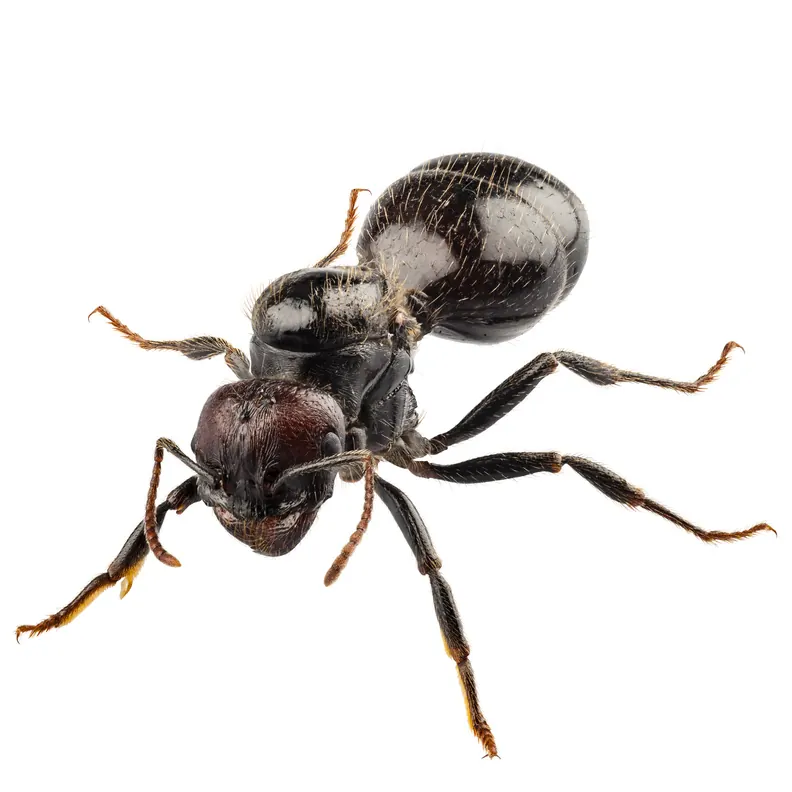
Ants are one of the most common pest problems and one of the most misunderstood. The ants you wipe off the counter are foragers, and foragers are expendable. The colony behind them, with its queen or queens, eggs and larvae, sits safely in a wall, under paving or in the garden. To get rid of ants properly, you need to get something into that nest. That's what ant baiting does, and it's why spraying a trail almost never works for long.
How an ant colony works
A colony is a family. The queen lays eggs; the workers, all sterile females, look after the young, defend the nest and find food. When a scout finds something good, she lays a scent trail back home, and others follow it. The stronger the food source, the busier the trail.
Food brought back is shared mouth to mouth through the colony, including to the queen and larvae. That sharing is the weakness professional baits exploit: a slow-acting bait carried home by workers gets passed through the nest before it takes effect.
Why ants keep coming back after you spray
Spray a trail and you kill the ants on it, erase the scent trail and, for a while, the counter is clear. But the nest is untouched. Within days a new scout finds the same sugar bowl and the trail is back. Worse, some common household ant species have many queens and multiple connected nests. Under stress, these colonies can split into several new ones, a process called budding. A single spray can turn one colony into three.
Spraying also contaminates the area, so ants avoid any bait you put down afterwards.
Sweet-feeders and protein-feeders
Ant colonies want different food at different times. When they're raising lots of larvae, they need protein and fat; at other times they're after sugar. This is why ants may ignore a sweet bait one week and swarm over it the next. A professional treatment uses the type of bait the colony is taking at the time, and sometimes more than one.
Ants in the garden: the aphid connection
Ants farm sap-sucking insects like aphids, mealybugs and scale on garden plants and fruit trees, protecting them from predators in return for the sugary honeydew they produce. If you see ants climbing up a citrus tree or rose bush in a steady line, check the leaves and stems. Controlling the ants often helps the plant recover, and dealing with the scale or aphids takes away a big food source for the colony.
Signs and situations
- Trails along skirting, window frames, cables and countertop joins
- Ants inside plug sockets, light switches or electrical boxes
- Small mounds of fine sand or soil between paving bricks or along walls
- Winged ants appearing indoors, which often means a mature nest nearby
- Ants in pet bowls, sugar, honey and anything sweet left out
- Ants swarming in after heavy rain, as wet soil drives them indoors
When DIY is enough
Honestly, many small ant problems can be handled at home. Wipe the trail with soapy water, store sweet things in sealed containers and put down a good-quality ant bait station from a hardware store, then leave it alone and let the ants take it. The key is patience: don't spray near the bait, and expect the trail to get busier before it stops. If the problem keeps coming back, involves several nests, or ants are in electrical fittings or a food business, a professional treatment saves time.
What professional ant control involves
- Identify the ant and find the nest. We follow trails back to where they enter and, where possible, to the nest itself.
- Bait the colony. Ant baits are placed along active trails and near entry points so foragers carry them back to the nest and queen.
- Treat the perimeter. Once baiting has done its work, an odourless, non-staining residual barrier around the outside of the building helps stop new colonies coming in.
- Treat nests directly where we can reach them, such as under paving.
- Advise on food storage, plant pests and gaps that keep drawing ants inside.
For our service in the metro, see ant control across Port Elizabeth. Sandy coastal gardens produce some big colonies; our pages on ants in Jeffreys Bay holiday homes and ant problems near the Swartkops in Bluewater Bay deal with those settings. Ants are part of a wider family of pests covered in our crawling insect guide.
Ants in food businesses
In a restaurant, bakery, café or food factory, ants are more than a nuisance. They get into ingredients, packaging and display counters, and customers notice. Sprays near food areas are limited for good reason, which makes baiting the natural choice. Commercial sites usually do best on a monitoring schedule, so that new colonies moving in from outside are picked up and baited early, before trails reach the kitchen, and each visit is recorded for inspections.
What does it cost?
It depends on the size of the property, how many colonies are active, whether ants are inside walls or electrical fittings, and whether a perimeter treatment is needed. A single trail into one kitchen is quick. A large garden with several nests, or a food business, takes more time. We'll quote once we know.
Ants back again? Call Pest Arrest on 087 012 5550, or WhatsApp us a photo of the trail and we'll tell you what you're dealing with.
Questions we get asked
Why do ants come into the house after rain?
Rain floods nests in the soil, so colonies move to drier ground, often inside walls or under floors. They also forage harder after a wet spell.
Should I kill the ants on the bait?
No. Leave them. The workers on the bait are carrying it back to feed the colony and queen, which is how the nest gets cleared.
Why are ants in my plug sockets?
Some ants are drawn to the warmth and shelter of electrical fittings. They can cause short circuits, so don't spray inside sockets; call a professional.
Are winged ants termites?
Not always. Winged ants have a narrow waist and front wings longer than back wings; termite wings are equal in length. Send us a photo if unsure.
How long does ant baiting take?
Usually a few days to a couple of weeks, depending on the colony size and species. Activity often increases briefly before it stops.
Can I stop ants without harming the garden?
Yes. Baits target the ants that take them and are placed in stations or small spots, so the rest of the garden isn't treated.