
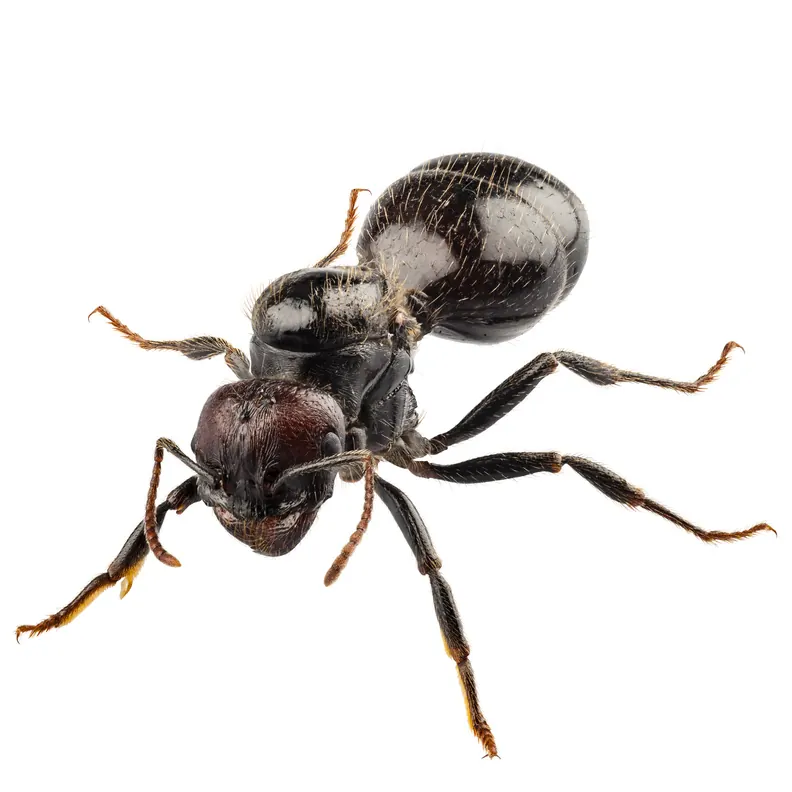
To get rid of ants in a Newton Park home or office for good, you have to reach the colony, not just the ants you can see. The trail across your counter is a delivery route back to a nest under the paving, in the garden or inside a wall. We use ant baits that the workers carry home, so the bait reaches the queen and the rest of the nest.
Why ants are so common in Newton Park
Newton Park is an established suburb, and established gardens tend to have established ant colonies. Paving and garden paths that were laid years ago have settled and cracked, leaving gaps where ants nest underneath. Flowerbeds right up against the house give them shelter close to the walls. Older homes often have small gaps along skirting boards, around window frames and where the floor meets the wall.
Then there's food. Kitchens, pantries and pet bowls at home, and staff kitchenettes in Newton Park's many offices, all give ants a reason to come in. Sugar, honey, fruit and pet food are the main targets.
Rain plays a big part too. After a downpour, ants that nest in the soil often move indoors or start trailing in large numbers. In the heat of summer, they come in looking for water. In a block of flats or a row of attached townhouses, a colony nesting in a shared wall can turn up in several kitchens at once.
Where we find the nests
- Under paving bricks and garden paths, often marked by small mounds of fine soil in the joints
- Along the foundations, especially where a flowerbed or lawn meets the house wall
- Inside wall cavities, behind skirting boards and under kitchen units
- In plant pots on the stoep or near doors
- Inside electrical boxes, plug points and meter boxes, where it's warm and dry
How we treat ants
- We follow the trail. We trace the ants from where you're seeing them back towards the nest, inside and out.
- We place ant baits along active trails. Workers pick up the bait and carry it back to the nest, where it's shared with the queen and the larvae. This is what ends the colony.
- Where it helps, a barrier treatment. An odourless, non-staining residual spray around the outside of the house and at entry points makes it harder for new colonies to move in.
- We tell you what to avoid while the bait works, so it isn't undone.
You don't need to leave. Keep children and pets off sprayed areas until dry, and leave bait placements alone.
The mistake almost everyone makes
Spraying the trail. It feels like it's working because the ants die instantly. But the colony loses only a few workers, and some species respond to the threat by splitting into several smaller colonies, each with its own queen. Now you have three nests instead of one. If we've placed bait, spraying near it also stops the ants taking it. Wipe the trail with soapy water if you have to, and let the bait work.
Ants in offices and shops
In a business, ants tend to show up in the staff kitchen, around the coffee station and in desks where people keep snacks. Sometimes they nest in wall cavities around plumbing. Office treatments are done the same way, with baits along trails and attention to where they're getting in. For premises with ongoing problems, we can include ants in a regular monitoring service.
A local tip
If you have older paving next to the house, look for fine soil pushed up between the bricks, especially along the side of the house nearest the kitchen. That's often where the colony is. Pointing it out to us saves time and helps place the bait in exactly the right spot.
What does it cost?
For a small ant trail in the kitchen, a good shop-bought ant bait placed on the trail can do the job, and it's worth trying first. If they keep coming back, if there are several species, or if they're in electrical boxes or wall cavities, a professional treatment is worth it. The price depends on the size of the property, how many nests there are and whether a perimeter treatment is needed. We'll quote after an inspection.
For ants across the wider city, see ant control in Port Elizabeth, or learn more in our guide to ant species and colonies. If cockroaches are sharing your kitchen, see our Newton Park cockroach treatments. Next door, we also do ant control for Walmer gardens.
Call 087 012 5550, or WhatsApp us a photo of the ants and where they're coming in.
Questions we get asked
Why do ants come inside after it rains?
Rain floods nests in the soil, so ants move to drier ground, often inside your house, or trail in looking for food and shelter.
How long do ant baits take to work?
Usually a few days to a couple of weeks. You may see more ants on the bait at first, which means they're carrying it back to the nest.
Are ants in my plug points dangerous?
They can short or damage electrical fittings, so it's worth treating. Don't spray liquid into a plug point; ask us or an electrician to look at it.
Will one treatment stop ants for good?
It will clear the colonies that are there. New colonies can move in over time, especially in big gardens, so a barrier treatment helps.
Can I use the ant spray I bought at the shop?
For a few stray ants, yes. But don't spray near bait, and don't rely on spray to clear a nest, because it won't reach it.