
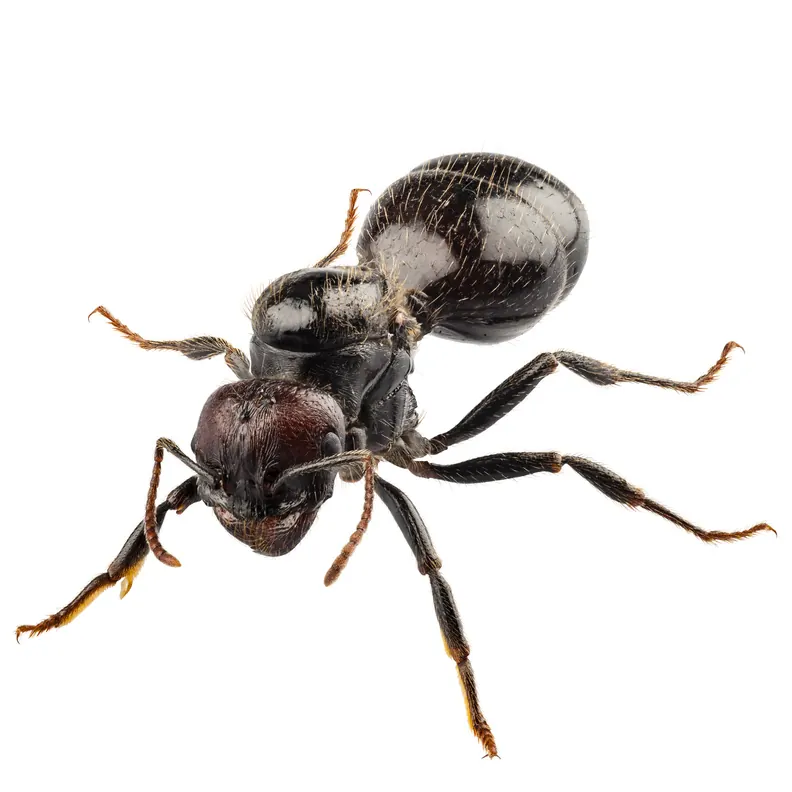
The ants you see in your Despatch kitchen are a small fraction of the colony. Most of it, including the queens, is underground somewhere in the yard, under the paving or in a wall. Kill the trail and the colony just sends more workers. Get a bait back to the nest and the whole thing collapses. That's the difference between ant control that works and ant control that has to be repeated every month.
Why Despatch yards grow big ant colonies
Ants love the kind of property that's common in Despatch: a family home on a decent stand, with lawn, flower beds, a vegetable patch, fruit trees and a lot of paving. Paving warms up in the sun and gives ants a sheltered, dry roof over their nests. Lawns and beds provide insects and seeds to eat. Fruit trees and shrubs often carry aphids and scale insects, which ants protect and "farm" for the sweet honeydew they produce.
Put all that together and a single property can have several large colonies, some with more than one queen. When the weather changes, they head for the house.
When ants come inside
- After rain, when nests flood and ants move to higher, drier ground
- In hot, dry spells, when they're looking for water in kitchens and bathrooms
- When food is easy, especially pet food bowls, sugar, honey, fruit and crumbs on the counter
- In spring and summer, when colonies are growing and need more food
Pet bowls are a big one in Despatch. A bowl of dog or cat food on the back step is like a supermarket for ants, and they'll set up a trail to it within hours.
The ants we see most
Most kitchen trails in Despatch are made by small brown house ants and black garden ants. Some species nest in wall cavities and under kitchen floors rather than outside. Others, like the large-headed ants that leave little piles of sand along paving and skirting boards, can have many queens and multiple nests, which makes them persistent. Identifying the ant tells us which bait it will take and where the nest is likely to be.
How we get rid of ants
- Identify and follow. We identify the species and follow the trails back to where they're entering the house and, where possible, to the nest itself.
- Bait. We place ant baits along trails and near nests. Workers carry the bait back and feed it to the queens and the young. This takes a few days, sometimes longer for big colonies, but it gets to the heart of the problem.
- Barrier where needed. For ants coming in from many points around the house, an odourless, non-staining residual barrier at the base of the walls and around doors cuts off their route. We place it so it doesn't interfere with the baiting.
- Advice. What to clean up, where to move pet bowls, and which plants are hosting aphids.
The mistake almost everyone makes
Spraying the trail with insecticide or wiping it down with bleach the moment you see it. It's an understandable reaction, but it kills the foragers before they take any bait home, and with some species it causes the colony to split into several new nests. Once we've baited, leave the trail alone for a few days. More ants on the bait is a good sign, not a bad one.
A local tip
Stand your pet food bowl inside a slightly larger shallow dish with a little water in it, like a moat. Ants can't cross it, and your dog or cat will still get to dinner. It's an old trick, and on Despatch properties where pets eat outside, it works very well. Check your fruit trees for aphids too. Fewer aphids means less honeydew and fewer ants climbing the trees and then heading for the kitchen.
What does ant control cost?
It depends on the species, how many colonies there are and how big the property is. A single trail into the kitchen can often be handled with good baiting in one visit. A yard with multiple large colonies or a species with many queens may need a follow-up. If you've got a small trail and you're happy to try first, a shop-bought bait station (not a spray) placed on the trail may be enough, and we'll tell you if that's the case.
Related pages
Our in-depth ant guide explains how colonies work and why baiting beats spraying. If ants aren't the only thing coming in from the yard, have a look at our crawling insect treatments in Despatch. For other parts of the Bay, see ant control in Port Elizabeth and ant problems in Bluewater Bay, and for the bigger picture in town, our guide to Despatch pests.
Call 087 012 5550, or WhatsApp us a close-up photo of the ants and we'll tell you what kind they are.
Questions we get asked
Why do ants keep coming back after I spray?
Spraying kills the workers you can see but not the queen or the nest. The colony replaces them within days, and some species split into new nests when disturbed.
How long does ant bait take to work?
Usually a few days for activity to drop noticeably. Large colonies or species with several queens can take longer.
Is ant bait safe with dogs and cats?
Yes. We place it in small amounts in cracks, along trails and in spots pets can't reach, and we'll tell you where it is.
Why are ants in my pet's food bowl?
Pet food is an easy, high-protein meal. Feed pets at set times, pick up the bowls afterwards and use a water moat if bowls must stay out.
What are the little piles of sand along my paving?
That's often a sign of ants nesting under the paving, frequently a species with several queens. It needs patient baiting rather than spraying.
Do ants damage anything?
Most household ants don't damage the house itself, but they contaminate food and can protect garden pests like aphids on your plants.