
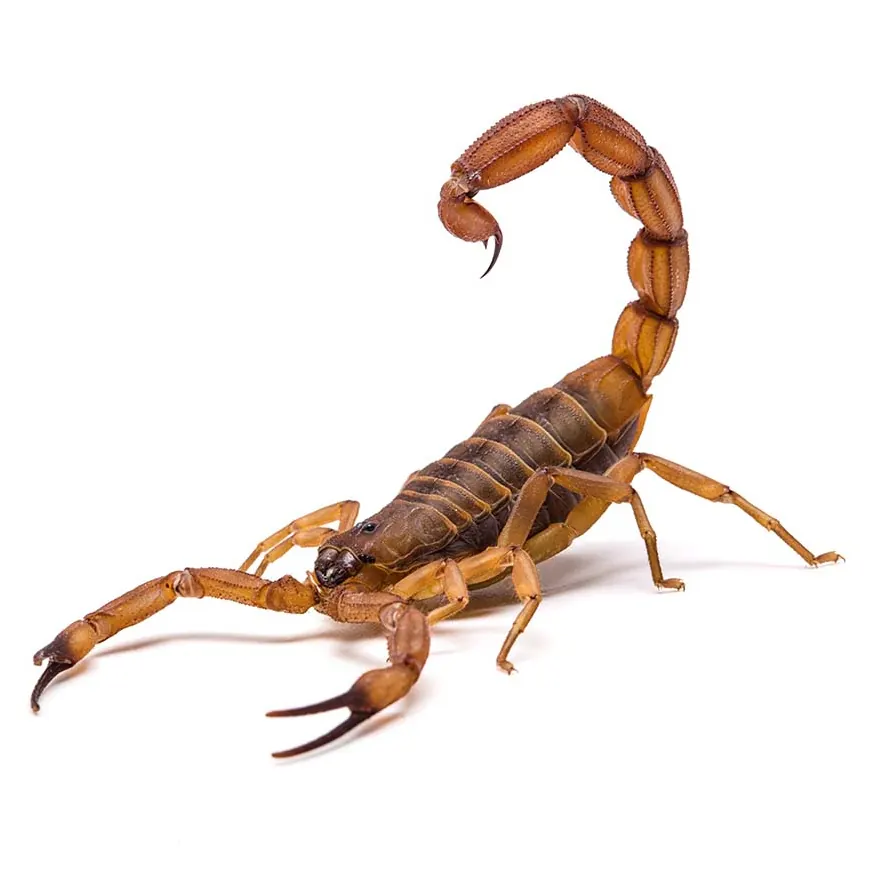
Finding a scorpion in your house in Despatch is a shock, especially with children around, but most of the scorpions you'll come across are not dangerous. The trick is knowing which ones are, and making your home and yard less inviting to all of them. We can help with both.
A simple rule for South African scorpions
Look at the tail and the pincers.
- Thick tail, small pincers: treat with caution. These scorpions rely on venom rather than grip, and their sting can be serious, especially for children, the elderly and people with health conditions.
- Thin tail, big pincers: generally less dangerous. The sting is painful, a bit like a bee sting, but not usually a medical emergency.
It's a rough guide rather than a hard rule, but it's a useful one, and it's worth teaching older children too so they know which ones to back away from. If you're unsure, treat every scorpion as one to avoid, and WhatsApp us a photo so we can identify it.
Why Despatch has scorpions
Scorpions are ground-dwellers that hide during the day under rocks, logs, loose bark and debris, and come out at night to hunt insects. Despatch suits them well. Properties are bigger than in the city, with rockeries, garden walls, piles of bricks, stacked paving slabs, firewood and old building materials. Smallholdings on the edges of town add open veld, sheds, feed rooms and animal pens with plenty of insects for scorpions to eat.
When the weather turns very hot or very wet, scorpions move. That's when they turn up indoors, in shoes left by the door, in laundry on the floor, or in the bath.
Where we find them
- Under stones, bricks and paving slabs stacked in the yard
- In wood piles and among garden refuse
- In gaps in garden walls and rockeries
- In garages, wendy houses and outbuildings with things on the floor
- Inside, in shoes, under towels and in dark corners of the bathroom
How we reduce scorpions
- Inspection. We look at the yard and outbuildings for hiding places and work out how they're getting into the house, usually under doors, through weep holes or through gaps where pipes enter.
- Barrier treatment. An odourless, non-staining residual spray around the base of the house, door thresholds, garage, outbuildings and the main hiding areas.
- Reducing their food. Scorpions follow insects. Cutting down crickets, cockroaches and other crawling insects around the house makes the property less attractive. Our page on crawling insects in Despatch homes covers that side.
- Clearing hiding places. We'll show you which piles, stacks and gaps need moving or sealing.
A common misunderstanding
Thinking that one spray will make the yard scorpion-free. Scorpions are tough, they move in from neighbouring land, and they can go a long time without eating. A barrier treatment cuts down how many reach the house, but the biggest long-term difference comes from clearing the rubble and woodpiles they live in and sealing the gaps under doors.
A tip for Despatch families
Buy a small UV torch. Scorpions glow a bright greenish-blue under ultraviolet light, so a quick walk around the yard and the walls after dark shows you exactly where they're living. It's also a good way to check the kids' play areas and the wendy house before summer.
Keeping children and pets safe
Teach children not to pick up stones or bricks with bare hands, and to shake out shoes and clothes left outside. Keep beds away from walls and don't let bedding trail on the floor. Dogs and cats sometimes paw at scorpions, so if your pet suddenly yelps and won't put weight on a paw, call your vet.
What does scorpion control cost?
It depends on the size of the property, how many outbuildings there are, and how many hiding places need treating. A family home with a few scorpions coming in under the back door is a straightforward barrier treatment. A smallholding with veld on the boundary and several sheds is a bigger job and may need a repeat in the warmer months. If you've only seen one, clearing the brick pile by the back door might be all it takes.
More information
For scorpions in the wider metro, see our scorpion control service in Port Elizabeth, or scorpions in Kariega if you're further inland. Spiders use the same hiding places, so our page on spiders around Despatch homes may be useful, and the Despatch pest overview covers the rest.
Call 087 012 5550, or WhatsApp us a clear photo of the scorpion and we'll tell you what it is.
Questions we get asked
What should I do if someone is stung?
Stay calm, keep the person still and get medical help, especially for a child or if the scorpion had a thick tail and small pincers. Take a photo of the scorpion if it's safe.
How do I tell a dangerous scorpion from a less dangerous one?
As a rough guide, a thick tail with small pincers means more potent venom. Thin tail and big pincers usually means a painful but less serious sting.
Why do scorpions come into the house?
Mostly to escape heat, rain or disturbance in the yard, and to follow insects. Gaps under doors and around pipes let them in.
Can you get rid of scorpions completely?
Not completely on a property with a yard, but treatment combined with clearing hiding places reduces them sharply.
Do scorpions really glow in the dark?
Yes, under ultraviolet light. A UV torch makes them easy to spot at night.
Is the treatment safe for my children and dogs?
Yes, once it's dry. Keep children and pets off treated surfaces until then.