
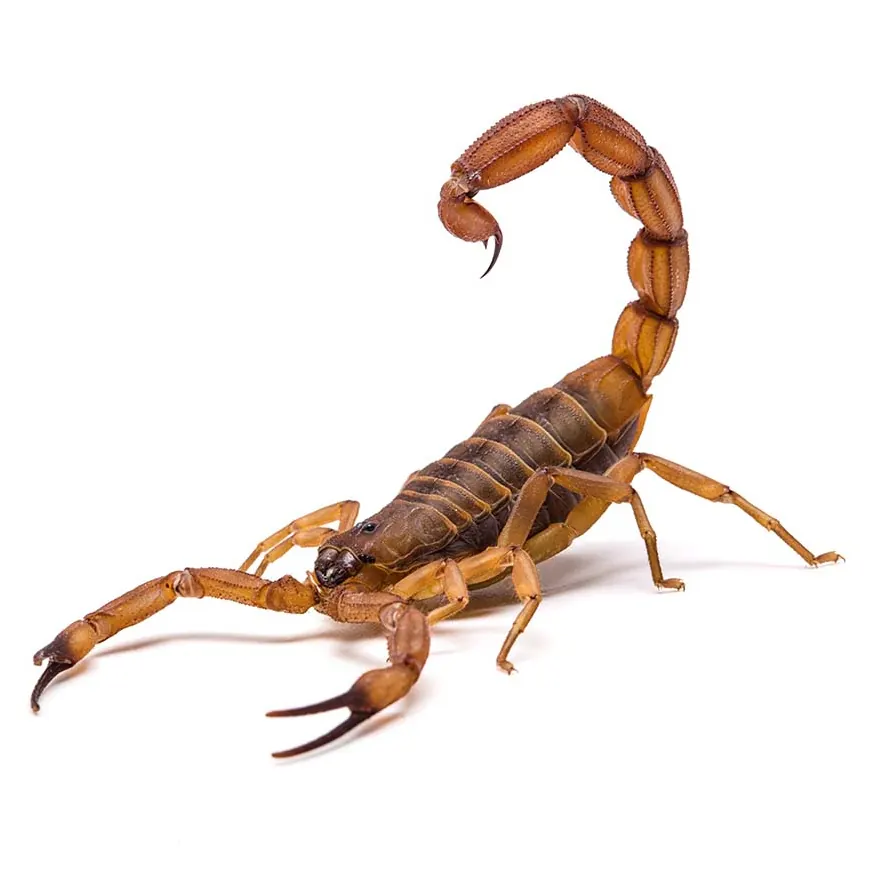
Scorpions are not one of Summerstrand's everyday pests, but they do turn up, usually in homes near open ground, in gardens with rockeries and wood piles, or in something brought in from elsewhere. If you've found one, the first job is to identify it, because most are mild and a few are not. Then we treat the hiding places around the house so fewer come inside.
Why you've found one here
Scorpions are mostly creatures of bush, rock and dry ground. In a built-up beach suburb they're less common than further out, but parts of Summerstrand sit close to coastal bush and reserve land, and gardens anywhere can offer what they need: stones, logs, paving slabs, piles of building rubble and dense ground cover. They hide by day and hunt insects at night.
We also see scorpions that arrived by accident. Firewood brought in from farms, building materials, garden rocks and moving boxes from inland towns can all carry one into a house that has never seen a scorpion before.
Is it dangerous? The quick rule
South African scorpions are commonly judged with a simple rule of thumb: look at the pincers and the tail.
- Big, strong pincers and a thin tail: generally milder venom. A sting is painful, much like a bee sting, but not usually dangerous.
- Small, slender pincers and a thick tail: these are the ones to respect. Thick-tailed scorpions can deliver a far more serious sting, particularly to small children, the elderly and people with health conditions.
Any sting that causes more than local pain, such as spreading numbness, trouble breathing or muscle twitching, needs medical help straight away. If you can safely photograph or contain the scorpion, it helps the doctor too.
Where they hide around the house
- Under stones, pot plants, logs and paving slabs in the garden
- In wood piles and stacked braai wood
- In the garage, among boxes, garden tools and old building materials
- Inside shoes, gumboots and clothes left on the floor
- In gaps under doors and around weep holes at the base of walls
How we treat
We inspect the garden and the house perimeter to find the harbourage: the rockery, the wood pile, the gap under the garage door. Then we apply a residual barrier treatment around the foundations, door thresholds, weep holes and garage, and treat the key hiding spots outside. Scorpions are tougher than most insects and can be hard to kill with a direct spray, so the aim is a treated barrier they cross on the way in, plus less shelter close to the walls.
Because scorpions feed on insects, we'll also look at what's attracting their food. A garden full of crickets and cockroaches is a garden that feeds scorpions. If spiders around your Summerstrand home are also a problem, we treat both on the same visit.
There's no need to move out. Keep children and pets away from treated areas until they're dry.
What people get wrong
Either panicking because all scorpions must be deadly, or shrugging because none of them are. Neither is right. Before doing anything else, take a photo from a safe distance and check the pincers and tail. That tells you how careful to be.
A tip for beach homes
Store braai wood off the ground and away from the house walls, and don't stack it against the garage. Shake out shoes and gumboots that have been left outside or in the garage, especially if your property backs onto open ground. When you buy firewood from a roadside seller or bring logs back from the farm, leave them outside and check them before carrying them in.
Children and scorpions
Small children are the most at risk from a serious sting, simply because of their size. If you've found scorpions around the house, teach children not to pick up stones or lift logs in the garden with bare hands, keep shoes off the floor and pull beds slightly away from the wall so bedding doesn't touch it. These small habits matter more than any single treatment.
What does it cost?
For a single scorpion that hitched a ride in a box of firewood, you may not need a treatment at all; remove it safely and keep an eye out. If you're finding them regularly, or you've found a thick-tailed one, a perimeter and garden treatment is worth doing. The cost depends on the size of the garden and house and how much harbourage there is. We quote after a look.
See scorpion control across Port Elizabeth for more, or the Summerstrand pest overview. Further along the coast, pest control in Schoenmakerskop deals with homes right on the reserve edge, and leafier gardens inland are covered under scorpions in Walmer.
Call 087 012 5550, or WhatsApp us a photo of the scorpion and we'll tell you what it is.
Questions we get asked
Are scorpions common in Summerstrand?
Not very. Most homes never see one, but properties near open bush, or with rockeries and wood piles, do find them from time to time.
How do I tell if a scorpion is dangerous?
Look at the pincers and tail. Thick tail and small pincers means take it seriously; big pincers and a thin tail usually means a milder sting.
What should I do if I'm stung?
Stay calm, keep still and get medical advice. If symptoms go beyond local pain, such as numbness spreading or difficulty breathing, go to a doctor or hospital immediately.
Will a normal insect spray kill a scorpion?
Often not. Scorpions are tough. A residual barrier treatment around the house, plus removing their hiding places, works better than spraying them directly.
Do scorpions come up from the beach?
No. They come from gardens, bush, rockeries and wood piles, or arrive in firewood and boxes from elsewhere.