
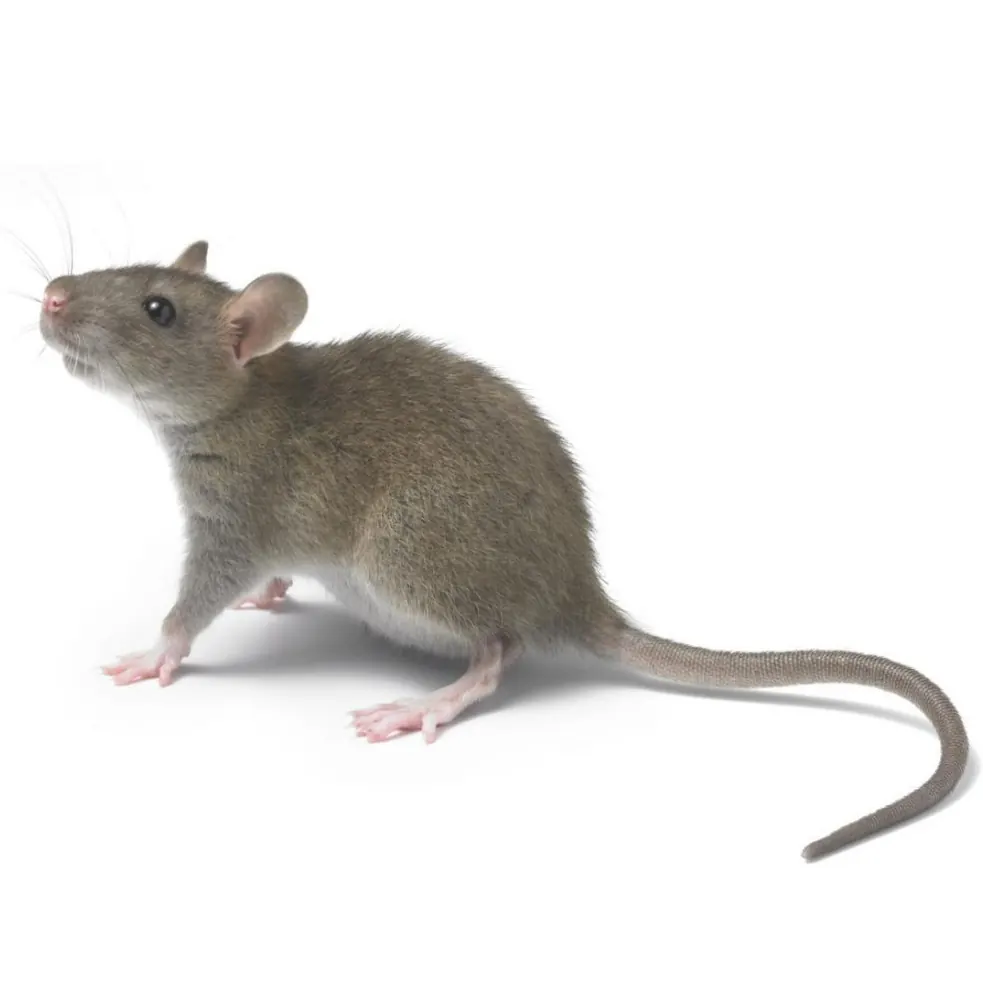
If you've got rats or mice on a Despatch property, the problem is rarely limited to the room where you heard them. Rodents here usually live in one place and feed in another: a nest in the garage, a run along the fence, feeding at the chicken feed, sleeping in the roof. Good rodent control follows that whole route. That's what we do on every job.
Rats or mice?
It's worth knowing which one you've got, because they behave differently and need different handling.
- Rats are bigger, more cautious and travel further. Droppings are about the size of a raisin or larger. Roof rats climb in from trees and fences; Norway rats burrow under paving and sheds and follow drains.
- Mice are small, curious and nest close to their food. Droppings are rice-sized. They get through very small gaps and are more likely to be in kitchen cupboards and stored boxes.
Many Despatch properties have both, particularly where there's animal feed. Our pages on dealing with rats in Despatch and mice in Despatch homes go into each one separately.
What draws rodents to Despatch properties
Food and shelter, and Despatch yards offer both in quantity.
- Chicken and bird feed, often stored in bags rather than sealed bins
- Dog and cat food left out overnight
- Fruit trees and vegetable gardens
- Compost heaps and bins that aren't closed
- Outbuildings, wendy houses, old cars and stacks of building material
- The Swartkops River and its vegetation, which give rats cover on properties near the water
Our approach
Step one: look at everything
We inspect the roof space, garage, kitchen, outbuildings, animal pens and boundary. We're looking for droppings, gnaw marks, rub marks along walls and beams, burrows and, most importantly, how they're getting into the buildings.
Step two: treat safely
Bait goes into lockable, tamper-resistant stations that dogs, cats, chickens and children can't open. Inside the house, we may use traps instead of bait so you don't end up with a rodent dying in a wall. Where we need to see how many rodents are moving and where, we can use tracking powder in places pets can't reach.
Step three: close the gaps
We show you every entry point we've found and tell you how to close it: a gap under the garage door, a hole where a pipe goes through the wall, a branch touching the roof, a broken air brick.
Step four: come back
We return to check stations, top up bait and confirm activity has stopped. For smallholdings, a regular monitoring visit is usually the best way to stop rodents becoming established again.
A family home versus a smallholding
The approach changes with the property. On a typical Despatch family home, rodent control is usually a contained job: a few stations around the outside walls, traps in the roof or garage, and a list of gaps to close. Once the entry points are sealed and the food is put away, the problem tends to stay solved.
A smallholding is different. There are more buildings, more feed, more animals and more open ground for rodents to come in from. Clearing them once doesn't stop new ones arriving from neighbouring land. Here, a permanent ring of lockable stations around the outbuildings and house, checked on a regular schedule, keeps numbers down before they turn into an infestation. We'll talk you through what makes sense for your property.
The usual mistake
Throwing loose poison behind the shed or into the roof. Loose bait gets carried off, ends up where chickens or dogs can reach it, and kills owls and other animals that catch poisoned rodents. It also doesn't solve anything if the feed bag is still open on the floor of the garage.
A local tip
Raise everything off the ground in your storeroom and garage. Feed bags, boxes, firewood and old furniture on the floor give rodents shelter right next to food. Store them on racks or pallets with space underneath and you'll see immediately if something is moving in.
What does rodent control cost?
It depends on the size of the property, whether it's rats, mice or both, how many buildings are involved, and how much proofing is needed. A house with a few mice in the kitchen is a small job. A smallholding with rats in the feed room, roof and chicken run takes more work and usually suits a monitoring arrangement. We'll quote once we've had a look.
For more on rodents across the metro, see rodent control in Port Elizabeth. If your property is on the Kariega side, we also cover rats and mice in Kariega.
Call 087 012 5550, or WhatsApp us a photo of the droppings and we'll tell you whether it's rats or mice.
Questions we get asked
Is rodent bait safe around chickens?
Yes, when it's in lockable stations placed where chickens can't get to them. Loose bait is never safe around poultry.
Why are rodents worse on smallholdings?
There's more food and shelter: feed, outbuildings, animal bedding and stored material. Rodents settle where food is easy.
Can rats get into my house from the chicken run?
Yes. Rodents feeding at a run often nest in nearby buildings and move into the roof, especially in cooler months.
Do you use traps or poison?
Both, depending on where. Bait stations are best outside; inside the house we often use traps so rodents don't die in the walls.
How often should a smallholding be checked for rodents?
Regular checks work best for properties with animals and feed, often monthly or quarterly. We'll suggest a schedule after the first visit.
Do you seal the gaps yourselves?
We identify every entry point and tell you how to close it. Many are simple fixes you can do yourself; bigger ones need a handyman.