
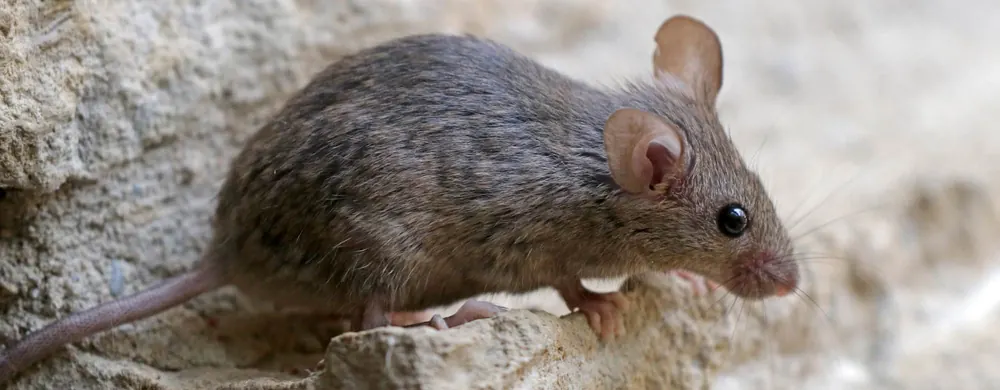
If you're finding tiny droppings in the cutlery drawer or a nibbled corner on the bread bag in Summerstrand, you've almost certainly got house mice. They're small, they breed quickly and they're very good at getting into flats and student houses. The fix is to remove the mice, cut off the food and close the small gaps they're using.
Mice and shared living
A lot of Summerstrand lives in shared spaces: student houses with five people and one kitchen, digs near the university, apartment blocks with shared refuse rooms. Mice do well in all of them. Food gets left on counters, bread lives in plastic bags, cereal boxes stand open and nobody is quite sure whose turn it is to take out the rubbish. A mouse doesn't need much, and in a busy shared kitchen there's always something.
Mice also move between units easily. They run through ceiling voids, along cable trays and up service ducts, which is why a third-floor flat can have mice even though it's nowhere near the ground.
How to tell you've got mice
- Droppings the size of a grain of rice, often in drawers, under the sink and along the back of counters
- Light, quick scratching in the ceiling or behind the kitchen units, usually at night
- Chewed food packaging, especially bread, cereal and pet food
- Shredded paper or fabric tucked behind appliances, where they've made a nest
- A stale, musty smell in one particular cupboard
Bigger droppings and heavier noises probably mean rats instead; our page on rats in Summerstrand covers those.
Their favourite hiding places in a flat
In the flats and student houses we treat, mice nest in some very predictable spots: inside the base of the stove, behind the fridge where the motor keeps things warm, under the dishwasher, in the void behind the kitchen kickboards, and in boxes stored at the bottom of built-in cupboards. That's where we concentrate the inspection and treatment.
Electrical appliances deserve a special mention. Mice like the warmth inside a stove drawer, a microwave base or the back of a fridge, and they will chew wiring once they're in there. If you find droppings inside an appliance, unplug it, clean it out wearing gloves and have the wiring checked before you use it again.
Our approach
- Find the activity. We trace droppings and gnaw marks back to nests and entry points.
- Treat. Traps and lockable, tamper-resistant bait stations go on their runs. In wall and ceiling voids we sometimes use tracking powder, which mice pick up on their fur and swallow while grooming.
- Proof. Mice fit through astonishingly small gaps. We show you where: around pipes under the sink, behind the stove, unsealed cable holes, broken vent covers and gaps under doors.
- Check back. We return to check the stations and confirm activity has stopped.
The mistake most households make
Setting one trap and waiting. Mice breed fast, so one trap catching one mouse is usually only the start. Several traps set tight against the walls along their route work far better than one in the middle of the floor. And the food has to go into sealed containers at the same time, or the traps are competing with a buffet.
A tip for students and landlords
When the digs empty out at the end of the academic year, make sure nobody leaves food behind in the cupboards. A house that sits empty over the holidays with half a box of cereal and a bag of pasta inside is a perfect mouse nursery, and the next tenants inherit the result. For landlords, a quick check and treatment between tenants is far easier than dealing with an established population later.
Holiday flats
The same thing happens in beachfront holiday flats that stand empty for weeks out of season. If there's food in the cupboards and a gap under the kitchen door, the owners often arrive for the holidays to droppings everywhere and chewed packaging. Clearing out the food and sealing the obvious gaps before you lock up makes the biggest difference.
What does it cost?
A single flat with a few mice is a small job, and if you catch it early, a handful of snap traps and sealed food containers might be all you need. We'll tell you if that's the case. A student house with an established population, or a block where mice are moving between units, takes more time and usually a follow-up. We quote after we've had a look.
There's more on mouse control across Port Elizabeth and in the mouse control guide. For rats and mice together, see rodent control in Summerstrand, and for older homes inland, mice in Mill Park houses.
Call 087 012 5550, or WhatsApp us a photo of the droppings and we'll confirm whether it's mice.
Questions we get asked
Can mice really get into a third-floor flat?
Yes. They climb through service ducts, ceiling voids and cable runs, so height doesn't keep them out.
Is it ever just one mouse?
Rarely. By the time you notice one, there are usually several, which is why we place a number of traps or stations at once.
Are bait stations safe if I have a cat?
Yes. The stations are locked and tamper-resistant, so your cat can't reach the bait inside.
Won't a cat solve the problem?
A cat may catch a few and scare others off, but it won't reach mice nesting inside the stove or wall voids, and it won't close the gaps.
Can you treat a whole student house?
Yes. We inspect every room and the kitchen, treat where the mice are active and give the house a short list of food storage and proofing changes.