
If you have mice, the most useful thing to know is that they behave almost the opposite of rats. Rats are suspicious and slow to trust anything new; mice are curious and will investigate a trap the first night. Rats travel far; mice can spend their whole lives within a few metres of their nest. That difference shapes everything about getting rid of them.
What a house mouse looks like
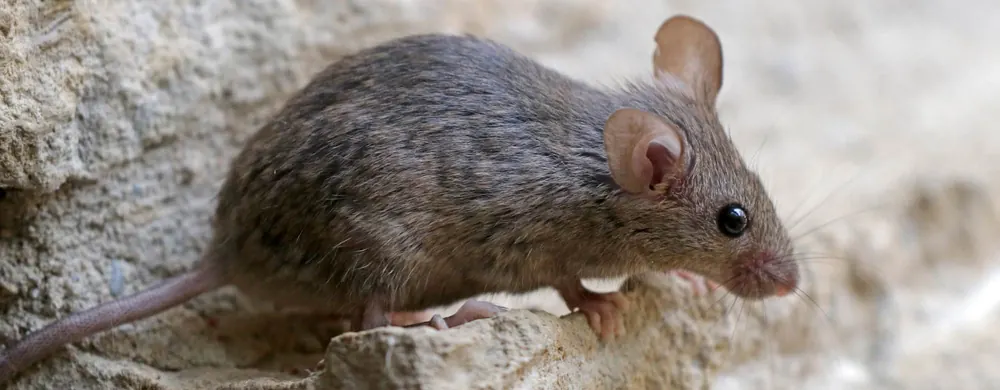
The house mouse is small and slim, greyish-brown on top and a little paler underneath, with large ears for its size and a long, thin tail. An adult will sit comfortably in the palm of your hand. A young rat can be mistaken for a mouse, but its head and feet look too big for its body. If you're unsure, droppings are the easiest clue: mouse droppings are about the size of a grain of rice and pointed at the ends.
How mice live
A small home range
A mouse finds a warm, sheltered spot close to food and stays nearby. Inside a kitchen cupboard, behind a stove, in a wall void, under a geyser or in the insulation above a ceiling. Because they don't roam far, a trap three metres from the nest may never be visited. That is why we use many devices placed close together, not one or two in the middle of the floor.
Nibblers, not feasters
Mice take small amounts from lots of places in one night. They'll try the cereal, then the bird seed, then crumbs under the toaster. They also get much of their moisture from food, so they can live in a dry pantry without a water source.
Fast breeders
Mice reach breeding age young and can produce litter after litter through the year in a mild climate. A pair that gets into a store room in autumn can become a real infestation within a couple of months if nothing is done.
Expert squeezers
If a mouse can fit its head through a gap, the rest of the body follows. Gaps around pipes, under garage doors, behind the dishwasher and where cables enter the wall are all big enough.
Signs of mice
- Small droppings in drawers, on shelves and along skirting boards
- Shredded paper, fabric or insulation, which they use for nests
- Light scratching in walls or cupboards, often in the evening
- Nibbled packaging, especially at the corners of boxes
- A musty, stale smell in cupboards or storerooms
- Tiny footprints or tail marks in dust on stored items
Why mice matter
Mice contaminate far more food than they eat, because they urinate and leave droppings as they go. Salmonella is the main concern in kitchens. Their droppings and urine can also trigger allergies and asthma, particularly in children. In offices, shops and warehouses, chewed cables and damaged stock add up. For any business that handles food, mice are a hygiene issue you cannot ignore.
Where home attempts go wrong
Here is the common mistake: setting one or two traps, catching a mouse and declaring the job done. Where there is one mouse there are usually more, and a single catch only tells you the population exists. Other pitfalls:
- Traps placed out in the open instead of tight against walls and behind appliances
- Ultrasonic plug-in devices relied on as the only fix; mice soon get used to them
- Loose pellets sprinkled in a cupboard or roof, where pets and children can reach them and mice can carry them off
- Glue boards used carelessly, which catch geckos and small birds as well
- Food left out on the counter and in open bags, so bait has plenty of competition
Honestly, if you have a single mouse that has wandered into the garage, a couple of well-placed snap traps can be enough. When you're finding droppings in several rooms, or catching mice week after week, it's time for a proper treatment.
How we deal with mice
- Find the nest area and the way in. We trace droppings and gnaw marks back to where mice are sheltering, and look for gaps at ground level, around services and in the roof.
- Use lots of devices, close together. Traps and lockable bait stations go where mice actually move: along walls, behind appliances, inside cupboard plinths and in the roof void if needed.
- Proofing. We show you what needs sealing. Steel wool and cement around pipes, brush strips under doors, and mesh over vents are typical fixes.
- Check back. Follow-up visits make sure activity has stopped and nothing was missed.
Mice and rats often turn up at the same property, and our in-depth rat guide covers the larger rodent. For treatment in the Bay, see getting rid of mice in Port Elizabeth, or, if you're in the busy central suburbs, our page on mice in Newton Park homes and offices.
Keeping them out
Decant dry food into sealed containers. Don't leave pet food out overnight. Keep storerooms and garages tidy, with boxes off the floor and away from walls so you can see what's going on. Check door seals and the gaps where pipes go through walls. Mice often arrive as nights get colder; our article on rodents moving indoors in winter explains when to be extra watchful.
What does it cost?
It depends on how many rooms are affected, how far the mice have spread, the type of building and how much proofing is needed. A garage with a few mice is a quick job. A warehouse, restaurant or block of flats needs more devices, more time and usually ongoing monitoring. We'll quote once we've seen it.
We've been sorting out mice for homes and businesses for 25 years. Call Pest Arrest on 087 012 5550, or WhatsApp us a photo of the droppings and we'll confirm whether it's mice or rats.
Questions we get asked
What's the best bait for a mouse trap?
Peanut butter, chocolate spread or a little bird seed pressed into the trigger works well. Use a pea-sized amount so the mouse has to work at it and sets the trap off.
How many mice are there if I've seen one?
Usually more than one. Mice breed quickly and stay hidden, so a single sighting often means a small group is nesting nearby.
Do mice come out during the day?
Mostly at night, but a mouse seen in daylight can mean the population is large or food is short. Either way, it's worth acting on.
Can mice climb walls?
Yes. Mice climb rough walls, pipes and curtains easily, which is how they reach roof spaces and high kitchen cupboards.
Will mice leave if there is no food?
Not quickly. They need very little and find crumbs you'd never notice, so taking food away helps but won't clear them on its own.