
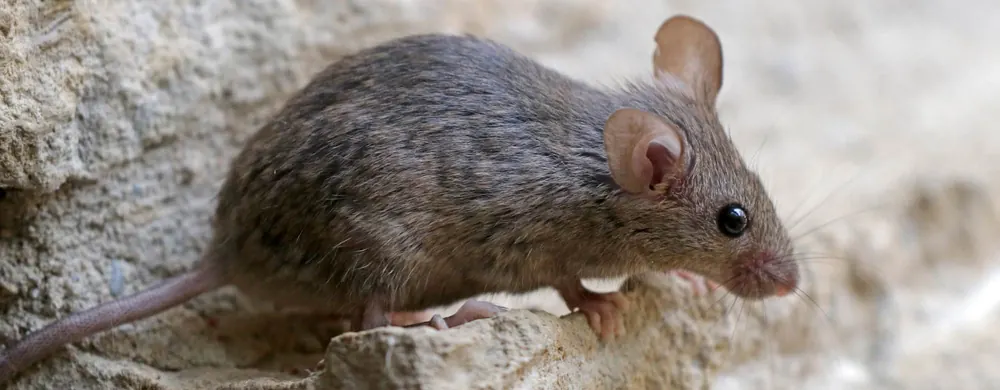
Mice in Newton Park usually mean there's a small gap somewhere and a steady supply of food nearby. In an office, it's the kitchenette and the snacks in people's desks. In a flat, it's often the service duct shared with the units around you. In a house, it's the pantry and the gap where a pipe enters the wall. We remove the mice with lockable stations and traps, then show you which gaps need closing.
Why mice are a Newton Park problem
Newton Park has a lot of office space, small businesses and flats alongside its family homes, with Greenacres' shops and offices next door. Mice do especially well in these buildings because they offer three things: suspended ceilings and service ducts to travel through, cardboard boxes and paper to nest in, and food left out overnight.
A house mouse can get through a gap about the width of a pencil. Older buildings, of which there are many here, tend to have plenty of those: around pipes, under doors, where cables go through walls and at the junction of old and new building work.
Mice in offices
Office mice often go unnoticed for a while because nobody is there at night. The signs build up: droppings in a drawer, a nibbled teabag box, chewed cable insulation under desks, a faint musty smell in a storeroom. Mice chewing through network or power cables can cause real problems for a business.
We inspect the ceiling void, storerooms, the kitchenette and under fitted desks, then place lockable stations and traps along the walls where mice run. For ongoing protection, we can set up a monitoring contract with regular checks.
Mice in flats
In a block, mice move between floors inside walls and service shafts. If you're the only one treating, they'll keep coming from the units around you. We'll help you treat your flat properly, and for a lasting result we recommend that the body corporate or landlord arranges treatment of the common areas and other affected units.
Signs of mice
- Small, dark droppings about the size of a grain of rice
- Tiny gnaw marks on food packaging, especially cereal, rice and pet food
- Shredded paper, tissues or insulation gathered into a nest
- Light scratching inside walls or the ceiling at night
- A sharp, musty smell in cupboards
How we get rid of them
- Inspection of kitchens, pantries, storerooms, ceiling voids and the outside of the building to find the nest areas and entry points.
- Treatment with lockable, tamper-resistant bait stations and traps placed along the walls and runways mice use. Mice don't travel far from the nest, so placement matters more than quantity.
- Proofing advice. We show you which gaps to fill, often with steel wool and sealant, mesh or a door brush strip.
- Follow-up to check stations and make sure activity has stopped.
Mice in older family homes
In houses, mice tend to settle in the pantry, behind the stove, in the garage among stored boxes and in the outside room. They often arrive in autumn as the weather cools. Pet food left in an open bag in the garage is one of the biggest draws we see.
A common mistake
Putting out one trap in the middle of the kitchen floor. Mice run along walls and behind objects, not across open floor, and they're cautious about new things. Several traps placed tight against the wall, along the route they're using, work far better than one in the open.
A local tip
Look under the kitchen sink and behind the stove. In many older Newton Park homes and flats, the hole cut for the pipes is far bigger than the pipe itself. That gap is a mouse's front door. Fill it and you've cut off one of the most common routes in.
What does it cost?
A house or flat with a few mice and an obvious entry point is a small job. An office building, a shop with stock storage or a whole block of flats takes more time, more stations and usually a follow-up or ongoing monitoring. If you've seen a single mouse and found one or two droppings, a few traps set properly may sort it out, and we're happy to tell you that. We quote after we've had a look.
If the droppings are bigger, read about dealing with rats in Newton Park. Our mouse control guide explains how mice breed and behave, and mouse control across Port Elizabeth covers the wider city. We also treat mice in Walmer homes, and the main pest control page for Newton Park lists everything else we handle here.
Call 087 012 5550, or WhatsApp us a photo of the droppings and we'll confirm whether it's mice.
Questions we get asked
How small a gap can a mouse get through?
About the width of a pencil. If the head fits, the body follows, which is why sealing small gaps around pipes matters.
Do you treat mice in offices after hours?
We can schedule visits to suit your business, including before or after working hours where possible.
Are mouse droppings dangerous?
They can carry bacteria that contaminate food and surfaces. Wear gloves, dampen the droppings with disinfectant first, and don't sweep them dry.
Why do I still have mice after setting traps?
Usually because the traps are in the wrong places, or the entry gap is still open. Traps need to be against walls on the routes mice use.
Can mice come from the flat next door?
Yes. In blocks of flats, mice travel inside walls and service ducts, so treating common areas and neighbouring units helps a lot.