
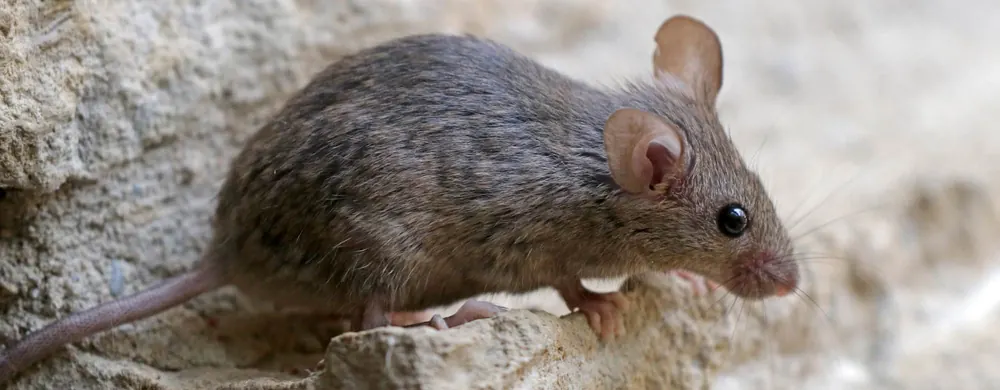
Mice usually announce themselves with droppings in a kitchen drawer, a chewed corner of a cereal box or a faint scratching in the wall late at night. If you've seen one, there are almost certainly more. The good news is that mice don't travel far from their nest, so once we find where they're living and how they're getting in, control is quick and very effective.
Where we find mice in Kariega
In the kitchen and pantry
The warm space behind and under the stove, the cavity behind the fridge and the back of the bottom drawers are classic nesting spots. Mice gnaw into soft packaging and leave droppings along the back of shelves.
Offices, stores and parts rooms
The automotive plant and its suppliers have a lot of office space, storerooms and parts stores in Kariega, and mice love them. Suspended ceilings, cable trunking, under-desk cabling and archive boxes give them shelter. Staff lunches eaten at desks give them food. Mice chewing cables is a real nuisance, and the cardboard in stores gets shredded into nests.
Vehicles and garages
Cars and bakkies parked for a while in a garage or yard can end up with a mouse nest in the engine bay or air filter housing. They chew wiring and insulation, which can be an expensive repair. If you keep a vehicle stored, check under the bonnet now and then.
Signs of mice
- Droppings like dark grains of rice in drawers, on shelves and along skirtings
- Tiny gnaw holes in food packaging, bread bags and cardboard
- Shredded paper, fabric or insulation gathered into a nest
- A stale, ammonia-like smell in cupboards that are closed for long periods
- Light scratching inside walls or ceilings at night
How they get in
A house mouse can squeeze through a gap the width of a pencil. In older Kariega homes, the usual routes are gaps under external doors, broken air bricks, holes around waste pipes and geyser pipes, and open weep holes. In commercial buildings, roller doors that don't seal at the bottom are often the main route. When the weather cools, mice that lived in the garden all summer start looking for a warm way in.
Our approach
- Find the activity. We look for droppings, gnawing, nests and smudge marks to work out where the mice live and travel.
- Trap and bait. Indoors, especially near food, we mostly use traps. Lockable, tamper-resistant bait stations go where they're safe and useful, usually along outside walls and in roof spaces.
- Show you the gaps. Brush strips on doors, mesh over air bricks and sealing around pipes stop new mice coming in.
- Check back. We return to clear traps, check stations and confirm the activity has stopped.
For offices and stores we can set up regular monitoring so a new arrival is caught before it becomes a family.
Why speed matters with mice
A female house mouse can have a litter every few weeks, and the young are ready to breed themselves surprisingly soon. A pair that moves into a warm stove cavity in autumn can be a dozen mice by midwinter. Mice also urinate constantly as they move, contaminating shelves and food far more than the number of droppings suggests. Dealing with the first signs, rather than waiting, keeps the job small.
A tip for Kariega households
Look at the bottom of your kitchen and garage doors from the outside, with the light on inside. If you can see light along the bottom, a mouse can get in. A simple brush strip fixes it and is one of the best things you can do before the cooler months.
The common mistake
Putting out one trap baited with cheese and waiting. Mice are cautious with new things and they don't especially like cheese. A few traps, set along walls where droppings are found and baited with something like peanut butter, work much better. And a single caught mouse rarely means the end of the problem.
What does it cost?
It depends on how many mice there are, how many rooms or buildings are involved and how much proofing is needed. For one or two mice in a house, honestly, a few well-placed snap traps and a brush strip may be all you need. Offices, stores and warehouses with ongoing activity are better on a scheduled service. We'll quote once we've seen it.
Seeing bigger droppings? That could be rats; see rat control in Kariega. For more on how mice live and breed, read our guide to house mice. We also cover mouse problems around Port Elizabeth and mice in Despatch.
Call 087 012 5550, or WhatsApp us a photo of the droppings and we'll confirm whether it's mice.
Questions we get asked
How do I know it's mice and not rats?
Mouse droppings are about the size of a grain of rice. Rat droppings are as big as a raisin or bigger.
Can mice damage my car?
Yes. Mice sometimes nest in engine bays of parked vehicles and chew wiring and insulation. Checking under the bonnet regularly helps.
Why do mice come inside when it gets cooler?
They look for warm, sheltered places with food as nights cool. Homes, garages and stores offer all three.
Is bait used in my kitchen?
Usually not. Near food we mostly use traps, and bait stays in lockable stations in safer places like the roof or outside walls.
Can you stop mice in our office ceiling?
Yes. We treat the ceiling void, find the entry points and can set up monitoring so new mice are caught early.
How quickly will the mice be gone?
Small problems are often cleared within a week or two. Larger ones take longer, which is why we come back to check.