
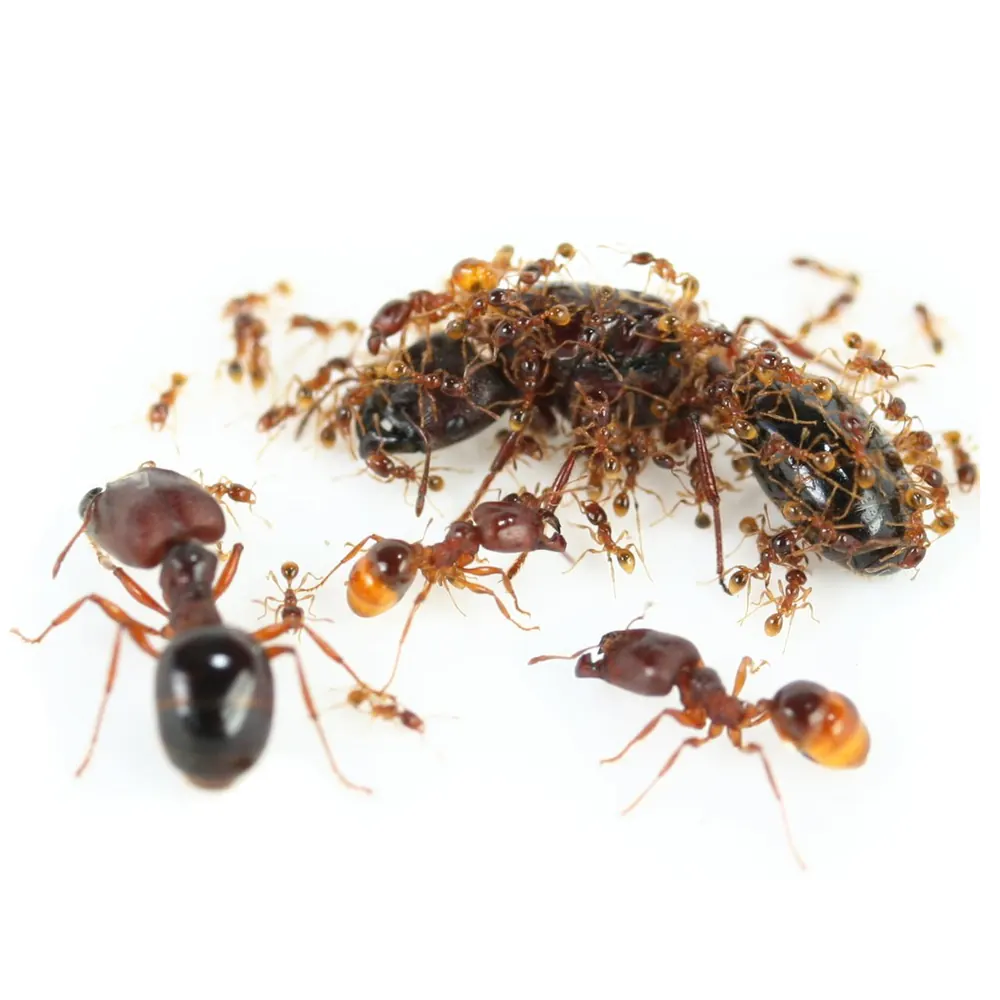
If insects are getting the better of you in Despatch, the first thing to know is that most of them are coming from somewhere specific on your property. A nest in the lawn, a drain by the kitchen, a damp cupboard, the shady patch where the dog sleeps. Find that spot and you can deal with the insect properly instead of spraying whatever you see.
That's how we approach insect control in Despatch: identify the insect, find where it lives, and treat there.
What a year of insects looks like in Despatch
Despatch isn't on the beachfront, and the bigger yards and gardens here hold more insect life than a flat in town. The seasons shape what people call us about.
Spring
Ant colonies wake up and expand. Paper wasps start building small nests under eaves and in carports. Fleas begin to build up again in yards where dogs and cats spend their days.
Summer
The busiest time. Flies breed around chicken runs, compost and bins. Mosquitoes come from standing water, including anything that collects water near the river or in the garden. American cockroaches are more active at night around drains. Wasp nests are at their biggest.
Autumn and rain
Heavy rain floods ant nests and sends them indoors in long trails. Crawling insects move towards the house looking for dry shelter.
Winter
Our mild climate means insects don't stop completely. Indoor pests like German cockroaches, fishmoths and bed bugs carry on regardless of the weather outside.
How we treat insects
Different insects need different methods. Using one spray for everything is why so many DIY attempts don't last.
- Ants: baits the workers carry back to the nest, so the queen and colony are dealt with, not just the trail.
- Cockroaches: gel baits in cracks and crevices for indoor species, and targeted residual spray in drains and outside areas for the big ones.
- Crawling insects in general: an odourless, non-staining residual barrier treatment around the outside of the house and at entry points.
- Wasps: treatment of the nest itself, done safely.
- Fleas and other biting insects: treatment of the places they breed, with advice on treating your pets through your vet.
Where it's needed, we come back for a follow-up to catch insects that hatch from eggs after the first treatment.
Smallholdings, chickens and pets
Some Despatch properties have more going on than a house and a garden. If you keep chickens, a couple of goats or a few horses, the insect picture changes. Feed attracts beetles and ants, bedding and manure breed flies, and animal pens give fleas and mites somewhere to live. We plan treatments around the animals: nothing sprayed near water troughs, feed or nesting boxes, and products chosen so the animals can go back to their routine quickly. If you've got pets in the house, tell us when you book. We'll work around their beds, bowls and favourite spots, and let you know when it's fine for them to go back into treated rooms.
Signs it's time to call someone
- You've treated the same insect two or three times and it keeps coming back
- You're seeing insects in the daytime that normally hide, like cockroaches
- Someone in the house is getting bitten and you can't work out by what
- You've found eggs, casings or droppings in cupboards and drawers
What people often get wrong
Spraying a trail of ants with household insecticide. It kills the ants you see and scatters the colony, and sometimes it splits one nest into several. In Despatch gardens, where colonies can be large, that turns a small problem into a bigger one. Baiting is slower, but it works. Our page on ant problems in Despatch goes into more detail.
A local tip for Despatch yards
Walk the yard after rain and tip out anything holding water: buckets, old tyres, pot saucers, a tarp over the trailer. That's where mosquitoes breed, and it costs nothing to fix. While you're at it, check the pet water bowls get fresh water every day.
What does insect control cost?
The price depends on which insect it is, how big the property is, and how established the problem is. A kitchen ant problem is a short visit. A whole-house crawling insect barrier, or a cockroach problem that needs a follow-up, takes longer. If a problem is small enough that you can handle it yourself, we'll say so. We quote after we know what's there.
More about insects
For a deeper look at how different insects behave and why they come indoors, read our guide to insect control. If you've got property elsewhere in the metro, see insect control across Port Elizabeth, and if you're further inland, we also cover insect problems in Kariega. For everything else in town, start with our Despatch pest control overview.
Not sure what you're looking at? WhatsApp us a photo, or call 087 012 5550 and we'll help you work it out.
Questions we get asked
Which insects are most common in Despatch homes?
Ants and cockroaches are the most common indoors, with fleas, flies, mosquitoes and wasps outside in the warmer months.
Do insects in Despatch die off in winter?
Not completely. Our winters are mild, so indoor insects like German cockroaches and fishmoths stay active all year, and ants just slow down.
Is one treatment enough?
Often it is for ants and general crawling insects. Cockroaches and fleas sometimes need a follow-up visit because eggs hatch after the first treatment.
Will the spray smell?
No. The residual sprays we use are odourless and don't stain walls or floors.
Can you treat around my vegetable garden?
Yes, with care. We keep treatments to the house, paths and entry points and away from food plants, and we'll talk you through where we're spraying first.
How do I know what insect I've got?
Send us a photo on WhatsApp. A clear picture is usually enough for us to identify it and tell you whether it needs treating.